Creating Magic in Storytelling and Finding Identity in Japan with Fantasy Author and Editor Ellen McGinty
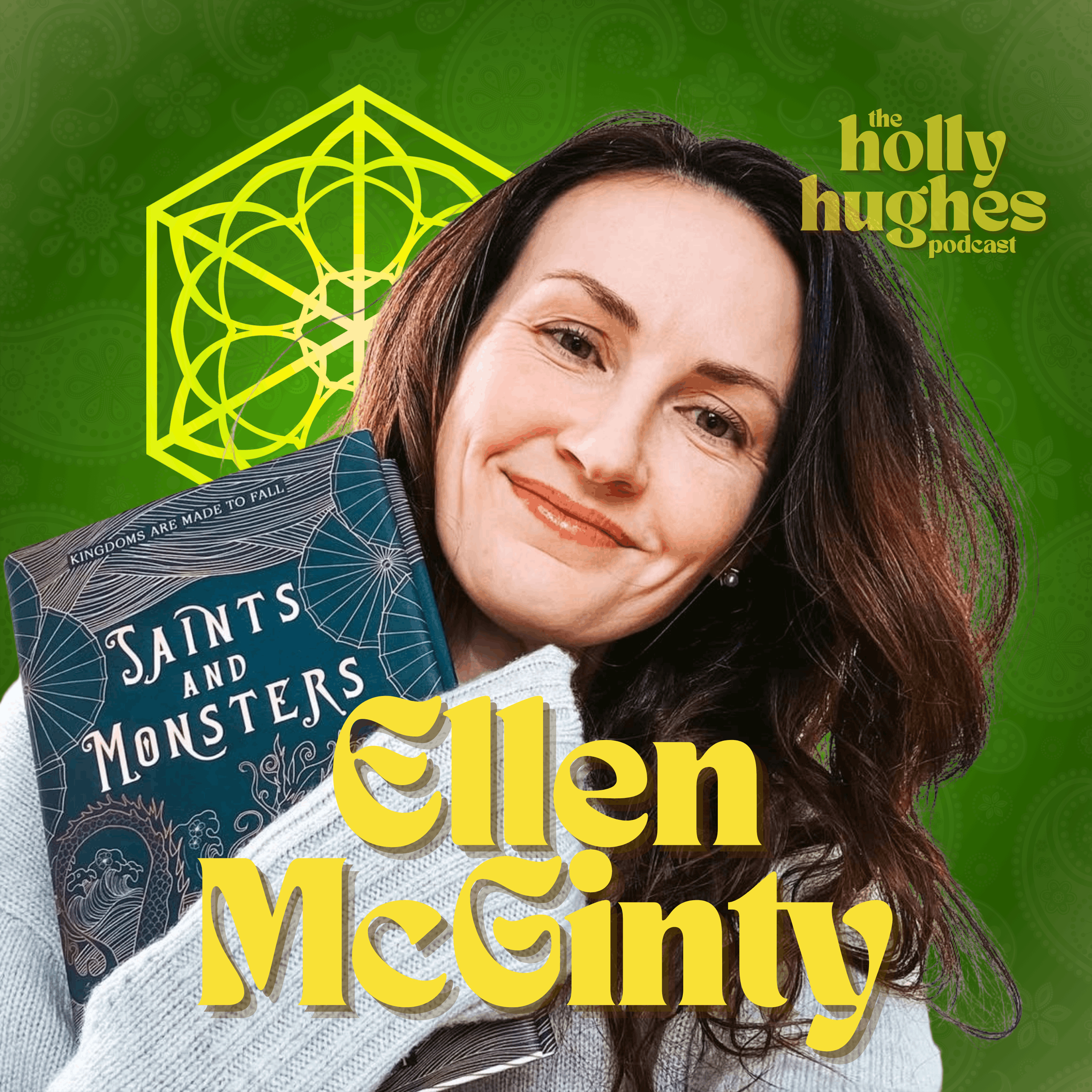


Art is often inspired by the experiences we cultivate through our lives. Whether it’s through our interactions with others or our experiences in the world, our art is a reflection of the lives we’ve lived.
Today’s guest on The Holly Hughes Podcast is fantasy author and editor Ellen McGinty. Ellen has just published her latest fantasy adventure novel, Saints and Monsters, while also serving other talented writers through her editing, all while living as an American in Japan.
Ellen McGinty joins Holly Hughes for a discussion about the magic of storytelling, the journey of finding identity in a foreign land, as well as the many challenges of the publishing industry. Ellen also talks about drawing inspiration from her own personal experiences, her writing and editing process, and the influence of her faith in her work.
Connect online with Ellen McGinty at ellenmcginty.com. Buy your copy of Saints and Monsters here.
Get your copy of Holly’s book, Real Not Perfect: How to Become Your Happy, Authentic Self.
Sign up for Holly’s email newsletter here.
0:10 So welcome to this episode of the Holly Hughes Podcast. Today, I am really excited. I don't know when I'm not excited, but I have Ellen McGinty here today who is an author and an editor. She's a woman who lives in Tokyo, Japan, right? You're in Tokyo or outside Tokyo? Tokyo. Tokyo proper, and everyone knows I'm obsessed with Korea, but she has lived in Japan for a very long time and that culture has seeped into her. It breathes in her and her creativity. So welcome, Ellen, to my podcast. I'm so glad you're here with us today. Thank you so much, Holly, for that wonderful welcome. And it's lovely to be here with you because we have a long history too, so I'm quite excited. We do, We do.
0:59 First of all, I would like to say like we met, it was back in the day when Brenda Drake, because I really feel like she deserves credit for pitch wars. But we were in a that was back in the day for people who don't write young adult fiction at all. It was a place where authors, not just YA, but all sorts could go and pitch on Twitter. When it was Twitter and get an agent, it was a contest. And you and I were like, in pitch wars, Pit, Med pit, there was a pitch. Slam pitch. Slam Yeah, all of the above. And I remember like, admiring you because you were always kind like you really.
1:40 You really are a kind person, which is what I also like about young adult authors in general or people who typically write with or for children. There is a kindness and a camaraderie within our world that I don't know exists in other creative places because we would watch people get their agents being similar to us. So it was very fun to cheer them on. But your journey to agenting was quite one. Do you want to share some of that story this morning? Absolutely. It was quite a journey. I'm trying to figure out where to start with that. Look how pretty.
2:23 It's so pretty. I'm holding the water, child, which is what you were pitching when we first met. It was it. Smells good. Your book smells so good. I can tell you like my perspective watching what you were dealing with if and then you can like jump in if you're into that. OK, so I also want to make sure everyone knows about all of her books. When this comes out, more of her books will be out. She is prolific. So she has the water child, Saints and monsters, the last wave, the wayfinder right. I said that right, And you will have you have stories in anthologies and your voice is very distinct. I think anyone can pick up one of them and be like, this is an Ellen story.
3:06 It is the way you write. It is the words you choose and there's like a cleanness, but you're so dropped into setting and the emotional arc of your people. So that is, I thought, something you should know from a reader of yours. You. But I also remember this was very much the beginning, like 10 plus years ago in especially young adult fiction where own voices started. And I have no problem with own voices, except I had a problem with what people, what agents in the publishing industry was deciding who could tell a fictional story, or how they could tell a.
3:50 Fictional. Story and for me you are a person who's lived in Japan for how many years now it's. Been eight years now. Yeah. So you live there, you love the culture. It is part of you. And this, the water child, has to do with the 2011 tsunami. Yeah, and my in laws were there at the time, Yeah, and. Everyone's like, but you're not Japanese. And I was like, did you read it? Did you read it? Like, can we get past the surface level and go deeper? So I remember you having difficulty because who they thought should tell the story, what they should look like was not who wrote this story.
4:30 Was that your experience? That was definitely my experience. And when I moved to Japan, it was 8 years ago, almost nine years now, but my husband had been here his like his whole life when, when he was a baby, you know, graduated high school and he moved to America for college. And so he, he had a long history in Japan. And then, you know, his parents had been here for 35 plus years. So as a family, you know, there was a big history there. And when I was in Japan is when I got my agent and she was a fabulous agent. She really believed in my story. It was right at the beginning of Own Voices movement. And so we pitched it all excited, and some really big publishers picked it up, like several of the Big 5. It went to acquisitions.
5:13 And I started getting questions like, how long have you been in Japan? What does your family do in Japan? And you're really more specific ones than that. And I was answering them and kind of like, OK, I wonder, you know, what's going on? They're just getting marketing information. And then my agent came back and she said, you know, I don't think we can sell this book. She said we were told you could be Thai and write about Japan and it would be OK, we could sell that. But you just can't be white. And hearing that that was something that was actually said was shocking to me because we're creatives. We want to create, you know, no creative want someone to say you can't do that because of your skin, because of who you are as a person. It could be something other than skin color, too. But you don't want someone pointing at, like, who you are and saying you're not qualified, like, who is qualified to make art, right?
6:11 Yeah. At the same time, like we understand you want to care for culture. Like, you want to be someone who, you know, it shows respect and care. And I had sensitivity readers and all of that. But I just still remember that one comment from one of the editors at one of the Big 5 and just thinking, wow, I really can't write anything that traditional publishing will accept right now because this is my world. Like the world I live in is Japan, and the world's I write are kind of. At that time, it was historical fiction. But then I shifted to fantasy because I thought, well, why don't I blend that? E meets West, right? The experience I'm living right now into a fantasy setting and see, you know where that goes. But that took me years because I was so wounded by. Yeah, just being told you can't create the art that you want to create.
7:05 I remember being really mad. I have AI have an African American friend, right, and she was writing a space opera and during the same time they said that's not the kind of book we need from you. And she's like, what do you mean? I write sci-fi, I write space opera. Like this is everything I want. And I think for me, instead of feeling that there was inclusion or a different perspective on that genre, they just wanted her to write something like, more like the hate you give. And she's like, I don't want to actually write that. I don't. That's not like what I'm interested in sharing. She had a huge.
7:49 Agent and they had a breakup because of it. So did you stay with your agent? Did they give up? Like because you do a lot you you do a lot with how you get your work out there. So I'm curious. Though I ended up partying with my agent, we we stayed for about two years after that when I started writing fantasy and I was actually writing the last Wayfinder, which is my book that's releasing right now and that I've done a Kickstarter for. And that book was so hard to write because it was my first fantasy book. And I was trying to explore the east meets West side of me, this kind of third culture, border Walker, kind of like merging these two cultures. And it was difficult and I was still battling with those wounds.
8:36 And so I didn't finish it. And you know, two years is a long time for an agent to wait on you. And so we decided, let's part ways and I'm going to figure out this writing journey and make a plan. I like that too. I parted ways. I got an agent during all of that as well. Our communication overall ended up not being good. Like I, she got mad at me. She's like, where's the next book? I'm like, I sent you the draft like 6 months ago and she's like, oh, it was in my spam and I was like, well that says a lot, doesn't it? Like, you know what, like that? That was an interesting learning process. I know so many authors now who never stay with just one agent, right?
9:16 Like it's the journey to get one. The like writing the thing, the querying, all of the heartache and ups and downs, the synopsis. Like you got an R and RI got a lot of R and Rs. And then ultimately my what they always came back with is like, I don't know how to sell it. So you are selling your own work and I think pretty successfully, right, Don't I? I think it's watching you online, doing all your programs and your lives and how you communicate with your audience. Like what made you start doing that? What gave you the bravery? Because it's brave. Thank you I, I, I appreciate that it's something I write into my books, I think because I want to be brave. I don't think anyone sets out thinking like I am brave. And if they do, I've I applaud that person, but that's not me. I'm like, I'm afraid and I'm choosing to step out. And that's that's bravery is facing that fear, right? Is making my heart stronger than that. And So what happened was I finished that book and that fear was still speaking in my mind.
10:21 And I said, you know, I have to try have to get my work out there. That's what art is. There's this desperate need to create, to tell these stories. That's why we are artists. I don't know if you've seen the meme. There's one of it's, it's like this is an artist who says they love their work writers, right? Because it's, you know, their passion. And then it shows like Kyle Miyazaki and other people just in agony. And this is this is the truth. So I had to get this story. So I decided to query small presses because you can query without an agent. And I felt like the traditional, the big 5, when you say traditional, there are the small presses, mid size and the big ones and they're all very different, kind of campy.
11:10 So you have to know which one you're aiming for. And I felt that traditional would still, meaning the big five would not accept my work still because own voices was still fading out. And so I decided, well, I'm going to go for the mid size small without an agent. I did that. I had about 100% request rate for the last wave Finder, which should have told me something, but it wasn't romantic enough. That book is Hawaii fantasy with a romantic subplot. And the industry has changed a lot since I first started querying. And it's a lot more fierce and there's a lot more marketing that the editors are looking for.
11:52 They're they're very specific in, you know, what they're hunting for in those flush piles. And so I had only one yes. Now I haven't been doing this long. I maybe a few months, you know, and five full requests this guest, the meeting right now. And. It's pretty good and one yes. The yes was from a small publisher that had just started and several friends recommended it and they also shared some of my values. And so I thought, this feels safe. Let me go with that. And so I did and signed a contract and actually signed for three books because it was a series and that ended up being a big mistake. And so this journey to, you know, how do I self publish like you see me doing now, has taken very long because I took a little detour with a small press. Yeah, I had a small press reach out to me as well for my book Dear to Drunk Girl, which had gotten so many R and Rs and my agent made me really rewrite it.
13:00 And it's it was not the book. I was like, how come no one's buying you? Like if you were so for it? And then when I got my work back and I read my book, I was like, who wrote this? Like, I worked so hard to please what they were looking for that it stopped being the story of sisters trying to save each other. So I have the final. I'm actually still editing it. But it's also hard because I wrote it forever ago and I write differently now, right? You know, hopefully my writings gotten better. That's what I always hope. But there's still something in that book that I haven't let go of. So I keep saying I'm going to finish it. And my critique partner, my writing partner's like, Holly, have you, have you done it?
13:42 I was like, no, but I wrote 8000 words of a new book, you know, So I keep kind of going back and forth. But I do believe in that story and in the story that it originally was, which was not about a bad guy coming. And it wasn't about making the my main character so unlikable that that she was irredeemable. Like, you know, when really horrible characters were like popular. So they made me make her so horrible instead of the truth was she was in so much pain and sad. There's like there's a fine line right between that. So I think that's fascinating. I would love to know more because I know your face is very important to you, right?
14:28 It's part of your your work, right where you are. So how does that come into play in like living in Japan? And how does it influence like how you absorb their storytelling? Because I watch like J dramas, right? Like I watch some of them and anime and stuff. So there is a very distinct way that Japanese share story, right? And the themes in their storytelling. And I'm wondering how that blends with your faith in like what you believe and how you experience being there. Yeah, So this is always something I'm like, how much do I share about this? But I am a pastor's wife.
15:13 And so that surprises people. And they're like, wait, you write, you know, young adult romantic fantasy with Dragons and dark curses and what is this? Right. And so it's really fun. And living in Japan, I think people forget about culture. They think that culture is just this one big, like one big pot and that's it. Like all Japanese are the same. All Americans are this way. And of course, we would say, oh, no, we don't think that way. But we we do generalize, you know, in our heads often. But Japan has a lot of different pockets. And there's a Christian community in Japan as well. And there are, you know, historical Christians in Japan. And I read a lot of their stories and not just testimonies, but Japanese fiction writers who are believers and philosophers, you know, who are Japanese Christians.
16:03 And so there's this whole culture subset, you know, of processing Japanese culture in a Christian way. And so that is kind of how I view Japan is through that that lens. And even in that community, it's still divided. I don't think there's community that's not doesn't have different interpretations of things. For example, going to a shrine, like there are some Japanese Christians who will not set foot in a shrine hole, so they'll choose to stay back. There are others who will go in, but they just won't pray, right. And so same thing with like at the family altar, you know, some people might pray to Jesus there or some might just not, you know, stand in front of it at all.
16:51 Might just like clean the sites during like old blown or things. So there's different ways people, you know, practice, but The thing is that they can still see beauty in the culture. Like they're not separate. We tend to think of Christianity as like Western, but you know, it started in in Israel and it's it's grown. And so each culture kind of use it a little differently. They have a little different print on it. Yeah, I only know a little bit of the history of Japan. I realized like pre COVID or during COVID, like how little I really knew about Asia in general, right? So that's when I started getting into Korean dramas, Chinese, Japanese things.
17:35 And I was like, I didn't know so much or my idea of what Japan was was so small, right? It was Miyazaki, of course. I'm like a fan of all of that and but there is so much to it. And then when I I did a little research into when Christianity first got there and how hard that was, right, You know, and going other places when I travel and I I go to temples, obviously, because it's such a huge part of a culture like it. That is, I'm so curious as to what it feels like. And with my woo woo, like I was at a temple. I'm forgetting the name starts with AB.
18:17 In Japan or? No, it's in Korea. There I saw a monk in front and he was praying and everyone was being very respectful. I was very grateful and like, it might not be my faith, but I'm not going to interfere in yours. But as he was praying, I saw ribbons of white. Like I could feel the love in his faith, like coming out of him. And for me, it was an amazing moment. And when I returned to that same temple at my second visit, the energy there is just so peaceful and loving. And we had been traveling for a few days. There were like six of us girls. And I was like, I need just a few minutes, though alone. And they're like, and I just went and like meditated like, and to connect with all of that, like love and kindness.
19:04 Because in the world there's so little that like, I'm like, I will take it anywhere. Like even back in the day in college and when I was in like Paris and I was at SAC Lacoo, I'm bad at French. People don't judge me. But I went up there right before it closed. It was night and it's just lit by candles just like it was back in the day. And it's not my faith, but again, I could feel all the love and belief of people there. And so I just got really quiet and my friend was praying and I just like kept her company. And I just, it felt like so lovely to be able to experience something like that. So I think you should own the pastor's wife thing.
19:44 Just just saying like, I think it's a big part of who you are. I do wonder how you interpret some of like the metaphors then and the like, mysticism, I guess I would call it in Japanese culture or, and or like the rules of men and women there. I know that was a lot. Sorry. Yeah. Where do I start? Women in mysticism. Right, like so like like in story, we'll keep it to storytelling, right, Like like I know you talk about like anime or stuff or like you talk about like in the water child. Right, you touch on the I I don't want to say it wrong. You say it the Mizuku. Kuyo Yeah. The music of Jesus.
20:25 Yeah, yeah, yeah. So like, you know, you talk about how they process grief or how they deal with things and I'm just wondering how that works for you. Yeah, I think, I mean, it's such a a big topic. And with grief, I think in that, in that particular story in the water child, it's how they view miscarried or aborted babies, you know, babies who, you know, don't see the light of day. And depending on the historical context, sometimes it's even for young children. Japan views it as a life, which in America, a lot of people would be outraged about that. But in Japan, traditionally, that is how they view it, that it is, it is life and it is sacred.
21:08 And so we honor it and we grieve and we we process that by by giving gifts, by praying, by remembering. And I think that is truly a beautiful, beautiful thing. And that said there, there's all kinds of things around that issue, but that's one of the ways, you know, that they process grief in that. That's explored in that book. And then with storytelling there, there's just so much in Japanese storytelling. They do a four act structure usually and it's all focused on A twist at the end. And anime and manga of course, use that all the time.
21:48 And I, I can also pull out like little threads of a faith in those stories of how characters are are processing their beliefs, their hopes, their dreams, you know, always wanting to be stronger, always wanting to believe the best in others or to find the truth about themselves. Like these universal themes, really. Yeah, I love that. So like, you know, I've had three miscarriages. So for me, when I like did a little dive into what that was, I was like, that would be nice because so many people around me were like, well, you're fine though, you know what I mean? They're like, it was very dismissive of the loss here. Like that wasn't a baby yet or, you know, better than something else happening.
22:33 I'm like, what? Then what? Like, you know, it's a loss. It's like like a grieving process. So I had, for me personally, like challenges with finding soft places to land in my grief, which is why I think I write about it a lot, right? Like the family dynamics and whatnot. You also write a lot about family and I was wondering what inspires those stories for you. I think just family is so special. Like I love my family and I, I think everyone, you know, everyone has a family. And our families might not be perfect, but we all have family. It's universal. And I really love old like classics like Les Mis or Little Dorit, Bleak out, Lurie Heights, those kind of language, shut up. And they all revolve around family. There's this complicated mess that comes with being in a family because we're people and humans do messy things and. How does that start for the last wayfinder? Because that's about right, you know. So what was the initial spark for that one? For that one, I, you know, live in Japan. And so I'm walking down the street and I see all these historical tiles depicting steam ships and, you know, Japanese women carrying parasols and wearing Western gowns. And I thought, wouldn't it be fun to write like a 1800s, late 1800s Meiji Restoration fantasy novel in Japan that had some of those deeper themes of Les
24:04 Miserables or something like that. So I started exploring ideas with that. And at the same time I was reading a biography by it's a botanist in Japan. I can't remember his name right now, but in his his biography, he has all these details that are very factual about different wars, diplomacy that happened, incidents. And there's one mention of sea Dragons in the Bay. And it just, I remember rereading that passage thinking, are these boats? Is it the, you know, they have a dragon boat ceremony in Japan. I was like, maybe that's what he's talking about. But he said it was the emperor's boat pulled by sea Dragons.
24:46 And I thought, well, that would be quite something to write about. And so that's where that that spark came from. I love that. I would. Now I'm trying to imagine what they really did. What do you think? Really, it really was. I think maybe it was the Dragon Boat race, but it it wasn't written in that sense. And he usually writes very detailed about all of the experiences he went through, so it was interesting. Do you think someone made him write that? No. I'm like, I'm like, this is fascinating it. Was like a Loch Ness Monster kind of thing. I was like, maybe they like had boats in front of it pulling his boat and they dressed it. Or did they make people swim? I don't know.
25:30 Like, I, I love that. I can see how your imagination would go from there. So how much longer are you going to be living in Japan? Like is this long term or will you be there for your life? I know you travel back and forth to the States too. This is one of those fun questions you don't get if you're not like an expat or a hygiene. So I don't know. I you know, I don't know the future, like how long I'll be here. But you know, my heart is here and I want to stay here as long as I didn't want to say. Guy Gene, I was really trying not to use that word because I don't know if it's nice. Well, I mean, it's one of those words. It's not nice for someone else to call you that word, but you can call yourself that word and you make up jokes with the word and all of that.
26:13 So we even talked about like a guy gene card or like we have a little card we can play, you know, that we're, oh, we're foreigners. We didn't know. We don't. We don't do that. Sure, sure, sure. So like how fluent are you now? You must be so fluent and. Actually not. And this is one of my. Yeah, it's really sad. Shut up. You know I have. Can you go to the store and get groceries or like like, yeah, OK. Yeah. I would have fluent for you. Blue Ant would be being able to read I'm illiterate, which is quite hard for an author. You can't read it. I can read the hiragana and the casagana and then some kanji, but not enough to just have like a nice reading experience. I have to pull out my my translator and look up all the kanji.
27:07 Do you use Papago? Which one do you use? I just use Google translator DL yeah. I shouldn't be real. I think it's a very hard language. Like I tell all the people. Like I have tried to learn Korean for years. I've taken a bunch of classes but because I'm not around anyone that I can practice with, but I can read it like a 2 year old. Like you know I can sound out. I mess up the botcham like I know I am. I can't always get the sound out of my mouth correctly but like when I get there I seem to know enough to get through. Do you know what I mean? Like I fix and they have kiosks everywhere and you can just tap English.
27:47 Right, In Japan you can usually tap English if you're in a big city like Tokyo. And for me, it's my husband's fluent, so I'm always like, oh, could you do this? And so it's a bit of a crutch. And then raising 3 kids as well and writing lots of books has kept me busy. So I should be studying the language more. And I'm working on it. I'm I study every day just a little bit so. Are your kids fluent? I'm assuming yes, no. Yeah, they're all fluent. Wow, So what you are while we're recording this, you are in the process of doing a Kickstarter. When this airs it will be a smash success, but like I want to know like where the idea to do a Kickstarter and the energy to do it, Like where does that come from with you? OK, so I had talked a little earlier about my small press experience.
28:45 And so with that I had gotten my rights back from that small press, which was not an easy feat at all. And I would say that was more difficult than everything with the own voices experience and querying. So once I had my rights back, I had to decide, you know, I now have control of my publishing. What am I going to do with these stories? How am I going to get them out to readers? And the first book, Saints and Monsters, I had to release quickly to keep all of my reviews. And so I did that with a whirlwind and then thought about it. And a lot of my friends have been doing Kickstarter to fund their indie books. It's kind of a way to cover all of the basic costs for the production and then maybe have a little extra to work as kind of an advance for yourself or to work on Nextbooks. And so I thought, well, I'm trying new things, so let's let's go for it.
29:37 And did a lot of research, launched the Kickstarter. And I remember the day before I had one of the Kickstarter authors message me and said, I hope you know your Kickstarter is going to do really well and you should prepare yourself. And I thought, what, like, I hadn't prepared for a success, but I should. I should, you know, believe in myself and do that. And so I did. And the day that it launched, it just funded within 16 minutes. And it's been going steadily up since. And yeah, so I'm confident it's just going to be a great way to push out these indie books. I have like I should have been prepared for success. That's like the quote of the day. Why would he?
30:23 I love that you did. You posted that you put that you fully funded in 16 minutes. Like do you think it's because you set a reasonable goal? Do you think you should go for a bigger one next time? Like I'm so curious and like, where do you start? Like, how do you even start the whole like, oh, this is the work that goes into Kickstarter because I don't know what is that like? So Kickstarter for publishing is different from Kickstarter for other projects. But for publishing, they say do your research, read books on, you know, Kickstarter for authors, join Facebook groups, There's two or three of them that are fabulous. And then get a good cover, get the good artwork. Like you have to invest in your art for your art to be successful.
31:06 And I know artists don't like hearing that. A lot of times you just want to make it and it's going to thrive without any of the marketing. But you do have to dress it up usually. I mean, there's always exceptions, but having that, that visual element on the Kickstarter really helps. And so I made sure to just check all of those boxes and and it worked. Yeah, the the the illustration, I want to say anime, the illustration is quite beautiful and very captivating and it grabs your attention. I feel like you have an eye for that because even for the water child, right when that book came out, I won one of your giveaways and it was really like, I don't even think you knew that you pulled me into this day.
31:51 I have my stickers of cherry blossoms. This is one of my favorite things. I have these cherry blossoms and I put it on the luggage and I stuck them to the outside of my bag that I do big trips with. And the first time I had covered my little piece of luggage. It's not a very American size. It's like a 26 inch bag, which you know for Americans is small anyway. So right it is though. Do you know what I'm saying is usually they have the 28 plus whatever. It's like I had this one bag and I went to Korea, but before I did that, I think I went to Colorado and some of the cherry blossoms fell off and they got on. No, no, but this is the best part. So as the bag was coming down the baggage carousel, there was a little boy like he maybe 4 tops fives adorable little boy.
32:38 He goes daddy, daddy, my bag has flowers on it now. So like for me, your story like went other places that like it. It just kept going. And I just really loved the thought that your work, your words and something that you created was reaching people you would never know. I think that's like the magic of storytelling. So I just, I always wanted to tell you that. I just never did before. So I love that story. That is so. Sweet. You've talked about how storytelling is healing, so are there things that you've read or that have helped heal you?
33:18 I have. Books that I've read that have helped heal me, I would definitely say the Bible, which I know is very cliche for Christians to say, but that's it's very important one for me and my faith and those scriptures have carried me through a lot of things. And so that's definitely one of them. And then another would be probably books by Mikoto Fujimura. So he writes Silence and Beauty. It's a book about the book Silence by Endo and then also his experience in 911. And it's about art as well, because he's a painter and it, it's kind of how we heal through grief. And it's highly recommended.
34:02 And another book I really enjoyed was Walking on Water by the Engel, the Engel excellent book. And that was her creative journey about what does it mean to be a Christian artist and kind of, you know, looking at how she's traveled with her faith over the years and her stories. And so I think those three are my my favorite, like healing books and there's a few psychology ones too that I would go to because I love reading books on trauma. Do you? Yeah, like the body keeps the score and things like that. So, you know, the the traditional ones. I love romance. Search for Meaning by Frankel.
34:48 Yeah. What's 1 of the biggest losses that you've like endured that shaped you? I would say the biggest one was probably a church trauma loss that I had, and that was when we were in Japan early on, we were with a different church and we experienced narcissism in the church and how harmful that is. And that was very damaging because you feel like your faith and the place and community where you exercise that faith should be safe. And we discovered that the people, not all the people were safe, right? And I think that's an important realization to to know and, you know, you can hold on to your faith, but you have to, you know, push out what's unsafe and, and really look at it for yourself.
35:39 And, and for me, that was going through, you know, the Bible and reading it for myself without the context of what that particular church and the individuals who have been hurtful and just, you know, making my faith really my own and holding on to it and getting out the things that didn't belong there. And so I think that's something really important for church community to talk about, especially because you want a healthy church, a healthy community, very important. And so I read a lot of those books around that time and then that kind of prepared me for later with my book rights. That was another trying time because it was another safe place, and I think that's where trauma gets us, is what's supposed to be safe and then we find that it isn't is usually one of one of those triggers.
36:32 That is what I'm actually writing about now in like memoir. I talked earlier in my podcast with an author. Her name is Judy Goldman. She's 83 now, I believe, and she's a memoirist. And she just came out with the latest book. And I've been holding off on sharing some of my stories because I didn't know how to like package it. I didn't know what the spine of the story was. I didn't, I didn't want to just be like daddy issues. Like that was my joke. I was like, oh, it's just going to be called daddy issues. But I didn't actually do that because I, I knew I was being sarcastic and deflecting, right? So I was like waiting and then speaking with her and her beautiful southern accent, she said, Holly, it sounds like you need to write about home. And then it that was the zinger for me that she could hear during our conversation, like what I was struggling with and then was generous enough to literally gave me the spine. That's the book that I have like 8000 words on in a few weeks now.
37:32 Just that it just it was like, Oh my God, I have my spine. I wrote all the chapter outline. Like I just knew every story that and how it I don't know how it'll all go together. I don't write linearly. I know that's so surprising. But like for me, it is about the word safety. I want home to be safe. And what does that mean? And what hasn't it meant, and why wasn't it, despite how pretty it might be? And what is safe, like we don't necessarily want to live for safe and that we're afraid of the things that are unsafe, right? Correct. And so how do we find that that safety and, and make that safety for other people as well, like going to kind of being the, the thermostat instead of a thermometer? Like how do you set a room to be a place that is, is safe? How do you bring that to wherever you're at, like your family, your church, your, your books, you know, how, how do you bring that safety into a place?
38:34 That's something that I think about a lot, too. I love that. And I, I think it's, I think in the world today, there's a lot of people who are reactionary and that they just think because they feel something in a moment or they tap into outrage or a heightened emotional state. No one's giving anyone tools to be like, to have when you're being emotional because I always tell everyone I'm super Moody. I'm super Moody and things probably hurt me way more than people have any idea because I won't show it to people I don't trust who aren't in my super inner circle because I feel like friendships are things that are interesting for me, right?
39:18 Friends, friendships don't last forever. I tend to welcome narcissists into my life, right, because there's something interesting and exciting because they do that thing that narcissists do, right? I'm wondering if that was like part of what happened in right your church in that like you had this drawing in. Yes, we're like minded. Yes, we have the same value, only to discover you don't. And it's also you, you can actually have the same value and still have that abuse or, you know, an unsafe person in that community. And the the hard thing is when that's in a position of leadership or a position of power, whether we're talking the church or the home or somewhere else.
40:03 When it's someone who has authority over others that can set that room for other people, you know it can make everything unsafe. So how do you weave hope into your stories? Like is that conscious or unconscious? Very conscious hope is like a rebellion. Hope is, you know, it is just this thing that defies what is. You know, you hope because you don't have that yet. You hope because there's something that's broken and you want it to be whole. And I think we're all reaching for that. And I think we all have wounds. And I like to think of in Japan, we have, you know, the broken pottery that's minted with gold. And so I have some friends who are actually artists that do that. And it's beautiful.
40:47 It's so beautiful. And it takes so much time and the pigments and seeing how you can take that brokenness and put it into something beautiful. It's hope that does that. If you didn't have hope, you wouldn't even try. Like why would you put gold into something that might just break again? Like that would be a waste. You have to hope that it's going to fit together, that it's going to be beautiful again. And so I I think it's something we all want. I, you and I see that word so different. I'm like fascinated by this right now. I, it's Katsuki. Is that how you say it? I always say it, yeah, I love that. It's like one of my tenants, I was like, Oh my God, they broke gold.
41:31 I don't. I think for me in some of my life is that I call it a goal instead of hope because sometimes when I've hoped, I felt so out of control and I felt not victimized. But a bit if I'm looking back, especially on my younger self, like like if I have hope and no one comes, if I have hope and no one hears me, right? And even though I can have faith, my faith is not like yours, right? So what did hope do? I don't know. So like there's that part of me that is just, I call it certainty instead or like my belief because something about hope can linger.
42:17 And I think sometimes people hang on to hope without evaluating like a role or a responsibility or how to make it better, even though you can't ultimately control everything. I think my brain, which is funny because I write magical realism, right? But then my brain goes, my brain goes there. So I love how peaceful your idea of hope is. It's peaceful in a sense and in another sense not because it again, it's kind of like a rebellion. It's like you're hoping, but like you said, you don't know, you know, if it is going to hold up, but you're choosing to. You're like, yes, it will.
42:58 I'm investing my time. I'm doing this because I have faith in that. And it's a scary thing. If you're unsure, it's very frightening. But you're right, as a person of, you know, Christian faith, you know, my hope is ultimately in Jesus. And so I feel confident in that. But when we're talking about like goals, for example, like this Kickstarter, I would use the term goal for that one because I hope would be like what that person told me before, the day before of you, your campaign's going to do well. You need to believe in yourself. They were daring me to hope I. Think they were giving you like a message like right? Like a message from like God or an Angel. Hey, we see you.
43:39 We you got this. Right. Yeah. Before it was just the goal to me. And it's like if it failed, that would be disappointing. But I wasn't like, you know, this is it has to happen. And so it's interesting how those words all have different meanings to different people. And. Yeah. OK, so Kickstarter successful your your book is like how are you distributing? How does it work being in Japan? I mean the world is flat. We can go any which way. So who are you trusting with that part? Because some of the bigger companies online, we'll just say that, right? There's issues like they've taken my book down twice, telling me it's copied.
44:21 And then I have to like, yeah, they took all my work down, all my work down. Like another author who wrote like a fiction book but used my title and my font got me kicked off of Amazon. And then it took me like a month to get back on. But then I, I am very detail oriented this way and I have all of the proof. And then at the beginning of the summer, they did it again saying your, your book is a fraud. It's a copy of someone else's work. I was like, well, back in, you know, 2022, you did the same thing. And here's the outcome. And here's the case number.
45:01 So could you please stop? Yeah, I, I think certain companies take issues very seriously and abruptly. And so it's definitely something to watch out for as authors like the copyright issue with AI that just happened. For instance, a lot of authors found out they did not have their books copyrighted even though their books are with Big 5 publishers. And so they weren't then in the the lawsuit to get the money from the AI corporations after all of that, which was a big deal. But for Kickstarter, you can drop ship your books from a printer and there's several printers that do that. Yes. So to do that, you also have to think about people want a limited edition book, so they usually want it signed. And so for my books, that meant a digital signature because I can't order them to Japan, sign all the books and then mail them, you know, wherever they're going in the world. And so I had to make a digital signature page for each of the books.
46:00 So and the other fun thing is that the shipping with the tariffs, that's going to change. Oh yes. So the day, a few days before the Kickstarter launch, I was checking the Japan Post, you know, because I was going to send some signed copies with, you know, special swag. And the hand post had a message and bold read and it said, you know, for US mail, we are no longer receiving like you have to make sure it's a gift under $100 and it can't be any kind of merchandise. And I know the Japan Post, they ask you a million questions when you go in, especially if you're at a smaller post office. And so it wouldn't be, it wouldn't I wouldn't be able to mail, you know, a book from Kickstarter because that is merchandise.
46:48 And so legally people have been saying, you know, print shouldn't, you know, be included in that minimum that was, you know, gotten rid of, but they threw everything in it. So a lot of the Kickstarter's are kind of the window. That's crazy. I know some other authors who even being traditionally published are running into, they keep saying the cost of paper. So because of the tariffs, the cost of paper has gone up. So the cost of books has gone up. The cost has definitely gone up. Yeah. So when you're running a Kickstarter, it's, it's tricky because already just on, you know, Amazon or whatever retail platform your book is on, trying to keep it low, the price for a reader, because we don't want to spend $20 on a book. Usually we're pinching pennies.
47:42 But the cost of paper is so high and shipping has gone up. So authors, they're having a price. Their books, you know, hardbacks now are $2530 and that's standard because the cost is so high just to produce it. It's, and it's like heartbreaking because for us authors, like we work without getting paid, right? You're creating, you're writing the story, you're doing the drafts. Like, how many drafts do you do in a book Average now? Now that you've been proficient and prolific, how how many drafts does it usually take before you're satisfied? I do what they tell you not to do, which is to revise as you are going and so I will draft and then go back and edit it. So how many drafts?
48:27 And you are an editor, I should say you're an actual editor, so maybe a little. Different. Yeah. So I have to turn off the editing hat when I'm writing, but then the next day when I open my manuscript, I go back a few chapters and reread and edit a few chapters. Yes. It's a very bad habit and so it takes me a long time to finish a proper draft and then once that's done, I go back and read through it. I used to say like 3 times for different edits and then send it off to professional editors. Because even editors and editors, you need other people's perspective on your work. And then there's the proof copy. So how many times I read my book?
49:07 I don't think I've counted. Wow, so then you write linearly. It depends on the novel. So I usually do a linear progression, but sometimes if I'm really stuck, you know, writer's block, I will skip a scene and write something in the middle of the end. Is that when you go for a walk like I I saw that you had like answered interviews like so share with other people now like what do you do when you get stuck on something? I usually go out in nature because that is the best place for inspiration and, and this activity, you know, to get your body moving. And so I'll go on a nature walk or I'll go out, you know, downtown to some cute cafe or something.
49:52 Tokyo has all of these little, little cafes hidden in little shops and you're always seeing something interesting. And so that's what I usually do in my favorite places. There's a big bamboo forest. And how can you not be inspired, you know, in a giant bamboo forest? That's one of my dreams to go to. I have not been in one yet. I've been in like pockets of bamboo, but that's not like a forest. And there's also, it was on a Japanese show. It was what was it was like? I think it was married at first sight in Japan. Did you ever see this? No, I pretty much only watch anime and the very rare Japanese movie. There is it's, it's like it's a force and it's well as well known as the Nara deer, right?
50:39 So, but, but I don't know the name of the forest. So maybe you can help me because I can't find it anymore. The name it's like it's dissolved in my brain, but it looks like mangroves. It's almost like it's like these islands of trees, but not just roots. They're like these little islands with paths in between, but water. But it's not a swamp. And they did an episode there and I this tea house that they found was, you know, very old home. And it was just so I was like, Oh my God, I've never seen a place in the world that looked like that. And I was like, if I went there, I can't imagine what my imagination would do. And I always think of you.
51:20 And I was like, did has she been there? Do you want to be? Curious now, I it sounds like something on Shikoku, like that island, but Nada Nada does have lots of old trees and forests and I think I've seen some brochures about something like that that you have to take like a bus to or something. I'm going to have to go find that. I've been to nada, but you know, the traditional, the type feeding the deer, the little SIM bankrupt. Like I'm nodding for anyone who doesn't know, because the deers nod because they're like giving me food. Give me my food. And they're vicious. They're vicious. They're vicious. Have you been there? No, Japan is on my list of places ago. I think the next time when I went to Korea last time there used to be a Beetle, which is a high speed ferry between Busan and again. I can't speak up Fuka.
52:10 Something I don't see, people are gonna judge me, Fuka. Fuka, yes. I love him. So I and it was like I was trying to get me and my friends to do and they're like, I was like, I'm not going across the world if I can't go to Japan this time, like if I'm going to be there, I want to go. And they shut down the beetle. They shut it down. Like I don't think there was enough people doing it, but it was like a whole experience where, you know, they had the rooms that you could be in with the heated floor and get quiet or you could go here and do this activity and that activity and it was like 4 hours. So it was super high speed. Oops.
52:51 I hit my mic super high speed and I really wanted to do it, but they didn't have it anymore. And then the regular ferry was like 3 times as long and it didn't arrive until midnight, like past midnight. And I didn't really want to show up in a city that I didn't know at all like that. And I was like oh so it is on my places I really must go and see list so. Maria's on one of mine too. I'll. Definitely go back, it's right there. I can hook. You up? It's my. Friends, I have friends. I could tell you what to do. Oh my gosh, with your family too. The whole shebang. It's. They all want to go. I feel so at home there. I tell everyone this. I don't, I don't know why.
53:32 I I because you know, I'm not downplaying how bad I am at speaking in Korean. I'm awful. But there is something about like the culture and the cities, and I don't know if it's because it's a monoculture and I know that comes with pluses and minuses. I'm not ignorant. But there there's like standards of politeness, of cleanliness of I don't, I just like everything, the food, the culture. Everyone's like you like that. I'm like, I love it. I just feel at home like in in my bones I am just like oh I'm where I'm supposed to be. Which makes no sense for a girl who like grew up on Long Island each and an American to like be that at home.
54:19 I'm assuming you must feel that at home in Japan cuz it is your home. Definitely feel that way in Japan and it's hard to communicate that as a foreigner living here, you know, long term resident because I am American, you know, I grew up in America, but my family was Army, so we moved around all the time. And then when I came to Japan, it just was that feeling. And I had been here several times before we moved here and I had felt it then like I had felt it the first time I visited Japan was this I feel a sense of belonging in this place and in this culture and I wanted to learn more about it. And then now that I've lived here, I still feel that, but it's, it's a bit of a, a, there's a tear because I feel at home, but I'm also other, right?
55:07 I'm always reminded that I'm different every day because I don't live in like a western bubble here. It's very much a Japanese community. There's some parts of Tokyo that are very western tourist friendly, but I do not live in one of those. And so I really in the culture and, and with, you know, people, but at the same time there, there is a foreign community. There are these little sub pockets, but they're they're not what you would think. Like we have, you know, immigrants from all over Asia, from the Middle East, you know, different places and everyone's trying to figure out, you know, where do I, where do I belong, like within this culture and how do I fit in? We all want to.
55:50 So it's interesting talking with other people who are kind of third culture who live here, because I think a lot of people have that experience. Yeah, I I love, I love that theme of like belonging or not belonging and how that connection happens or doesn't, right. Like I had amazing interactions with people in Korea, mostly older, who are just like, oh, you're trying so hard. Like you're trying so hard. Or because I am ajma age, which is in theory middle-aged woman, a level of respect. I know if I spent more time there, I would still always be other. And a lot of people, I think, label themselves with all their 100 million labels of their identity, which most of the time I just don't care.
56:36 I'm like, I'm looking at who you are as you show up in front of me and around me and all of that. But I don't know anyone who doesn't feel a little othered. I haven't met a creative person who didn't feel a little outside of normal, right? And I think that's part of why we create is to make connections. Absolutely. And I, I think it's not just creative as everybody like everyone has a sense of, I don't really feel like I belong. You know, everyone feels like they're in the are they on the inside and Japan like the inside, outside is a big deal. And you know, people will say they're, you know, they're on the inside, you know they made it or if you're on the outside, it's really, it hurts.
57:23 But I think everyone really is kind of like walking on the border, like you're in, but you're also, you feel a little out in some sense. And that's where storytelling comes in because it it shares that with everyone. And I think about some of the big anime in Japan, like One Piece, it's Luffy, you know, the pirate and the whole show was just him rescuing these friends and say you belong, you're in, you're inside. And then seeing them struggle with but I feel like I'm outside and him insisting no, no, no, you're in. And and then seeing them realize that for themselves is like each arc of the the series as it goes on for thousand plus, you know, episodes.
58:06 I love that. I also love the pictures that you post when you're in your kimono. I have one that I have. It's not behind me. I have a beautiful kimono with storks and it's, I think it's actually authentic. I've had it for, I think 30 years. I found it in a yeah, I found it in a funky, like antique place and it was neglected in a little stain. It's white and it's pink and the bottom is tufted so it stays in its shape. So I don't know if that makes it real or makes it not real, but it's stunning. And I have it on one of those beautiful poles and it's they look at it all the time.
58:49 It's just so inspiring. What are storks in Japanese like culture? What do they represent there? It might be a crane. Oh yeah, that's what I meant. Like a crane. Yeah, yeah, yeah. It might be a crane. And I would think like a wedding kind of kimono, like something you would wear on the outside of the wedding kimono because it's usually like luck or fidelity. There's probably other meanings too, but that's the first thing that. Jumped in my bedroom. It's good for that. Like a both fidelity. I'll take both. There you go. Yeah, I remember once I my kimono teacher, she had an obiage like the sash that you put on top of kind of the belt that goes around your waist and it was white with golden cranes.
59:35 And she said it was for a wedding because of the luck that it brought so. I will definitely post it. I think when I when I start promoting this, everyone can like see that part. I just, it was, I kept it in a closet. I had it professionally cleaned like a couple of times cuz it had gotten stained and I just like I was coveting it. I just, I just, I thought it was so beautiful. And then I was like, why am I hiding this in protective plastic? Like a grandmother, My grandma in her apartment, right? Her sofa was in plastic. I don't know. So now I have it and I just get to admire that. So anyway, what? Is.
1:00:16 I know you look good in them too. By the way, what's your next great thing now Kickstarter's out, your books are out, people want to read more, What do you Are you going to stick with fantasy? So I have one more book and my series is releasing. It's a series of interconnected standalones, and it starts with Saints and Monsters, and then it goes to the Last Wayfinder. There's two more books that we'll be releasing probably this year, and then the year after that are within that same series. And it's all kind of like Meiji Restoration Japan, but with Dragons and some of that E meets W vibes that I'm bringing to it because that's part of my story and it's all young adults. And then after that I do have some other projects but I have not finished them, so I'm not talking about them yet. OK, I didn't know.
1:01:06 Like if you're like, oh, we keep that secret, so where can people find you? Where do you want them to go? Find and follow and get your books. Yeah, so all of my books are on Amazon giant store, they're on KU Kindle Unlimited and on Audible. They will all be in audiobook. And I have an amazing mariner. They won awards. So highly recommend the audio version, especially of Saints and monsters in here. And then you can also find them at libraries because now we can have KU books and libraries. So wonderful. And then in the future, I might be expanding some of those books to different platforms. But as of now, that and Barnes and Noble as well. And then your website, do you want them to follow you like on Instagram or your website?
1:01:55 Yes, and you can follow me on Instagram where I post all of my Japan and manga anime book news and marketing tips and things like that. And then also my website for my editing. My editing information is up on my website. Yeah, did you watch Blue Eyed Samurai? I did not it. Was good I. Couldn't tell if that one would be too graphic for me I'm. Oh. I some I. Don't like violence. I don't like violence. I I don't watch it in general. I don't remember it being too violent. Like I know some historical Japanese shows are too violent for me. That one I don't remember. I don't have that. Spice.
1:02:36 I tend to watch No spice and limited violence but it really depends because I'm a huge fan of Kaiju 8 which is monster gore so. What's the other one? Oh my gosh, my brain. There's another there's a very famous actor. He has his the Netflix one about the band is out right now. And he he does, he does like a I should have written this part down, but he has a he does a samurai. It's two parts. It starts with AK. He's a movie and it's amazing. He's like a I'll send that to you part the live tax, part movie. Is it historical?
1:03:20 Yes. Is it Daroni Kinching? Yes. OK. Yeah, those are amazing. I've seen all of those. Those are great. Yeah. Those are based on a manga and has an anime as well. And the live actions and so good. Really, really great storytelling. Yeah, OK. So thanks for coming. I like to end every episode with asking my guests the same question. And that is, if you came with a warning label, what would it be? I think my would be that I'm a Hobbit and so I will probably keep my door a little closed and have tea by myself. But I I'm an introvert so I think that's my warning label. Just be prepared.
1:04:02 I am the same. I was actually telling my producer Andy before we started, I was like, he's like, I'm a night owl or whatever. I'm like, I'm neither because if I could be alone, I'll just close the door. And people always find that very surprising. But I really need that time. I do find that surprising. I know Chuck, it's true though. It's so true. See, that's the Moody part. I I love the connection. And then I run away and then I can. Charge and refill, that's how I do it. So thank you, Ellen, so much for being a guest on the Holly Hughes Podcast. If you liked it, please leave a comment like subscribe and follow and we'll see you again soon.