Get a Unigrip: Killcode Drummer Rob Noxious Talks About Growing Up in LA, Playing Drums in Front of 60,000 People, and Accidental Entrepreneurship
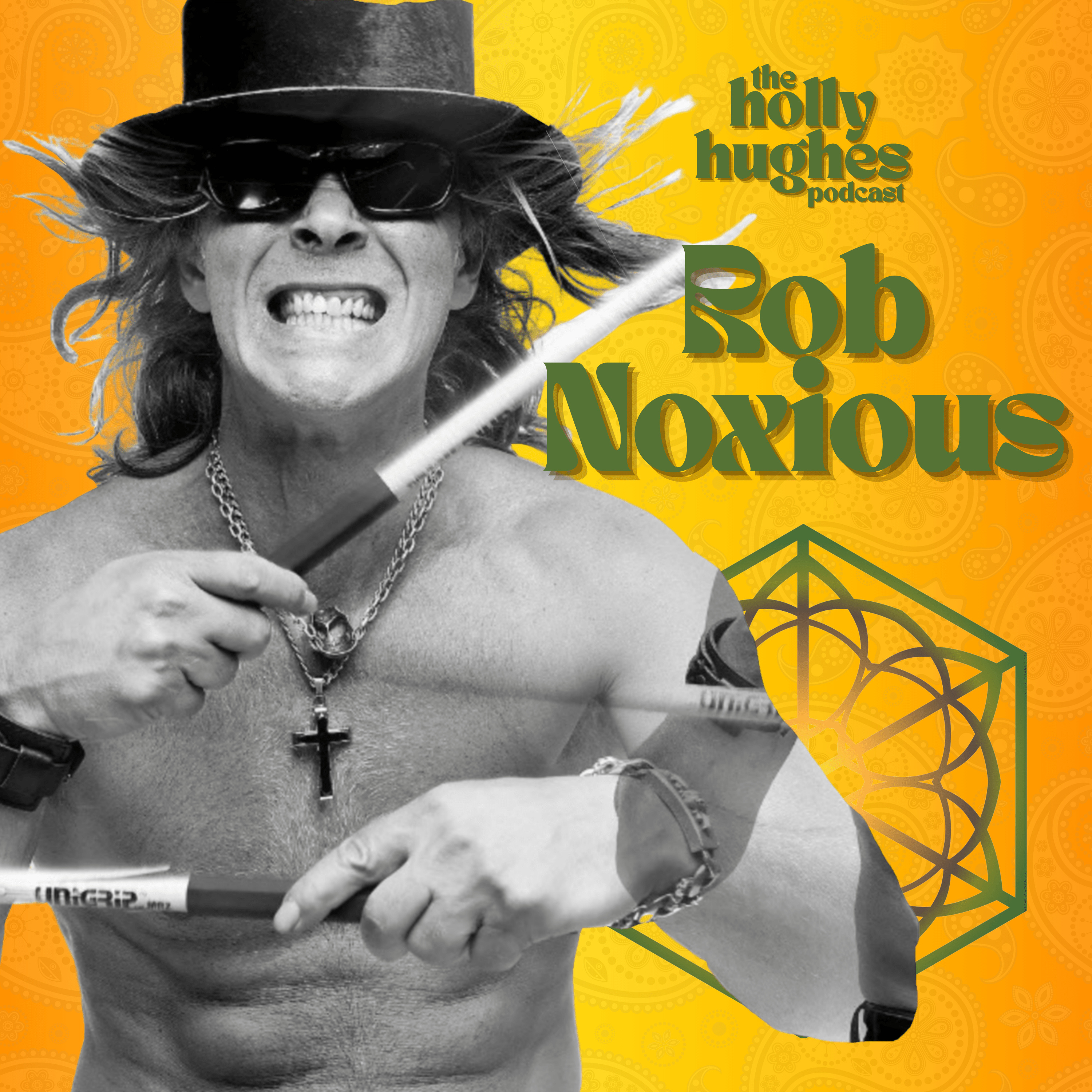
Rob Noxious joins host Holly Hughes to talk about his musical influences growing up in LA, making the move to Hollywood and launching a career in music. Rob also speaks on inventing Unigrips, a special grip for drumsticks, and the decade-plus journey it took him on. Finally, Rob speaks about balancing family life and music, as well as the need to stay fit to continue performing and recording.


How is playing drums to 60,000 people at a music festival easier than playing to ten people in a dive bar? How does a musician make it in the cut throat music industry, especially in Hollywood? Why is physical fitness key to longevity in music?
Our guest on today’s episode of The Holly Hughes Podcast gives answers to all three questions and many more. Rob Noxious is the drummer of Killcode, but has been a session and touring musician for most of his life.
Rob Noxious joins host Holly Hughes to talk about his musical influences growing up in LA, making the move to Hollywood and launching a career in music. Rob also speaks on inventing Unigrips, a special grip for drumsticks, and the decade-plus journey it took him on. Finally, Rob speaks about balancing family life and music, as well as the need to stay fit to continue performing and recording.
Find Killcode online at killcode.net, or on Instagram at @_killcode_.
See Beavis and Butthead roast Holly’s starter husband here.
Chapters
00:00 Introduction to a Rock God
02:54 The Early Days of Drumming
07:31 Influential Teachers and Musical Foundations
11:13 Navigating High School and Musical Identity
14:40 Moving to Hollywood: The Big Leap
18:11 Building a Music Career in Hollywood
22:56 Networking and Opportunities in the Music Scene
25:34 Family Life and Career Shifts
27:47 Inventing Unigrips: A Unique Journey
30:04 The Journey of Entrepreneurship and Music
35:56 Navigating the Music Industry and Copyrights
42:10 Balancing Family Life and Music Career
48:58 Experiences of Performing at Festivals
53:55 Physical Challenges of Being a Drummer
59:57 Final Thoughts and Personal Insights
0:05 So welcome to the Holly Hughes podcast. Today I have the one the only rock God Rob Obnoxious of Kill Code and we are going to talk all things long term rock'n'roll drummer career. So thanks Rob for being on my show. Of course, thank you for asking me. I'm really happy to be here. I mean, I'm excited. I'm excited. I think like we should tell people that like we knew each other, like we grew up on the same street from single digits. Yes, we sure did. Like maybe 5 houses away or something like that. My my best friend Johnny Esposito is really close with your family and live right across the street. So yes, we go way back.
0:48 Yeah, I mean, that brings me to my first image of you. Like besides being you always had swag. Like even as a little kid you like had swag. You were just like born with it. What do they call it now, Riz? Whatever. I'm I'm old. So I don't know either. I don't know what the kids call it these days and I never would have really been conscious of that. But thank you, I guess. Really. Yeah. Like, I know you, I don't my, my idea of you is so different than your idea of you. But I remember like the first time that I was aware that you played music, that you were a drummer is like when you all like, dressed up like Kiss. Oh, wow. Yeah. Like our parents used to have parties and stuff and we would.
1:30 We would. Yeah, I remember that vaguely. Sure. I mean that. That's funny. I mean, I also. I would guess you'd have to remember I played in the school band and see me up there with the big bench drum or something like that. I do remember the KISS things, yes. That was pretty funny. Yeah, that was pretty funny. And we used to scream car because we played tennis in the middle of the street or. Whatever. We we played everything in the middle of the street. Yeah, it's when Oaks Dr. Baby, that was a really great place to grow up. It is you. OK. So I don't want to jump ahead. I want to kind of go chronologically with you. So I can't remember a time you weren't a musician. When did you actually start playing drums? I'm going to say somewhere around 2nd grade when you everybody has to, like if you want to be in a school band and whatnot, you have to pick an instrument. I had picked drums.
2:25 I was studying at that point with Mr. Colabello at Fort Salonga Elementary School was, by the way. I see him still all the time, if you remember. Yeah, he's still not in town, but like, I go to lunch with him here and there. Great guy. One of my, you know, one of the main reasons I excelled in in music, let alone drums, is because I had such great teachers and he was the we'll get into that later. I mean, he was the foundation of that. You know, he directed me to the next, you know, private teacher, whatever. But I mean, I was playing guitar as well and I was taking lessons from a guy up the road on Twin Oaks Drive, but more up towards like where Tommy McCabe lives, if you remember and. With like Section 3 section.
3:07 Three, yeah, whatever it was, but it was right by Heather Drive, if you remember that. But yeah, so I was pretty damn good at that as well. And I do remember both of them ironically at the same time. And I again, I, we were in elementary school, they both, I run and they didn't know each other, but they both came to me and they said, you know, you're really, really good at both. You know, you should seriously pick one that you just concentrate on and kick ass and focus on entirely. It doesn't mean you can't do the other as fun and, and whatever. And honestly, you bring up Kiss like I picked drums because I thought Peter Criss, the drummer of Kiss, was the coolest guy in the in the band.
3:47 So I was like, all right, I'll, I'll, I'll go with, with drums. And, and that's when I just focused mainly on drums always and still do play guitar pretty well actually. Yeah. Enough to write music and, and help with things like that. With, with a lot of the bands I work with in their arrangements and stuff like that. I can, it's mainly by ear at this point, but I'm pretty damn good at it. But still, I'm I'm a drummer, you know, I'm better at drums, that's for sure. Yeah, I was out to dinner the other night and I could tell there was like a couple on a first date and the guy was clearly a drummer because his feet were moving at different rhythms and his hand was twitching.
4:28 I was like, oh, he's nervous, but that guy's a drummer. Yeah, Well, that's a, it's a, it's a habit. I don't do it as much, but even through elementary school, junior high, high school, I would like you, you can literally practice as a drummer sitting at a desk because it's all coordination. You know, they call it independence. You got two hands, you got 3, two feet and you want to do 4 different things at one time. So that's what they call independence. But like you can practice all that stuff sitting at a desk. So used to drive my teachers crazy because that's what I was doing all day. No doubt. Do you think you could actually teach someone that if they have no rhythm? Absolutely.
5:08 I've, I mean, look, I've taught little kids that you don't know if they have rhythm yet or not. First thing is finding if they're really interested because you know, you don't want their parents spending money if they're not really interested. And you can tell within the first three lessons if they go home and, and they learn what they're doing. But nowadays, unlike how I was taught, well, maybe not unlike, I really only know how to teach the way I was. And again, Tom Colabello was amazing. So like you would learn how to read music, real simple stuff at first. And he would always intertwine it like to the drum set. Again, remember we're learning on a snare drum and, and, and for starts.
5:48 But he would always take those quarter notes, which is the simplest of things. And then the 8th notes is the next thing. And he would find a popular song and he would write it out and say sit at the drum set, do those quarter notes on your foot, do this on your snare, blah, blah, blah. Next thing you know, you're playing like Led Zeppelin and you're like, holy shit, I'm really good at this. And it gets the kid, especially me. It gets you very intrigued. So you want to, you want to practice? You want Excel? Because I'm already playing. It gave you the win. It gave you the win. Right, So Fast forward down the road, like the reason I can do some of the things I do today, which like show up and play with people that I don't know and and just know a million songs. It's because I can see it all on paper in my head and it and it was all based on Mrs. Bittner and stuff like that.
6:34 It's just really. You can see it in your head. As it's like I mean I I can. Like it's up there. Yeah, like I can read charts, but like, I and you could write them out and I could use them, but I don't, you know, I get caught. Like I'll get calls these days to fill in for a lot of cover bands. Like I was telling you when we spoke. And, you know, it doesn't matter what reputation I have at this point, which is like, this guy can show up and do it. They can't believe that you can until you do it. And I mean, I know thousands of songs, you know, just from driving around with our parents in the car and listening to all that stuff we did growing up. Yeah. Like, that's why I say I can see it on paper because in my head, because if I if I can't understand something, that's when I'll have to go to YouTube or something.
7:20 And, and but most of it all flows. It's all pop music and it's it's structured simple enough that like if you know the theory it's a rock beat or it's a disco beat and you know the difference of those. It's really just first chorus, just that doesn't tempo and that's it. You just made me think, what was that movie about the drummer? And it was a jazz beat. It was like a it. Wasn't it came out not too long ago? Yeah, yeah, yeah. What the hell was it called? Great movie. Yeah. I should have looked that. I can't believe. That one of my favorite moves. What the hell was it called? Yeah. But again, he basically abused the crap. Yes, yes, the teacher was. The teacher was like a drill Sergeant. What the hell was it called?
8:05 I've seen it in a million. Times find it, I'm going to look because drumming movie. Oh my God. It's funny. I'm upset. Me. I met that, that gentleman, the actor, the teacher at an airport once when we were flying to Mexico. He was on the same flight. Whiplash. Whiplash. Exactly. Great movie. Were you ever in an environment like that? Like so you're pretty laid back. You know, growing up around you, I would say you were always popular, right? Easy laid back, had your swag right like that was like what I like saw of you. You never seemed unsure, but the other day you like even said that you didn't feel any of that. Well.
8:47 You didn't always feel like you fit in either. Yeah, well, see, so I was also like an athlete, if you remember. I'm like, it was pretty easy. I remember football. It was very easy for me to get through the high school thing. I'm like a lot of people, you'll always hear the stereotypical bullies and this, that thing. I had an older brother and I had an older sister. Jeannie wasn't too far off. She was only three years older than me and everybody knew I, you know, basically older brothers stuff. You know, they don't nobody mess with me, so I can't. It wasn't an uncomfortable thing like people picked on me. But like when we started getting into high school and I started dating like Carrie, you know, all the all the jocks and stuff, you know, hated the fact that I was, you know, and I was a good enough athlete, somebody.
9:34 Still talking about it. There's someone still talking about it. I'm like, let it go, man. It was high school. Oh yeah, and they still do, you know. But anyway, I guess the point I'm making is I was always accepted with the with the athletic thing and then I had my brothers and sisters, so nobody picked on me, even if they just were jealous of some for some reason. But as far as a musician goes, I just never felt accepted in this town because everybody just feels like, you know, you're not going to go anywhere with it. I mean, don't get me wrong, you knew my parents. My parents were very supportive, but even my mom, who's the most supportive one at all, even with my hair and in like high school and stuff, she always make me have at least that stupid, you know, like mullet cut where at least the top of it was kind of short and she would never let. And she's like, you're not playing on stages yet. So I don't want to hear it because you got to kind of have like a short hair.
10:27 And my father was more like, yeah, short hair, short hair, you know what I mean? But at the end of the day, they always really supported what they did. And after high school, they sent me, you know, I went to, I went to one year of Community College at Suffolk out here and I was a music major. I had one English class and all music classes and I chose not to even go to English and got an incomplete. So I was really a part time student. But I found this school in Hollywood that was just, it was a complete drum school. It was a tech school. And you went there and, like, the teachers there were like, very famous and it was obvious, like, yeah, I want to go there. So even my father at that point, he's like, OK, it's a year school, there's no dorms, we'll pay your rent, we'll get you out there, whatever.
11:17 But after that year, you're on your own if you want to stay there or you come home and you get a real job, whatever. So obviously, I had within a year, met enough people. I started getting worked, like in the film industry and TV industry and stuff at the studios in Hollywood. And again, that's just all from networking. So I stayed and you know, that school, I met a lot of people and I was able to get a lot of work right out of right. We're talking when I'm 19 years old, you know, in Hollywood, living on my own. And I stayed and it's. Insane. Wait, especially wait Hollywood then isn't it's not like what it. Is yeah, it was 1989. It was pretty crazy.
11:57 Like, you know, in other words, I used to say, you know, we had. Friends So wait, did you land in actually Hollywood? Were you in like, what's what part of town were you? Well, right. And it's funny, I I've just played in Hollywood recently. I was able to go back and we did a pretty decent show in the heart of Hollywood and I went to visit my very first apartment. So if you're familiar, obviously you are. I lived Franklin and Gower basically when I first moved there. Yeah, 6000 Franklin was my my first apartment shut, so I just got a whole bunch of pictures right out in front of it. And my school was like Mcadden and Hollywood Blvd. So I would walk Hollywood Blvd. every day and back to go to that school. OK, so if people don't know LA, it's like he is literally in the middle of the middle of Hollywood back in the day. So when I I mean, I moved out there, I was 22. So you had a couple of years on me, right? I think I was 20.
12:56 Yeah, 22. And I started working at Shannon Clear Films. That was on Hollywood and Vine, which I thought was right near the frolic room. It was right by. I love the Frolic Records, but Frolic Room was my favorite, craziest little place in the world. Little die, but back in the day, like Hollywood was, I don't I mean L as got a whole different thing, but the early 90s in Lai mean it was a moment like a lot of part of town has. Yeah, a lot of fun, a lot of different stuff. So many bars to play at the time. I think that's one of the hard things is like after living there for so long, like being able to go hear live music was so easy.
13:37 You could go to 1000 places in whatever part of town you were in. Yeah, it was crazy. And that's all. Like, that wasn't West Hollywood. It wasn't the Sunset Strip. As time went on and my lease would come up, I'd start gradually moving more towards, well, like the person went to Las Palmas then like Buena Vista. Next thing you know, I'm like living down on this on the strip. And I did get to play, you know, at that point, like the whiskey and the Roxy and all that stuff. So I, I can say I did all, I used to hang out at the Rainbow all the time. I basically lived there. I mean, it was a. It was a fun time. I can't like, so when I was in production, right, I was working 14/16/20 out like I was working. So I everyone's like, didn't you party? I'm like man, I was working.
14:21 Yeah, you didn't really have your own. Set. Yeah, you didn't really have time. I. Didn't get to have the fun like that. I don't. I don't know if I was even that fun. I mean, but at that point I was, I was working at a place called Hollywood Center Studios, which was like right at Las Palmas and Santa Monica Blvd. You know, they had shot all kinds of things there back in the day and, and like Jeopardy was on my lot and all that stuff, but they were part of KTLA at that point also. So I worked at KTLA Television a lot, a lot and, and also at Hollywood Center Studios. But I worked for, you know, the, I worked for the studios. I didn't work like on the films as far as like getting right like.
15:05 But as time went on, I met all those people and that's what I started falling into, was getting picked up to work a film or a commercial or or whatnot. I met a lot of line thinking that and stuff like that. Yeah, that's what I ended up doing. So I had left. I was like, this is not why I'm here. I do not want to be doing this. I want to be creative. Yeah, it's all freelancing. One nightmare after another all day. Long I would pick up jobs like in the art department on, on like Schwarzenegger movies. And the next thing you know, I'm a grip. I know some people won't even understand what we're talking about, but like, you know, you know how those things are. Like there's an air conditioner and it needs to be moved. There's 20,000 people looking at it. They know it needs to be moved, but can't move it until the grips come. The grips have to move it.
15:47 It's like ridiculous. But that that's, that's the world we lived in. So I was very fortunate. There's so many good old jokes about grips, I don't think they're like acceptable nowadays. Like, probably not. OK, so you're doing you're, you're like day playing and you're, you're like working on stuff, which is really cool. So how do you like start moving into building your career as a musician? Where did you ever do like session work there? Oh yeah, yeah, absolutely. And still do again, it's all it's all who you know, I I used to set. So if you go back to the way Mr. Colabella taught me, and then he had me go to this lady, Anne Peterson in junior high.
16:34 And then I had this guy Murray who lived in like high school. And I kind of had a little band out here when I moved out there. And I went to that school. I, I could, the way the school was structured was you punch in and you had 24 hours to punch out. If as long as you did that you were, you were an absent #1 #2 you had five main classes, one of them each day of the week, whether it was reading, jazz, Latin, odd meter, whatever they may be. And then you had what was called a reading class that was 1/2 hour. So one class was an hour, one class was 1/2 hour, but you had full, you could go into the school anytime you wanted. You could rehearse in the rooms.
17:17 You put bands together. You had to do like live playing things for credits each 10 weeks. My point is every three weeks before the end of a phase, they would give you what's on your final. So like I could read my way through this whole thing and instead of going to these classes, I went to all these open workshops that had like real famous people that were just sitting in a room that are there to either help you what your tests or just talk business with them and become friendly with a lot of these people. Next thing you know, I'm jamming with some of them. And by the time that school ended, I was getting work with like people like Billy Sheehan, who I don't know if you know who he is, but he played with David Lee Roth. He's like a monster bass player.
18:01 There was a guy named Tim Bogart. Like it was all referrals. But because of what I showed them and just got along with them, I was getting session work and I I started my own band and the band I started actually had a record deal. When there were record deals, it was like 1990. We were signed to. What the heck was the name of it? It was Madonna's record label. She's just unopened it. We recorded an album and the whole thing, and then we got dropped like everybody else. But that's when I was playing like the Roxy. And then I got in another band and and they were more like alternative and we wound up going to Europe and stuff like that. So I really can't explain how it happened.
18:42 It was like a whirlwind, but like everything just started happening at once. And when I was home, I would work. One of the guys I was playing with worked with me and basically was my manager at the Hollywood Center studio. So like if we were home, he gave me hours. If we were not there, we were both not there. You know what I mean? So I didn't have a care in the world that, you know, I didn't have any kids. I didn't have anything like that. So it was just like go wherever. It was almost like being a gypsy and home base was Hollywood, you know what I mean? But that's how I got it. I. Think it's like, well you're very easy to get along with so you like you have that right so you meet people whatever, but you were in a good place at the right time in like a magical kind of like the music then right there was like so many different genres that.
19:30 Yeah, like grunge was about to come out, the hair metal. I think the point I was trying to make with some, most of the guys I went to school with, you had a drum lab too, and you can be there 24 hours. These guys would like they wouldn't go out a lot up against I need to practice me. I was like, I can read my way through this crap already. I want to go meet rock stars. I want to mingle. And I didn't realize from a business perspective at the time, it was called networking. I thought I was just partying, you know what I mean? But I were, I were. Partying. Come on. Right. But like, during that partying, I rubbed elbows with some really killer people that I still talk to today and have thrown me some crazy work both in the movie industry and in the music industry, you know?
20:19 I love that. I can't believe we didn't know that we were both. Out. No, we didn't. We didn't for so many years like it. That blew me away. That that, that upsets me actually, because we would have had a lot of fun. Yeah, you would have pulled me out. He'd been like, you know, you're working too hard, come here. I would have done anything for some of. That, yeah. And who knows when you wrapped one thing you might have, we might have wound up working together at times too, because that's just how that all worked. I'm I'm pretty sure that's how it still works, but you know, it is what it is. Oh, for sure it. Was a big time in my life. And, you know, some days I go, I look at all the people we grew up with and, you know, they got married young and, and they started there, you know, I can't even explain it.
21:04 They did everything right. In other words, you know, and like there was a good 15 years, I didn't do any of that stuff. But at the end of the day, now they look at me like, oh man, I wish I had your wife, you know, and they're, they're old and, and, you know, bored. I think, I don't ever think. I think that was part of my thing, why I didn't fit in. I'm like, why is that the only way to do it? That's not like obviously there was the pressure to do good. That was like the pressure of like what I felt in my house. You have to do better than we did. You have to do better, right? That was like the culture inside the house. But I think like, you know, I live in the South now and people get married really young now and they have babies really young. And I'm like, or hear me out, you go figure out who you are. You go explore the world, make some mistakes, fail, try again, Go see the world while you only don't really have any responsibility and then.
21:59 That's exactly. Then you still had kids way before me though. Like, yeah, I'm just saying for a guy who lived a rock'n'roll lifestyle, you, you have a big family. I did, and that started it when I was 30, you know, which compared to who we grew up with, that's late, you know, But it was a little too early for me as well. You know, Look, I wouldn't trade it for the world. I love my daughters, but you know, it didn't, it definitely put a, it definitely put a stop to what I was doing for a little while. You know, I had to recalculate. I was telling you like there was a period there where technically I, I quit playing professionally and I started my own drumstick business and I had a day job.
22:41 There was just no time to commit to being in, in, in the rock'n'roll scene. So they had that whole thing and somehow I wound up inventing like these grips for drumsticks and you know, I was able to get it off the ground. I was selling the stuff globally, big orders to like South Korea, Europe, stuff like that. And back then it was before YouTube and stuff. It was really no way to market it the way you could market today. So it was all trade shows and again, meeting people. I met a ton of drummers because I was endorsing some pretty big, you know, stars and stuff like Tim Mcgraw's drummer and stuff like that.
23:30 And that all went away when my partner just wasn't doing anything and I was doing everything, you know, I got tired of doing everything for half the money. I tried to take the company alone when I moved back to New York when it was just too much to do. And I went back to play because I kind of needed money, you know, And that's when I started playing again. And the second, the second leg of my career, I remember the. Name it was called unigrams. I just love it like unigrams. We might have to resurrect it. You're, you know, you see you. Got time. Now. That's a funny thing is I still have a basement full of these things and I can't personally play around drumstick ever again. And I have.
24:13 I'm the only one who has them at this point. But yeah, I was selling them. Sam Ash, Guitar Center. We were all over the place. So you know that that, that that's an odd story, but like the way that all came to be, and this is pretty funny. You talk about thinking out-of-the-box and how you can make shit happen. I had a buddy who was a drummer out there, which I had a million of them. He had a cleaning company. You know, he, he, he cleaned some like movie. He cleaned carpets and floors and he had some, you know, one of his clients was each movie star, a guy from The Godfather, Marlon Brando used to play chess with Marlon Brando, right?
24:57 So he had accounts like that. And then he also had like corporate accounts. And he had this thing was like a bartering system. Like you, you wouldn't like me and you barter per SE, but you would go clean somebody's limos or something. And then like if you wanted to use the barter system, if they were within it, you could use it for something else. Make a Long story short, I had a dream and, and it was when we were really young, like I could've, I don't even know it was a dream. I could've swore I seen one of these things. And basically when I moved to Hollywood, there MTV started doing like that unplugged show where all the bands would come on and play like acoustic and there with Promark drumsticks made. This thing is called the hot Rod. And the it's all, it's a bunch of it's a bunch of dowels like little say bamboo.
25:48 They're not bamboo, but say Birch sticks and they're shrink wrapped together. And the way they form it causes a hexa grip which like kind of fits right in the digits of your finger. Way before that I could have swore I saw one growing up like, but it was a, it was a yellow grip that you put on a stick. So now you could play it loud. I, I did like patent searches at the time and I had to, we had to get a lawyer, which will, the whole barter thing will come into play. This is why I haven't had the partner in the 1st place. And I kept telling I'm like, there's no way it's that it's out there. I saw it like 1520 years ago when I was a kid.
26:30 And sure enough, there wasn't. So she's like, let's go for a patent. So we bartered this, this woman to do like a $23,000 patent, which we would never going to clean those carpets and, and floors to ever pay that back. But sure enough, we got the patent, and that's how that whole damn thing started. I love that. Yep, that's how it all started. Yeah. Like you can't, you can't really put a business plan like that together. All you can do is take advantage and make moves on opportunities that are in front of you. You know what I mean? And that's how that all came to be. And honestly, he was the one like, hey, you can get a patent, BI got AI, got a lawyer that can help us. So down the road, I I wound up having a couple of other patents on a couple of products.
27:17 I won't go into too much detail, but I wrote the patents myself because I, I saw how she did it and whatever. I didn't have to pay all that money. All I had to do was pay the filing fees. So that company was a, you know, we were in existence for a good 1015 years. We used to do all the NAMM shows and stuff and it was a really cool period of my life. But you were always making music, so I want to talk about like, do you? I'm assuming you write your own music too. I have. It depends on the situation. Like I always tell myself I'm still sitting on like a whole bunch of music that I wrote on my own that's never been used with any of the projects I've been involved in and whatever. And one of these days I'm going to get in the studio and I'm going to make my own album.
28:02 And I'll get a bunch of guest players that people I know that are somewhat famous to like be sing on this song and play guitar in this song. But yeah, my whole thing is I learned at that point when I got out of of the Unigroup thing that AI need to make some cash. So I need to take advantage of the fact that I can play almost anything and play in cover bands because cover bands get cash and they go home. They don't go on a bus and don't come home for three months and then wait for checks or things like that. But I always had to have this creative side to me, so always needed to be involved in like an original ban.
28:42 And when I moved back, I mean, I was in several of them, like I explained in in Hollywood, and some of them were successful, but it was a whole different business then business totally changed when I came back here. I needed to have both avenues. So this is probably to time it stamp it. My world, I'm not my world. My space was the thing. It wasn't even Facebook yet. And there was a band forming that was in a couple of different pretty well known bands from the New York scene. And those bands fell apart and it was a band forming and they were looking to get a drummer. So they weren't a band yet. They didn't even have a name. But I recognize who they came from.
29:24 And my whole thing was at that point, I need a cover band to make some money and I need to have my creative outlet. And at the same time, these guys look like will at least get to play some of the big rooms in the city and I'll get noticed and spin that off into another big game just while I'm trying to get my, you know, being from here, you would think it would be easy to move back. But I moved out there at a time where I was so young still, I didn't do anything with anybody out here. Nobody knew who the fuck I was, you know what I mean? So I needed that. And in all reality, and we put together, that's when Kill Code was formed. And it it, it's just is, it's five guys that had no business meeting each other.
30:06 And we did. And we wound up just kicking ass right out of the gate. We all had really good connections. Some of our big first shows were like at the Rhode Island, like Dunkin' Donuts Arena, like opening for Godsmack and stuff like that. It was ridiculous. That's. Insane and every opportunity that we ever got, we showed up and we kicked ass. So we doubled our fan base. All the opportunities we wound up getting down the road in Europe and all that. All those big festivals, most of them were to strangers, but then we kicked butt and everybody liked us some. But yes, that's all original and we all write the music together and you know, we would get in a room and, and this guy would have, there's no like equation to it. But if somebody would have an idea and then we just start playing and all of a sudden becomes a song. Sometimes I help with lyrics, sometimes I don't have to. It all depends on it.
30:56 But together we write really well without each other. It's not the same, you know. So knock on wood, that's, that's been my bread and butter. We've, we've been able to land some and here's where the where the money is. All the nowadays is all in publishing and we've been able to get some TV spots and some good movie spots and stuff like that. So. That's cool. Like so if people aren't familiar with killcode, I can tell you like your music is like, you know, it's rock, it's met. It's like hard right? But then you also have Skitch and then you have the wrong side, which is chill. Wow, you know you did your homework. Yeah, you did your homework. So right. Yeah, the name, the name Killcode itself sounds a lot heavier than the band is, but yeah, so Sketch is funny.
31:43 You bring up Sketch Sketch. That song actually was the first song we ever got in ATV show. So I still get a little bit of checks from that song. And then we have beautiful songs like the Wrong Side. See, there's no rhyme or reason to it. You would think The Wrong Side would be making me tons of money. It's not Sketches, you know. And then we have another song, Bleed, that just came out in the new Schwarzenegger. No Stallone movie, it's called. The movie is called Armor. The movie is called Armor. Yeah, it came out in like November. So there's probably already right to to streaming, but I'm already seeing checks for that. So you just, you never know. You know what, we we never wrote anything like this is one we want to send to a movie.
32:25 Like we just have a publishing company and they pitch all our shit, you know what I mean? And they find placement for it. So how do you not get screwed by that? Like honestly, right was like, because a lot of people sign that, like new artists nowadays, I'm watching because of TV shows or they'll hit a viral moment on social media and and I always leave in the comments, keep your rights. Like, yes, give those away. But that's a hard thing for people to be like not get sucked into. So how did you all keep your head straight with that? Like well, we didn't sucked in the way the business was changing and it was changing so fast and I'll be honest, which is the way the business has changed like since kill code formed say this guy like 1516 years.
33:15 It's a the friggin business already has changed like 3 times yes, no matter how the business changes, you have to keep your right. So you have to copyright your stuff on your own. Don't let a label get involved in any of that. Every time you release a piece of music, you make sure that you guys, in our case is five ways. Our names are on it and now that just to not to beat a horse, but. Like, do you all split it even or is it like the person who wrote this? Like, yeah. No, we're all 555 ways, 20% so love. It. Then the streaming thing came in where nobody was buying downloads and you can stream shit and now they've made it where you do get paid for streaming.
33:59 So like YouTube, Spotify, all that stuff. YouTube is basically like ATV channel now. So if your if your songs hit a certain amount of spins, they start throwing advertisements on it. And sure, people can skip the advert, but once you start seeing that, that means you're generating money, you know? So it's all based on how many subscribers we have, which by the way, everybody please sign up for Kill Code Band at YouTube, because we really don't have a lot of people on there. It's crazy. We got a million fans and people just don't hit that subscribe button. But yeah, you get money for the amount of people you have on there and then the amount of hours of spins are, and then each individual thing. And the same thing with like Spotify and stuff like that. So we do see incremental checks.
34:46 But it's funny, if I showed you like my quarterly things like, you know, you get $0.10 for this song from this amount of spins and but it adds up. You know, the TV shows and the movies are the other other big things you know and see. They do it, People ask. Me about my book, they're like how much money you making on that book? I'm like baby, like an e-book. You get like a fraction of a penny. Right, right. So, so in my case, like that's why I say the money's more with the TV and stuff because we have a publishing company. He pitches our stuff. If he lands somebody who wants it, you basically a get a sign on fee. So you get money up front for them to use your music #1 #2 then it starts being put it into the theater or whatever it may be on TV and then you'll start seeing it goes to Hulu or whatever. So your statements say like, you know, the The Rookie is one of the shows we're on and now it's to be aired on Hulu and whatever.
35:42 So like this month, this many spins on on Hulu or Netflix or whatever, and that's where we go. But you get money up front putting it in there. Now you have to protect your publishing. We pay the publicist probably 10% to land it. So he gets 10% of our sign on fee. And then you know, we, I don't think he gets 10% of the royalty stuff. He basically just gets to sign on. But it's all, it's like anything else. It's all, it's all how you sign the deal. If he puts in that deal, he's taking 50% of it and you take it, you're giving him 50% of. It yeah, you gotta be tough. You gotta know how to say no. Yeah, during those things, 'cause it's so excited.
36:23 You're like, Oh my God, I'm discovered. I I know. It's like when people are like, hey, can you work for free? No, I mean, I could, but I'm not going to, right. Thanks for asking. It's like, yeah, don't ask artists to work for free. It's a lot of work, man. We know it's not right. Like I think I was thinking of Nabster. I think Nabster changed a. Lot that started it right and so that was the beginning of people being able to stream and listen to your stuff without having to purchase it and thankfully down the road somebody changed something in in Congress or whatever and you do get paid for streaming now but the streaming platforms were smart and they went out and just like ATV station they get people to pay for advertisement.
37:06 So that's why like, you know, if if you start seeing advertisements on your stuff on YouTube, that means you're starting to generate some sort of money, you know? So like, how did you do love like family and music? Like, I know you sacrifice some of the music to like be the man like his. No one could like ever say that you're not like, you're not a Mensch, right? Like you're such, you're a good man. So like, how did that like, feel for you? Like that balancing routine being like, you know, I have to be responsible. So I can't quite do this part of the business anymore. This is a, this is, yeah, this is a great conversation because it's going to bleed into what we were just discussing. So again, I really only have success and know what not to do based on the states.
37:55 So I had mentioned when I started having the kids, I had to like I fell into this situation. I was going to start my own company. I couldn't do a band or or be a musician out at night, put the extra time after my day job into all three things. So like, I had a day job which I had to keep for, you know, insurance and stuff for the kids and I had chose to start my own business with my extra time. I got hurt on my day job. I wound up getting workers comp at a killer time because I was able to take that time and really get the business moving. And then it got to the point, like during that time, I would get a lot of people asking me, you want to work, you want to play this, you want to do this gig, you want to do this album, you want to do this. And I got really good at saying no because honestly, I had to say no, I don't have the time.
38:51 And I'm not the type of guy who's going to take somebody along and say I have the time and then do it half assed when you say no. Like we were just talking about all of a sudden my rates went up because people would come back, Oh, what if we pay you more? And believe me in that, in that in that time where I said no, there's probably a few things I probably shouldn't have said no to that will create opportunities. Do we want to bring up puddle of mud? Because, you know, this is like, I'm like, I'm like. Well, yeah, you didn't do that. That's one of them. It was during that time. And the guy's name from Puddle Of Mudd is Wes.
39:32 So Wes is just, Wes is just some other guy. Everybody knows that. I don't know him, but he's got a band and he got signed by capital or whatever it was and they need a drummer and he's got $1,000,000 deal. And you know they'll pay you this much to go in and do the album. And again, there's so many people at that point. This is like 2001 something, 2002 people just getting screwed by the record label. So I didn't even want to hear that. And I said if I would record the album, I remember saying, but I want like $5000 and I don't want anything to do with the future because there ain't going to be no future. You know what I mean? So they were like, now we want a guy to come in and be the drummer. It's that type of band. I said I understand, so I'll pass. And we all know what happened with Puddle Of Mudd. They became a huge band.
40:18 So like, I was very confident that I made the right decision. But you know, at the time it was the right decision because I probably couldn't have gone on a bus and gone anywhere. So you know that that like I said, most cases saying no help me. But in that case I probably lost a decent amount of money. And even today now, with all the streams of their music and stuff, if I was the guy in those videos, I'd be getting some really good checks, but I don't. Know but you you you had a good life so. Yeah, I just. Remember hearing that I was like, what? You didn't go to polo mud? What are you thinking? I don't regret it. I at the same time around that time I ghost drummed on a whole bunch of really popular. So then I got I got paid fat money like just to be the ghost drummer and walk away, sign the contract and never say I was their drummer for like 20 years or whatever. So like for?
41:10 I really can't. Interested in doing that. Like what kind of money is that? Like if you don't want to say, you could just give me like. Well, at that point, so this one, this one band who like they were, they were frigging huge youngsters. They were way younger than us even at the time and now they're already you. You can put them in the category of the washed up but comes out once in a while and still sells out like really big theaters and stuff. They have 1,000,000 of streams on their videos and stuff. At the time they really only it was only really a question of like 3 songs that they needed done that the young drummer was like believe his kids better than me. He's a Psycho drummer, but he wasn't inclined to really play into a clique and the style they wanted for that, those particular songs.
42:02 And I had met that producer of the album playing with this other Psycho band called So So Human that the drum stuff in it was incredible. It was like, and that's pretty much the the gig that broke me out of retirement because when I had Unigrip, I was trying to get every one of my endorsers to go audition for this band. I, it's like a like a record label. I would get a million bands that would send me stuff. And I was blown away by the talent in this band and the songs in this band. And I would go to some of my biggest players like Nick Menza from Megadeth and Bless the Soul, he's not with us anymore. But like he's like, I don't even know I could play this stuff. I don't know. I'm too old. I don't want to do it. So like, I wound up just going down to the auditions, you know, just to see if I can pull it off and I've got the gig, you know? So next thing you know, I'm like on AI was on a bus with these guys and open it up for bands like Mudvayne and whatnot. So that producer who I recorded some songs with for their album wound up the, the producer for this, this band that I'm Speaking of.
43:08 And he was the one who was obviously hitting the wall time wise and money wise with the young drummer. And he knew I could play to a click. He knew I could do that style. It's just again, it all lined up. So he's like, would you come down? And I negotiated $1000 a song, you know, And that's, that's what I got. So I I made $3000 to record 3 of their biggest songs and you know, if I was that drummer I'd probably have about $3,000,000 you know what I mean? But it is what? It is. So if you do that, do you not get a part of the back end because you're? Not no. Well, again, it's all it's all it's all what you signed. And it's funny you say that because it's, you know, the 20 year mark had come up and, and they wanted me to resign it because they were going back on the road like a reunion thing. And, and I did resign it for another five years. But I'm getting ready to renegotiate that because I want a piece of the spins and I want backpack. So I'm talking with a lawyer now. They may tell me to go scratch.
44:12 We don't care anymore. You can tell everybody it was you or they could cut me in on that. I mean, I would imagine. Dealing and it just makes sense to cut you in at this point, doesn't it? It really. Does it? Might I mean not that. Anyone in the industry does that. I won't. Get another lump sum of money I'll just start getting points on that on that on the spins and all that stuff just pretty well I'll tell you I'll tell you offline who they are and I there's. Been AI think I remember who it is actually. There's been a couple of other ones because of thanks to that producer. You know, I can't really mention their names either. They weren't as as poppy and as big as these guys became, but they're pretty damn popular and they're pretty good, good bands.
44:55 And I made the same amount of money about, you know, that became my rate at the time. But this is like 20 something years ago. So I mean, now that rate would probably be 7 to 10 grand a song for a situation. I was like add a zero man, you would need to add a 0. You gotta remember at that. Time like to play if there's a big money then so what's it like to play a festival? I always wondered what it's like on stage compared to like being out there. It's a pisser. So many people are coming and going. It's a pisser. So it's like, first of all, forever. First of all, you're playing with bands that you idolize and you can't even believe like, especially when you're in Europe, you're playing with bands you haven't even thought of, but you saw as a little kid at the Coliseum and stuff like that.
45:39 Because they're still big out there and they're the main ones. I mean, look, we toured with Twisted Sister when we were little kids watching MTV. Like who wasn't waiting for D sider to come on TV? You know, now I know these guys. But so as far as playing in front of all that many people, I'd say the biggest show that I can recall we did was in Mexico City, honestly. And it was like 60,000 people and we were kind of early on in the night, not way early, but by the time, by the time the main bands went on, the last bands went on like Rammstein and stuff, it was 85,000 people I think was the Max. So we play in front of like 60,000 people. It's not even real.
46:24 You know, they have the jumbo charms, you're on the jumbo charms. You see all these people. I tell you, it's more nerve wracking playing in front of 10 people in a little room because they you can't really communicate with these people. It's so massive. It's it and it's fun. Like you just bouncing around, watching other bands, staying in hotels. It's you meet a lot of cool people. I've made a lot of friends all over the world. And, and you know, we've been fortunate to go back to Germany several times and the UK several times and Switzerland and out there it's kind of small. So you meet people like in Spain that are from Germany and vice versa. Whatever. So now I've got a lot of really, really great friends and, and good relationships of people that they're not just, you know, they're not just fans.
47:12 They started out as fans, but they become friends. The big thing about Kilco, it's, it's a big family. You know, we, we, we love them just as much as they love us. So, you know, we hang out with them, you know, we walk around the campgrounds because most of those things are, they camp for three days. We'll go walk around and drink with them at their tents and shit. And that goes a long way, man. People are like, oh, those are those guys. They hung out with us. We've gotta get over and see. You know, they come to your merch booth, they buy all your stuff. So it's a lot of fun to answer that. Do you make good money as a musician with merch? Like do you guys get a good part of that? Like we, we can we we you make your most.
47:52 Yeah, for the most part we control all our merch and all our publishing. But when you do festivals like that, you, you can't run your own merch table, kind of like even some of the smaller places out here, like even the Coliseum or Jones Beach or whatever, the venue gets a piece of it because they're running your merch. So you count it off, you give it to them, their people run it. And at the end of the night, they take their piece like 15% and you get the right, but it's still less. It's good money, yeah. Like I'm still trying to imagine like being on a stage with like 60,000 people in front of me. I I don't I know you looked at some videos and stuff. This is 1 video of us before we go on on that in that show in in Mexico City and we're standing backstage waiting to be announced and we're looking out like this is fucked up. Like do you see how many fucking people are out there? Are they even gonna like us?
48:46 You know, like it's, it's pretty crazy. But like, I'll tell you what, it's like you remember when you were. Kidding. Do you feel safer because you're behind the drums? Like, you know, you're like, you're kind of back in that or. I guess is it? Just as. Intense, I guess, but the adrenaline starts going and stuff and you just, you just do. You're saying, you know, And like I said, it's not like playing in front of 10 people where they're staring at you watching every note. Yo, you made a mistake or something like that. It's just a free for all. It's, it's, it's, I tell you, the feeling is kind of like it's like when we were kids and you went to like great adventure or something and you went on the best roller coaster you ever went on and you'd like went in the loop, the loops and you come off with this adrenaline high. That's what it feels like. It's like I'm I'm.
49:27 Gonna guess it's better than. That yeah, it might be. I mean, it's just like, did that happen like that? That was just insane. And they're screaming back at you like we always have this thing, 'cause honestly, my singer Tommy, he comes from like a hip hop background, so he loves hip hop. He used to be a break dancer and all this stuff. Nobody he came up with this little, he came up with this little kitchy thing we used to do in New York City a lot. And he said, when I say kill, you say code kill and everybody goes code and like you do it in front and they all they don't even know who you are and but they love interacting and doing it. She has 60,000 people yelling told it's like it's pretty fucked crazy. It feels good that. Is awesome, I'm no doubt all right.
50:08 So going from feeling good to like knowing that we're now past or in our middle age, how do you physically manage like touring and how do you physically handle being a drummer? Because that is all your body going. Like I know, I know how much PGI require. Like, you know, just getting out of bed, I'm like every part of me cracks. I've got 1000 old injuries from dancing. So you still are super active as a drummer. So what do you have to do to take care of yourself physically to keep going? Good question. I mean, I've been better at it at times. There's definitely you should be staying in shape. I mean, what I do is pretty vigorous, especially in, in front of those big crowds.
50:54 But I mean, like it all depends. Like we're, we've been fortunate. We've never really been that band that gets in a van and, or a bus even and towards 50 cities and it gets exhausted. You get sick of each other and whatever. We do a lot of what's called fly dates where we'll fly like 1 summer we flew to Germany, I mean to it to, to Europe 7 different Times Now. We could have stayed out there for two months and just did it. But like for festivals, pay for the flight. So we'll fly out for like 3-4 days, play a huge show and if I had a festival, fly home, recoup, go back out ten days later, do it again. But either way, it's exhausting and you have to, you have to stay safe.
51:36 So like, do I work out? I don't work out like a muscle guy, but like I I do a lot of running for cardio. For me it's more stamina. As I've gotten older, I definitely have like arthritis in my hips. I have like arthritis in my ankles and stuff like that. I feel fine when I start moving. It doesn't really bother me when I'm playing, but the next day I feel like an old man because you overexert yourself when you're in front of all those people and you forget how old you're. So I always say like, OK, I'll be right back. I got to go act like a 16 year old for about an hour and I'll I'll see you after the show. But that's pretty much what you're doing. And your body doesn't heal. You know, the way it used to, like you used to go workout and you'd feel sore for a day if you did your chest and then it goes away.
52:20 Now it's more like two or three days. Is that that is certain. So when you're not active, you got to kind of stay on top of your stuff. I, I, I eat a lot healthier. I'm a lot more conscious of that stuff. I do take some supplements, but nothing crazy. That's, that's it. I drink a lot of coffee. Do you have like a biggest fear of like, of not being able to like, play like, like? I think if I were you, I'd be worried about getting arthritis in my hands. Yeah, fortunately, none in my hands, a lot in my hips starting to get in, in my feet.
53:01 Of course, there's some stuff with my arms at night, they'll go numb and stuff like that. This is all wear and tear. I mean, my fingers, like they're bent. They don't even like, they're not even straight anymore, but they don't hurt. Mine are mine are bent and I don't do that. I don't know. But yeah, but. You're telling me I'm a secret drummer or musician? I just never. I do fear it and that's why like as time goes on, I don't fear that I couldn't make money playing my drums for the rest of my life. But at certain levels, no. Like, like I could probably do what I'm doing with Kilco for some time still. But if you asked me to join like Metallica right now, I don't know if I could physically pull off at 4:00 with Metallica, probably be hurting pretty bad.
53:52 So I don't think I would even consider taking it. But yeah. And as they get older and older, I would probably tone down those type of big events and just do the smaller tanks, you know? And unlike an athlete, I should, I should be able to do it for a long time, you know, it's not like I'm a football player, you know? So are you going to be touring anytime soon, like in winter or anything? Where are my? Plans. Or you know, it's too soon to know. Next summer we will have a lot more stuff back in Europe. It's odd because like we've had more success with Kilcode overseas, like in the States after all this time, we've yet to really done like the Southeast. You know, we've done California, we've done South Dakota, we've done we even go to Puerto Rico quite often. So it's not that we don't have fan bases down there. It's just the money that's been offered has never really been appeasing to go.
54:49 But tour wise, like I think it's it's next summer mainly is going to be Europe again, then maybe a few Mexico things that I know of coming up in, in the winter time like in November, stuff like that. And it'll be announced when when it's all you know said and done, but can't really say that yet. I love that. Oh my God. I just thought it was something really funny. So we all know I had a starter marriage, which is what I call my first husband. He was a starter marriage. But one of my my crowning achievements or revenge thing was I was working with MTV Films and it was like when Beavis and Butthead existed. Another thing that couldn't probably exist in today's world. Loved that.
55:30 Show but he he was a in in the art department on come on feel the noise and their actor didn't show up that day. So he ended up my starter husband sort of marriage. He ended up being in the video. He's the guy, get shook on the bed and then be. The Quiet Riot. Video yeah, yeah. And Beavis and Butt Head. Yeah, they, they rag on him. So everyone knew at MTV that I was getting divorced and he was unpleasant at best. That's like, he was a total anyway. But, you know, I liked broken people then. So anyway, so there's this whole video and they gave it to me like I used to have it, like on tape, but it's Beavis and Butthead making fun of him. They're like, oh, look at that idiot. Just make, look at.
56:20 He's such an ass anyway. And I was like my crowning achievement of my time at MTV Films. But anyway, yeah. I mean, now I'll. Find it. I'm sure it's on YouTube. YouTube and. Find this video Yeah. We'll have to. So we will definitely leave the killcode Spotify stuff here. So, you know, that's important and where they can find you on YouTube. So thank you, Rob, so much for being here. We know this is how I like to end on my podcast, which is my favorite question. Drum roll. Come on, give me my drum roll. You're the drummer. Thank you. If you came with a warning label, what would it be? Oh, I like that.
57:03 Well, let's see, can I have a couple of warning labels? Can I go for it Let? Me think all right, well, I would first try saying and this is goes on in life a lot like don't mistake I guess my kindness being humbleness and a silly sense of humor for weakness at any point in time. Don't mistake me not jumping into a conversation and being a good listener for like not already knowing what to do. I like to listen to people and, and let them kind of in, in a way it's a good thing because I, I guess it's really not a warning. It's, it's kind of like I'm my, I'm man enough to want to hear everybody else's.
57:45 Even though I may know and have experience. I, I like listening to other people's point of views because they might be smarter than me. And the only other one was, which I was given by a bunch of people aside from this crazy nickname of mine. They all say I'm 140 lbs of sheer terror. So that's my warning, right? I like that. Yeah, that one is definitely true. Yeah, you're totally true. I love that. It's so good to connect with. You, Oh my God, yes, it was so good. We have to we have to stay in touch and I can't wait. I can't wait to to see you again. And it was really good. I'm so happy you called me and best of luck with your podcast and any way I can help let me know.