How to Get Rich for Being Funny Without Being Famous | Judy Carter, Comedy Bible Author

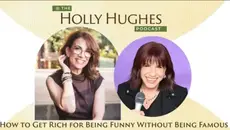


This week Holly sits down with Judy Carter, comedian, comedy coach, and author of The Comedy Bible, to talk about how to build a creative career, make money being funny, and turn your biggest problems into your most bankable material.
Because here is the thing: your problems are not your problem. They are your material.
Judy has coached Seth Rogen, Taylor Tomlinson, and Lisa Lampanelli. Her book has sold over 200,000 copies and been published in nine languages. She got rejected by 59 literary agents. Then Oprah called. She has been broke, she has been brilliant, and she has figured out the exact formula for turning your mess into your most bankable asset.
We talk about the psychological tricks she uses to dominate any room, why the richest comedians are people you have never heard of, and why everything you think is wrong with you is actually your ticket.
Oh and we also completely destroyed The Giving Tree. You are welcome.
What you’ll learn in this episode:
-
The trick Judy uses to own a room in the first 30 seconds
-
Why your anxiety, your dyslexia, and your people-pleasing are not holding you back. They are your content.
-
The four words that make anything funnier instantly: hard, weird, scary, stupid
-
Why the comedians making the most money are literally people you have never heard of
-
How Judy made 50 times more self-publishing than she ever did with Random House
-
The $2 billion comedian who only performs in churches and what that tells you about niching down
-
Why chasing fame is the worst business plan a creative person can have
-
How she turned her direct competition into her biggest collaborators using one counterintuitive move
-
The real reason imposter syndrome might actually be your biggest competitive advantage
-
What a comedy career, a nursing niche, and passive income have in common and why it matters for you
We talk about:
-
00:00 Meet Judy Carter: comedian, coach, and the woman who will rewrite your life
-
01:00 Is AI funny? Hard no. Here is why.
-
03:00 Why influencers can do five minutes but not an hour
-
05:00 Planning versus presence: why your carefully rehearsed set might be killing you
-
07:00 Ride your talent like a wild horse or get thrown off
-
09:00 The subliminal psychological trick that makes any corporate crowd yours
-
11:00 Making them applaud twice and why it changes everything
-
13:00 Why she touches the MC every single time and what it transfers
-
15:00 Growing up with a disabled sister and a drunk dad: the real origin of her humor
-
17:00 Imposter syndrome is not your enemy. Here is the reframe.
-
19:00 Hard, weird, scary, stupid: the four words that unlock comedy in any context
-
21:00 Getting a laugh every 15 seconds: how corporate speaking actually works
-
29:00 The New Comedy Bible: turning your worst moments into punchlines
-
31:00 Making Money Being Funny: the book the industry did not want her to write
-
33:00 Why self-publishing made her 50 times more than Random House ever did
-
35:00 Famous in a niche versus famous to everyone: which one actually pays
-
36:00 The $12 million nurse comedian and the $2 billion Christian comic you do not know
-
38:00 59 rejections, one Oprah call, and what she learned from all of it
-
39:00 Royalties, intellectual property, and making money while you sleep
-
42:00 Empathy over jealousy: the move that built her entire career
-
43:00 Calling your competition and making them your collaborator
-
47:00 Her warning label: caution, time with Judy Carter has been known to cause unexpected career changes
Connect with Judy
-
YouTube: https://www.youtube.com/c/judycarter
-
Website: https://www.judycarter.com/
Connect with Holly
-
Instagram: https://www.instagram.com/holly_hughes_intuitive/
-
Get Holly’s book here: https://hollyhughesintuitive.com/my-book/
-
Website: https://hollyhughesintuitive.com/
0:11 Welcome to the Holly Hughes podcast, where curiosity meets creativity. It's a place where creative people from around the world connect, inspire, and get real about living life outside the corporate box. Today, I'm so excited because we have Judy Carter. She's a comic, a keynote speaker, and an author who sees humor as a superpower. Welcome, Judy. What a great intro. That was the best intro that AI ever wrote. I know, right? I decided to stop fighting it 'cause my creativity just wasn't hitting the mark. I was like, all those hours of sweating over 15 words and and people on Instagram and stuff are like, Nah, next whatever. I was like I realized AI needs to talk to AI. Is AI funny?
0:55 Judy, I don't know. You tell me. No, no, it's not funny. It's not funny at all. If you're a stand up comedy, you're using AI to write jokes. Oh boy, it's, it's it, it's idea of what is funny is so detached. But you know what it is good for? It is good for brainstorming premises. If you're a comedian and you know, that's primarily what I do and who I work with and everything is, is I love it for some ankles. But then you take some of the ideas you get on your feet and you put some what we call soul. It's a little, a little life. Isn't that cool?
1:36 Like the one thing that it can't replace? Yeah, sure, bye, bye. But comics here to stay. I I like that. I think, you know, my thing is also the difference is I love doing the podcast and having a conversation and going back and forth and I've been hired. I used to speak and everyone's here so different on stage. I was like, 'cause you make me stand up there alone. I have no ability to connect individually, which is what I like, and instead, because I have the woo woo, I could feel the rooms neurosis and it's overwhelming it. I just start flop sweating. And then I was like, is that what my voice sounds like? Or one time I got called high maintenance because I asked for a podium. I was like, can I have a podium? They're like, you're really high maintenance. I'm like, I guess so I brought my own music stand. I was like, so is that how do I turn that into comedy? I just can't.
2:27 I just can't. I don't, I don't have that, that timing thing. Do you need to have timing or can you be taught it? Can you be taught timing, like timing timing. Yeah, exactly. Here's the thing that I have always discovered is that everybody can do one minute of funny and live people do 5 minutes of funny. So what's going on right now is that there's a lot of content creators and influencers who are getting very successful on the talk and the gram and they're funny. So then they get booked to do like headline and the comics are all bitching about this.
3:12 They're going like, yeah, they get everybody in the door and but they cannot sustain. And so that's been a a a problem, but you know. Are you going to help people with that problem? Is that what the new book is? Or are you just going to let them flounder and let the comics keep their own to territory? Well, I think they're not floundering, you know, I think, I think everybody needs a live show because we need to get out and be with an audience. Like last night I had a gig and you could tell who has been just kind of posting online because they're kind of like robo comic. I've memorized this and I'm pretending you people in front of me don't even exist. I was talking about this 'cause I do an insta live every Tuesday and.
4:00 You do. You also do the finish my line thing. Oh yeah, yeah, finish a joke Friday, which we have I I give free privates away and actually on Tuesday it's just essentially free coaching on Instagram at every noon. It's the one thing I've consistently have done and it's just been awesome because I've, I've met, you know, comics from high words in, in Syria at a comedy club. And oh, sorry about the shots in the background. But you know it's. Just what what it's been amazing. But what I what I'm saying is to really do comedy, you have to have some kind of talent. I'm sorry, people, that you can memorize knock, knock jokes or whatever you can sustain for a minute, 5 minutes on stage. But to go past that have to have talent because, and I was talking to a comic last night, Dana Eagle, about this, about how when we plan our act, when we plan it, we're in fear. I don't know if this will work.
5:03 Will this work? Well, maybe I'll jump to this joke, then this joke and then this. So we're in the state of fear when we are in rehearsals. I I think anybody listening to this, wouldn't you agree? Oh my gosh, yes. Again, you just said that in the whole thought. I'm like, I got the sweat, the boob, the under. I just start sweating at the thought of that. Right. Isn't it, it's it, it's you're planning, but you have this critic in your head going well, that's not going to go over. Maybe it will. And and there's a lot of anxiety in creating material and writing material. But when you get on stage, you have to go fuck it. You just have to go fuck it and be present with the audience.
5:47 If you forget material and you're riding your talent like you're on a wild horse, that means that material wasn't meant to be done. You've, you've got to like play. You got to let go of the structure and the ideas and get on stage and you've done the work and you got to ride your talent like it's a friggin wild horse. And like last night I was doing a gig and someone said something that pissed me off and I was like present. So I just went, I just went off on it. It was like, because I'm a boomer and the crowd was really young and I said. You scared them.
6:27 Hey, I'm a boomer and someone said or something like that, right? And I said, well, you can just call me homeowner. And I said that's right. And we're staying. We're like cockroaches. And I just went on a riff that was so unexpected. We're not dying. We're going to stay here and suck up all the resources. And look at me right now. I'm taking a spot at a comedy club, so fuck you up and it just came out and the audience was on the friggin floor and you can't plan that kind of stuff. And you wait.
7:07 I'd like to tell people who cannot see you first. You're the cutest face ever. And you're like a petite little. You're just like a little tiny person. You're like little. You're tiny. You're California small, for God's sakes. You're so. God no, I'm not like wicked tiny. You're wicked and you're wicked tiny and forget about them. There's no So I want to know, did you get into this fire pit? Did you have your baseball cap? Because I know when you put your baseball cap on backwards, it's like a whole other woman comes out. Oh, that's interesting. I like that. I like that. But when you put your baseball cap on in, when you're doing your thing, you get really, you get more physical, you're get physical comedy out of you.
7:50 And I like watching that because then you, your audience starts reacting. They're like, oh, oh. Yeah, I mean people audiences are looking for someone to dominate them. So if you come out going, I hope they laugh. I hope they like me. Oh, you're you're it's no, they're looking. You want to hear a tip for doing corporates. You mentioned your flop sweat with them and I want to be behind a podium and all of that. I do a corporate events and I have found some psychological manipulations.
8:36 Do you want to hear what they are? Is this a narcissist point of view? Because we were talking about narcissists before. Oh, everybody's talking about narcissists. It's. The buzzword, yeah, I want them to. I would love to take my power back that way. I always feel like, hey, I'm the talent, but I need to deliver. Like, I don't want to disappoint you, but at the same time, or it's the secret, yeah. All right, this is a secret. This is in one of my books called The Message of You, which shows people how to find their message and and take it to make a career speaking. Because let me tell you something, they pay a lot of money to speakers and it's essentially what I consider it's stand up with a message. You know, where you make people laugh, but you also touch your hearts and you also give them what they call takeaways to improve their lives.
9:26 So that's what corporate speaking is all about. And I do a lot of it. And I just, man, I just, I just love it. I crush it. And I'll tell you, here's the secret it has to do. When you come up on stage, the first thing you do, someone has introduced you. You say to the audience, hey, give a hand to and know their name because you're like the outsiders. So it's cool, you know, there's name, you're coming on. You look like you're given appreciation. Hey, give a hand to Earl. You know, that was a great intro, blah, blah, blah. You know, OK, what does that do? What that does is it makes them put down their phones because you can't applaud with a phone while you're holding a phone. So the first thing is it makes them put down their phone. The second thing that it does is it shows you're a nice person, you're showing appreciation to somebody else. And the third most important thing that it does is it commands them to do something and it subliminally says to them, I am friggin in charge.
10:36 I will be telling you when to laugh, when to applaud. I'm going to dominate you. And you know, let's look at it. You're a woman, you're standing there, you're holding a phallus in your hand, the microphone, you're higher than them, you're taller than them. And you need to own that. And that's the way you own that. So that's the one thing do you do? So it's very simple. How about a hand for. But there's the subliminal psychological thing. Second thing you do, you make them applaud a second time, this time for something funny. And so it has to do. This is really important. It has to do with something that the entire audience has experienced. So it could be like the chandeliers look like breasts. And how about a hand for the chandeliers? Or how about a hand for them giving us both, you know, cake and pie?
11:33 You know, how about a hand for the waiters or the how about a hand for, you know, like when I was in Hawaii and I was doing COVID and they kept us on the airport forever. They had to give everybody a COVID test before they went to the island, get out of the airport. So I just said, how about a hand for us finally getting out of the airport, big applause. So that is saying to the audience, I'm present. I'm I'm really here with you. I'm not giving a canned speech. This is just for you. And again, I'm going to be telling you what to do. And it's, it's subliminally psychologically manipulative. But it I guess I'm giving away my secrets here.
12:15 I'm like, it's just so smart and I'm probably going to have to listen to that four times before it sinks in. OK, no, because the thing that people often like creatively or editors when they work with me when I'm writing is I know where it's something's missing that I can't fix because it's I'm like right here. Like my opening. I don't know my. It's just so not me. I suck at reading out loud. I just don't sound like me. Give me 5 minutes. I'll sound like me. I don't know how to fix that. It's like a fucking glitch and it's annoying. And I had some other speech codes once tell me, don't thank someone around you because that would have grounded me in the space, you know, I mean, like here I am, I'm with you. I feel good. They're like, you're taking the attention away from you.
12:56 I'm like, I'm standing here. And then that ate in my brain for like a year. I was like, that's crazy. No, when you think the MC. I also like to shake their hands and touch them because. You touch someone, shut off, it's. Transfer during power. Their power to you. It's like a transfer of leadership. So anyway. I let wait. So is that in your comedy Bible? Is that in that book or is this in your book coming up, or is this? Message of you turn your life story into a speaking career and that is, you know, on my shelf up there. There it is, right on my book, yeah. So I, I obviously need to add that I'll put it in the link. So you all should get it. I, I do think that's one of my things.
13:38 I, I, I've also been saying I've recently learned like a year ago that I'm really dyslexic and I didn't know it. I didn't know it like, but that, hey, I figured it out because my daughter told me she's Oh my God, mom and I was like, whatever. But I do think certain like concepts just just get jumbled and they never like exactly land. I love the idea because you do command a stage. You have been on so many. You've got done corporate, you've done Oprah. I mean, you've you've been on the stages, the Ted X talk, you've done, you've done them. So does that feel good? Like is that something that you carry and you're like, oh, I have to live up to that? Or is are those like boxes you tick? Like I wanted to accomplish that and I did that. What would you think?
14:21 I'm just curious, because then I'll tell you. I'll tell you how. I I think it's a melody for you. I think there's an emotional thing because I think you carry your sister with you. Oh, someone's done their research. On well, I also remember your stories of Marshall. I I just remember. Well, those of you who are listening, you know, I grew up with the sister who is severely disabled. And actually in the last Ted Talk, I based it around that where I said, I'm, you know, not funny because funny things happened to me that we comics are generally miserable people. And we, I, I started my comedy as a way to handle a traumatic childhood. And my sister was severely disabled and my father was a drunk and he would scream at her, you know, stand up, you know, and she couldn't, she's confined to a wheelchair and she couldn't speak.
15:12 So I knew at an early age I had to stand up for her. And that became my purpose in life. And, you know, and I was 6 and I would, you know, I got this book called Sex Jokes for the John, and I'd memorized all the jokes in it. And I was 6 and I still remember them because I never forget jokes. People's names, yes, but not jokes. I am. And I said, hey, Marsha, a squirrel who runs up a woman's leg doesn't fight nuts. You know, it's just stupid jokes like that. Sex jokes back then. And my sister would go from she wouldn't, she would laugh, she'd scream, she would scream. She thought it was the funniest thing. And you see this very depressed person just scream with and, and I saw the power of humor to transform.
16:00 And that became my purpose in life. And it always has been and it continues to be. But your question was, I have accomplished a lot in my life, but I also have a severe case of imposter syndrome. And I know a lot of people probably listening to this feel the same way, like I'm not worthy. I couldn't do that. That's too much. I could never write a book. I could never do this. I could never stand on stage. I'd be too nervous. And and they have this critic inside of them telling them that. And of course, growing up with, you know, the kind of way I did and the trauma I went through, of course I have, I had that. So here's a reframe of imposter syndrome. I think it's a good thing because I can't remember success.
16:53 So everything I take on, I go, well, this isn't going to work. And I work harder on it because I have so much doubt. And I think that kind of thing makes you more vulnerable and human. And although it's painful and we don't like to feel it, I, when I was teaching comedy, I found the students in my class who were like, no, I'm confident I got this. And they weren't the funniest one. But if you look at a guy like Larry David, who's, you know, a mess, a mess of neuroses, it, it's compelling. So the very thing that you feel is keeping you from doing what you want to do in life can be your ticket to success. How do you manage the vulnerability, right? Because there's there like meaning, like there's the private you, right?
17:52 And then there's the woman with all those feelings and all of those things that you endured when you were younger and you're grown and you've been powerful for a long time, right? And you still have this insecurity. That's all great, but you come on stage and like you said, you manipulate and you get them to do what you do. So I don't know, like how do you turn it off on stage? Or is it like, do you have like cues in your head? Like when I get to this beat like I don't. I'm so curious how your. Mind I absolutely, when I have a gig coming up, you know, several weeks beforehand, it's all I think about. And even though it might be a similar speech to something I've done or a gig or, you know, again, I will, I'll go, I'll really work it out and go, you know, it's just something I want to say.
18:42 And then, you know, of course, in, in my book, the New Comedy Bible, and I talk about that, you know, yeah, there's joke structure and there's all this stuff. But what's really important, I feel what a lot of people miss is your emotional connection to what you say. And even though you're being funny, that authenticity has to be there and in the book. Yeah, this book. This the one coming out? Oh, the old one. No, no, the the new book, but it says there's four attitude words. So whatever you talk about, know what the attitude is. And here are the four words.
19:27 Something is hard, you know, and these are usually what we call in our setups, you know, boy, Yeah. Is it hard being a mother people? Am I right? It's so hard because and then that becomes your premise. It's because you know the husband, Hey, he's not doing anything. What, what, what whatever your point of view is, but but hard. Do you know it's weird. It's weird and it engages an audience that word and and then you you, your body takes on we. It's weird. You know, it's like you have the expression and and it's weird and then too it's.
20:07 Scary. Have you know, and, and it could come anywhere in the setup, you know, have you seen Trump's new plan on global warming? It's scary people, isn't? It right? And so that word pumps emotion and the final word, so it's hard, weird, scary, stupid. Oh, this is the stupidest thing. And people are going what what is what is what is stupid? And it you, it brings people in so. So that works in the comedy and when you give your corporate because there aren't those different timings like right, like 1's typically shorter, like a stand up routine is shorter than like maybe a speech you give at corporate events. Yes, well, a corporate event you I'm giving a message, but I'm getting a laugh every 15 seconds. You know, I kind of but, but it still is. It still is, you know, a, a, a point of view which has an emotional like a point of view, which would be like, it's, it's hard finding happiness, isn't it, people? It's hard finding happy.
21:16 We can't, we can't wait for the world to stop being mean, to have, have laughter, you know, forget about fairy tales, happily ever after. How about happiness now when we are, you know, stressed, broke and surrounded by friggin idiots. So. So. I just think you're funny. So that's funny and that get that gets a laugh and a hand when I do it. But again, it's, it's the passion. It's, you know, I. Think you have to really know what your message is right. So like I was thinking about like I had once started a talk but I never finished the talk because I got lost along the way. You know, I just got distracted by something shiny, but I always wanted to talk about, you know what book I hate? The Giving Tree.
22:02 That book, that book, first of all, it's green, which is your heart chakra, right? That's my woo woo stuff. It's this damn tree. It starts off beautiful. This little boy hacks his pieces and sticks his old ass on it. How is that teaching anyone love? Fuck that. But I never knew where to go with that after. But like, I really was pat. Everyone's here a little too hot about that. I was like, that book will mess up so many children for the rest of their lives because it tells you give, give, give, give, give, give, give until you have nothing, give until you're broken, give until you disappear. That's love. Oh, yeah? And what? Woman? That's something you don't have to tell. Oh, you need to give more. I don't think so. I think I'm depleted people. Did you?
22:42 Think I ever watered that tree? You never fucking watered that tree. You didn't do shit. You just got hacking at it, No? But I'm going to be. Able to fall on him. The tree should have been like Wham go away, forget a squirrel. Tree ever given me OK oxygen? Thank you. Not enough. Not really not. Enough. I just see, I love what we're doing here. So you had this idea about the giving tree and you're pitching me a joke, right? And and then we're playing with it, right? Because this is another really important thing for your listeners who want to be a little more creative or, you know, have a speech to give. And the worst possible thing you could do is to sit in front of your computer and write it. And the best thing you could do is have a girlfriend like you, Holly and or you know, a boy or whatever, a friend, a buddy, a comedy buddy.
23:38 And, and, and then you just play and you jam and you do it. I add something and then you react to it. It's kind of like we're playing the improv game. Yes and yes. And what has the tree ever given me? Thanks, tree. I've dated trees like you before. I call them stumps. You know, whatever, whatever we're doing, you know, we're just riffing and and then you record that and then you try that, you know, open my egg, you do something. I was gonna say you definitely have to record it, 'cause I'd be like, wait, what did we just say? My menopausal brain is what big hole? I don't know what happened. Where was that? Yeah. Well, you know, the other thing I just want to mention that you're bringing up is you've mentioned a couple times in this what we call this an interview, podcast, whatever we're doing.
24:22 You said my menopausal brain excuse. OCD. Did you say OCD or these are all things discovering? Yeah. OK, so you're mentioning your problems, right? As if your problems are preventing you from being successful as maybe a speaker or whatever you want to be on stage. And I like to reframe that for you. And, and that is that your problems are material. And people think like, oh, I've got imposter syndrome. I have this, I have that, I'm stupid, you know, I have a bad inner critic. Whatever. We talk about them as if they're the thing stopping you, not realizing that every single one of those topics are something people can relate to and are the basis for comedy material. So you could take any one of those. Put one of our four attitude words, hardware scary. Stuart's hard about being that, you know. Oh, yeah.
25:21 And this is when I started the beginning of this interview talking about ChatGPT. ChatGPT, give me a list of everything that you would think is hard, weird, scary, stupid about being dyslexic. What would you imagine? And then maybe you can, you know, hybrid it and go what's you know, what's really hard? Being a, a dyslexic mother, a 5 year old, whatever your stitch is. And then it'll spit out some stuff and then you get on your feet with, you know, your funny friend and you just have something to eat and jam it. And that's how we develop material. And I think that's the best way because it's coming from something, your problem, something really real that you're you're wrestling with.
26:08 And there's nothing better than wrestling it with it by getting a laugh from the very thing that's tormenting you. Because laughter, there's a. Cure I love that, but it's it's like you're the one who called it your superpower. So like that is all on your stuff. So I. Yeah, that's my website. That's. Your own I like copying. That humor is a superpower. That it is I think you know also all of those things that make creative people because I'm talking to many from all over literally all over the world and they all have the same strange insecurities and or feeling of outsideness, right? Part of why I started this now was the loneliness of just what you said. I'm at my desk for way too many hours a day.
26:51 Like working, right? Working, writing, writing, whatever. And if you don't talk to someone else, if you don't reflect, if you don't get another opinion, an opinion that you like or even when you don't like, sometimes the ones that piss you off can really motivate you, right? No, you're wrong. I'll show you, or I call that a fossil fuel because fuck you will only get you so far. You still need to do the work, but there is something to that, that you feel kindred and then you're creating a spark, a fire of more. But I also think all of us awesomely creative people have this little people call me quirky, and it's usually derogatory. But like this little quirk, when I own it, it's because I do see the world this way. I'm glad I see it that way. Like, I think everyone else is so boring.
27:34 Are you not? Aren't you just stupefied like when you go outside and you see something amazing, right? Like the one good thing that I don't see any more from living when I did live in LA for 18 years, that always someone like skinnier, right, prettier blonde or like I don't have to deal with that shit anymore, right? This is like that is out of my purview and I have a whole other world. So I just kind of, I love how in your comedy you take just like you said, your 4 words and your where you come from and who you are and who you carry and do stuff with that. And then you promote other people, which many people don't like to do because they're afraid they'll do better. Oh, yeah. You know, in my new book, I actually have a chapter about that and a story about how I, you know, had a comedy friend of mine become very famous and all of a sudden we stopped talking. And so she's like one of the celebrities now. And I was jealous and I had seen her years later in the event and she confessed that she was hurt by me not talking to her. And it was my own insecurities about that. And so in my new book, which is going to be the final book in the The Comedy Bible series, it's like the new Comedy Bible teaches people how to turn their problems into punch lines. Exactly what we're talking about, how to write a joke, what's in a joke, how to jam a joke, how to, you know, present it, how to have a set list, how to get on stage. And it's it's really teaches
29:05 people how to get content and funny stuff. And this last book, I realized so many people have used my book and it's been published in nine languages throughout the world. I mean, Mongolia, I love that there's a comedy club there. Serbia. There's a comedy club. Brazil. I heard you're famous in Russia. Yeah, I'm so, yeah, I didn't even know I was, but apparently because I didn't get any money from them, but. Their bothers. Like, my God, I'm very famous in Russia, so. But what the problem is, is that there's so many talented comics now, but there's they're not making enough money to feed their families. They're not. What's that old joke?
29:45 What's the difference between a comic and a pizza? Well, a pizza can feed a family of four. And so comics are or even headlining comics are Holly. It's really a horrible situation out there that these comics headliners really talented they can captivate an audience for an hour are sleeping in their cars to save on their hotel money and they're just not making a living that they could buy a house with that they can they can have any kind of financial security and it started to really bother me about the level of talent of some of these people. So I wrote a book, it's called Making Money Being Funny, and it is a game plan to financial security for comics writers, content creators and entertainers. Because most of you creative people are very focused on creativity, but that creativity can extend to creating, you know, focusing rather on the certainly you start off show business on the show part, but then this focuses on the business part.
31:06 I have so many questions about that because what I find in the my experience over the last decade, like I had a literary agent that I went through all that process, right? Wrote books, blah, blah, blah, did all the stuff like you and I talked about like viral before or whatever. But you don't get paid for that. I don't get paid per click. I don't get paid for the 10's. The 10 times someone saw something like you don't get paid for that. You get paid like 200 words. Huffington Post used to not pay people, which pissed me off to know it. I mean, now they do, but not much. But like, I love essays. I write a lot of personal essays. I think it's like a lost art. It's not comedy, but it is the same story.
31:47 You have very limited words, little bit amount of time to share a story and get something across. But there is no like business plan for that, right? You're like running after something. And nowadays publishers are like, you need 100,000 followers, but followers, they know there's plenty of data that it doesn't mean sales, but yet they demand it. And then, and so my question is like, how much time do you give to social media? What is actually selling the stuff? Is that what you're addressing in the book? Like those circular questions that keep us creative people going? Well, there's many aspects to it and it, it also is a mind, you know, having a prosperity mindset is also extremely important because I've seen a lot of people shoot themselves in the foot. But let me, let's start this way to answer your question as far as I don't have a lot of followers, I don't have a but let me and, and I, I've done 7 books. The first six were published by Random House, Dell Publishing, Simon and Schuster, and my last book, The message of you was Saint Martin's Press.
32:58 So all. Just tell all the big things. Yeah, yeah, yeah. But this book, The New Comedy Bible, I was so disgusted with my publishers. They weren't responding to me. They weren't returning calls. And my book was a big seller for them. And I didn't like the way I was being treated. And so I just found out that I could write a book with a similar title and I would write that book and I would self publish it. And I've made probably 50 times what I've made, I'm sure, from self-publishing. So there's that. So the gatekeepers are all gone. You don't need a literary agent. You don't, you know, to write a book, you don't need anything. But there are certain things you do need. So let's just start with what you do need. And there's a lot that has to happen before social media. Yeah.
33:46 So let me ask you this. Do you know a comic named Nurse Blake? No. OK, he's 28 years old. He's with $12 million. He is on a 35 city tour selling out 1500 seat theaters. OK, do you know a comic named Tim Hopkins? No. Tim Hopkins is with it's going to shock you 2 billion, two billion. He's made 2 billion at comedy. OK, you don't know who he is. So the entire thing that everybody thinks is I'm going to get famous and I'm going to be rich.
34:31 Some of the richest comedians are people you've never heard of. So in my book, Making Money Being Funny, I did. That's why it took me so many years to write. Who's making Money and what are they doing and how can we do it? And I put it into a formula of five elements that you need to have to make money being funny or doing anything creative. OK, so let's talk. I'm just going to talk for the sake of your podcast for the number one. And this is this is exciting because this is my first time talking about the book. It's right now being designed at the interior. The text is done. But the first one is it's no longer about being famous. It's about being famous and a niche. So Nurse Blake, who I mentioned with with $12 million, is a nurse.
35:27 He just does nursing jokes. He's made his. Oh, he just. Had that guy who does the skits. Yeah, so he's. I know. Yeah, yeah, yeah. He does these sketches. And if you're a nurse, you know he is. He's got a book deal, a children's book, and. But it's all about friggin nurses. What's hard, weird and scary stupid about nursing? He's famous in a niche. Let's look at Tim Hopkins. Tim Hawkins only does Christian gigs. He works huge churches. He gets 160,000. I think that's his fee. I could be wrong per gig. He does merch. His YouTube ad revenue is out of this world, and he's worth billions of dollars because he has doubled down on a niche. So he is famous in a very small sector. OK, so it's no longer about being famous to everybody. And certainly there are the Kevin Harts. You know, there are those people. But even having a Netflix special doesn't necessarily move the needle on your career.
36:44 What moves the needle on your career is meaning something to a specific group of people who are your fans and developing that because you're, because you know them, you hear them, you've researched them. And so let's look at me. My book has sold self published book has sold over 200,000 copies. Now I know everybody says I'm a million, you know, $1,000,000 bestseller and you know $1,000,000 bestseller. I'm a million and it's all friggin bullshit I put on. I asked ChatGPT how many authors sell 200,000 copies, Less than 1%.
37:27 It's it is, it is good. And I did this. I've never hired A publicist. I've hardly taken ads. So why self published? Sitting here in my little office with my cat, have I wrote a book that sold so many copies? And it's because it's just for comics and I couldn't get a book deal. You know, my first book, the stand up comedy, the book I sent it, I got rejected from 59 agents because everybody said no one's interested in becoming a stand up comic. It's too small of a market. And finally it got published. And then Oprah Winfrey had me on her show and she had comics on. She made a theme show because that's my niche, people who stand in front of people.
38:18 And so an agent said, well, why don't you write the joke for business people who want to be funnier? And it's because I don't know that that's not my people. It's all about niching down. So that's the element one, there is four more elements and then that all leads to multiple income streams. And then this book goes into creating intellectual property. So you make money in your sleep, which is something I've done. I, because I, I, I found a way to, you know, get royalties, own property, get rentals. And you might be thinking like, oh, but who can afford that?
38:59 Who can afford it? Well, you can when you plan and that becomes your goal. Your goal is not to be famous and getting all these gigs. Yeah, the gig is great, but you have to show up. You have to take a plane someplace. If you get sick, you can't do it. And then you have to wait for the next one. Whereas and, and, and that's all good and well because it, you know, I love doing that and it's creative and you connect with people. But anybody will tell you the real money is in owning something, owning a special that you create on YouTube that you that's very specific to a niche and you sell it on your website.
39:46 It's, it's all about ownership. What do you think? What do you think? I mean, I've. Really talked about it. I appreciate you, I sincerely appreciate you going there with me because I know it's a new baby. It's not out there yet. It will be when this is airing. I have studied business myself cuz I am just manic and trying to learn as much and do as much so I have. Like the woo woo and creative part. It's the business part that I, it irritates me. I just get, so I'm like, let's just be honest, I get short tempered, I get annoyed. I don't know why it doesn't move as fast as I'm used to because I have 18 years in film and TV production. When I got something done, it was done within a day or a week or we were wrapped in nine months.
40:28 You know, like I have that, like I'm going to go for it. And I think there is some magic like to like, I always thought like people who like chase fame. I'm like, I know famous people. You want to be like that? No, that's ridiculous. My idea of fame is or success was always like can vacation when I want, how I want. That sounds like a great yes, right? You don't need to know me. Vacation and not buying a Groupon. Yeah, right, right. I think, I think I love that niche thing. I don't know, does it all work the same with all those markets? Like I'm thinking like, how did comics find out about it? Was it because you were there or word of mouth? What was your magic Judy sauce?
41:10 Well, first of all, there was a need for it, right? And my book, the very first book that came out in I think 89, you know, the very first book they had. When you were 12. Yeah, what happened is that it was a real deal and it really gave people a career. And now those people are stars and, and they, you know, I just heard Taylor Tomlinson talk about my book on Fresh Air. And Jerry Shepherd starred in my class and and Liza Schlesinger starred in my Class. Really. Yeah, and she was talking about it. Seth Rogen started in my class. So I think what I developed, I took a lot of time. Really, this is like what I know. I know this world, I've lived this world. It's incredibly authentic to me.
42:05 So there's the expertise, but it's also about this word, which there's not enough of going around because a lot the question is, how do I get success? How do I, you know, let people know about me? And I'm going to suggest a counterintuitive way of looking at that. And because is in this word empathy, how do you feel about your audience? What do they need? What do they need? How can you help them? What can you give to them? And it's the opposite of I'm so jealous.
42:46 For instance, I'll give you like a little for instance, about like letting go of jealousy and finding win win situations by of an empathy and understanding the needs of other people. So now I was one of the first comedy coaches ever. And now there's a lot, there's a lot. Every city has so many people. So you know what I did when I when my first book came out, I would call up my competition, let's say in New York City. And I say, hey, you have a huge mailing list. I want to do a workshop in New York, have a book signing, promote it. And I want your help. And he's kind of like, you know, you know, I'm sounding very audacious.
43:29 That is crazy. You know, and I said, but here's the thing, I'm not teaching. I don't teach in New York. I'm leaving. And the end of this workshop where I've invited all these people and your people, I turn to you and you give a pitch for your classes and you could take all that business. That was and I'm. Taking a cut of it. I'm not taking anything from it. You have all the business. You're selling your class at 5:25. I'm going to give you 150 people to be in front of and you get, I'm Judy Carter and I have a great reputation. And I'm saying, hey, you want to continue with this study with this guy.
44:14 And it worked. They were so excited. Brilliant. Yeah, because it's like when you start having empathy, what do they want? They want some, you know, new students. They want this. I could give them that. What do I need? Where is our win win here, you know? That because I've never been the kind of person clearly who's like out in front, like, oh, I did this for this. I so I don't care. Like I want to connect people if I can. You need Hey, I know you, you, what do you need? I got this like that kind of stuff. That's all the time, but that's a whole other level of it. That's a whole other. I like it. I don't know I'm gonna chew on that you guys. I can just replay my own podcast five times. She gave me my shtick. She gave me funny.
44:56 She's telling me to get over my fucking self already. If no one cares, you're dyslexic. Everyone is. I don't care if you just figure it out. Just keep moving forward, but I am so appreciative that you're not holding back. I've talked to enough people and will keep talking to people. You know what it's like you had your own podcast, right? You've you're. Oh yeah, the power of purpose. Correct. I did that for a couple years. You did. And then you ended it to say you were going on stage, Did you? Did you go back to stand up after? Yes, I absolutely have. I, I, you know, I don't like just doing the same thing over and over and over. I like recreating myself and I, I find that I find that really fun.
45:37 And I think we're all headed towards, you know, our most authentic self. Isn't that our purpose in life? Are you reading my book cover? Is that why you just said that? Because that's my book. Real, not perfect. Real not. Perfect and and you know, when you are real and not perfect, it doesn't mean people are going to like you, that's for sure. When you're really real, like, you know, I do hate that. How can you say it about being my authentic? So being authentic means you're going to have less friends. Oh, that I know. That I know. You're not pleasing people anymore. You know, it's hard to do, especially if you're, you know, people, people. Pleaser, a former or a formed people pleaser.
46:20 So OK, we are at the end of our time and I know you're a busy woman 'cause you have books and places to be, but I like to end each podcast asking my guests, if you came with a warning label, what would it be? So Miss Judy Carter, what is your warning label? Let. Me think well, all right, here's my caution. Caution time with Judy has been known to unleash hidden talent and unexpected career changes. Oh, was we? Was that Chaji BT or did you start it there? No kidding. No, that's what I thought.
47:00 I was thinking that or maybe Danger, the author of the comedy The New Comedy Bible. She will rewrite your life. You like that one? I, I like both of them. Why don't you write a tagline for my podcast? I'm, I'm at a, at a loss. I, I cannot talk about myself. Like I can tell stories about myself, which is very different, but you'd be like, this is me. Pay attention. That's so antithetical to actually me. Really. It really is. But anyway, thank you very much Judy for coming and being we are of course obviously where do you want people to find you on your website or get your books from? Well, my name is Judy Carter and there's a website and everything's there.
47:47 But you know, the real thing is on Instagram, Judy Carter comedy where I can interact with you, where you can come to the live, you know, and, and hang with me. Come up to the mic and go, hey, I have an idea for the joke, but it's really sucks. Can you help me? Can you help me? This is what I'd like to do, but I have no idea how to do it. Can you help me? Yeah. And I and I love doing it for free because nobody says you didn't do it good enough. I want my money back. I like the freedom of just. Hey, I'm here for you people. It's only for an hour every Tuesday, noon Pacific Time on Instagram Live. And it's at Judy Carter Comedy. I'm sure you'll put it in the. Yes, we will. And then you'll find out about when I'm coming, you know, when I'm having my online workshops and come into my community, community of people who are creating and being funny and eventually will be making money being funny.
48:41 Obviously. And you're going to show us how. Oh, yeah. I also think you're not gatekeeping. So many people only say so much. They're really good at that, too. Oh, my God. So this is how you. Right. So. All right, Thank you. Judy Carter, Thank you for coming to the Holly Hughes podcast. We'll see you guys next week.