How to Use Dark Humor and Intimacy in Theater Writing, with Playwright Michelle Kholos Brooks


The best art often challenges our comfort zones and makes us reexamine commonly held beliefs. The work of today’s guest does that with one of history’s most challenging figures, while adding a dash of humor to the mix.
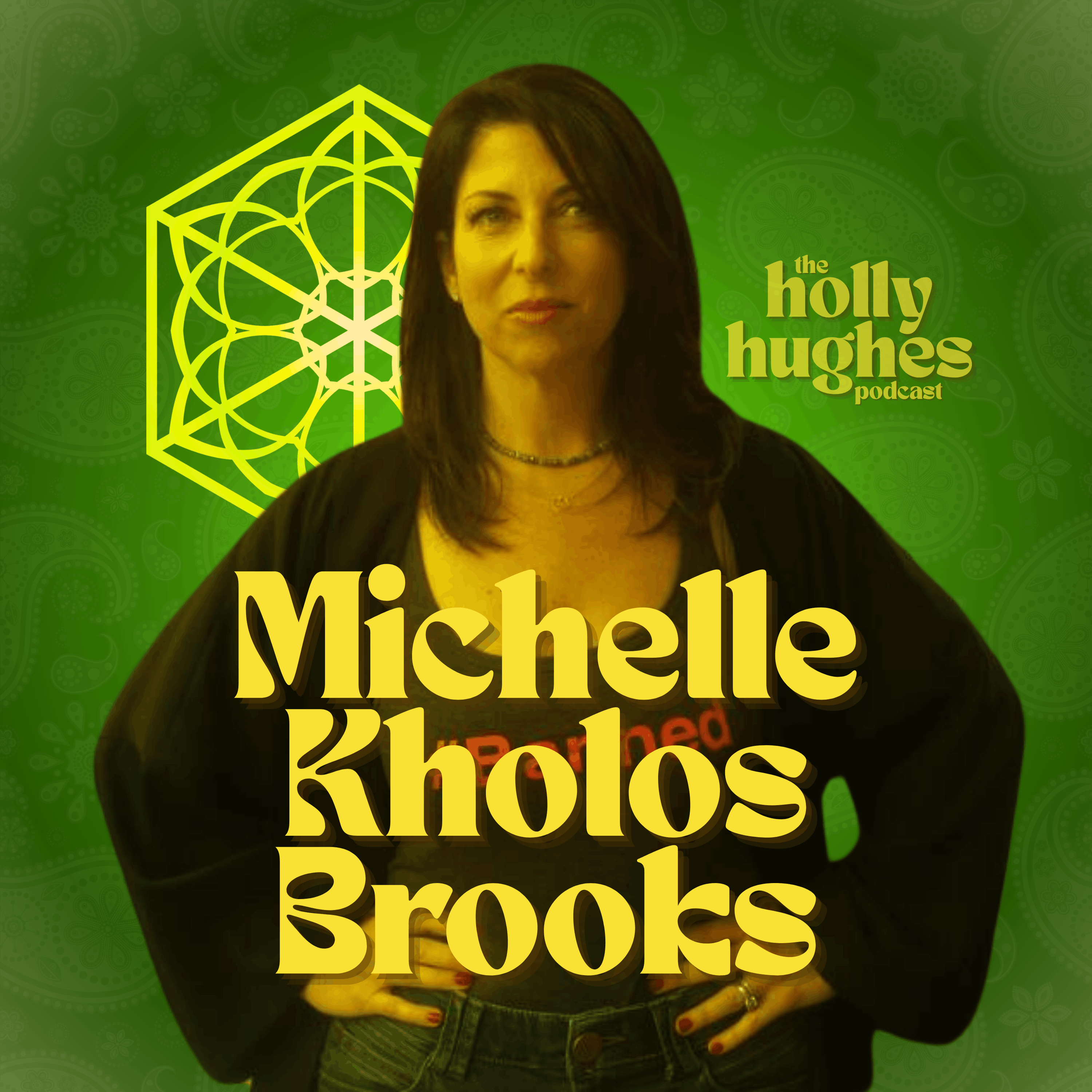
Playwright and director Michelle Kholos Brooks joins host Holly Hughes for a delightful conversation about her creative playwriting process and challenging people’s perceptions about the treatment of young women through her latest play, Hitler’s Tasters.
Holly and Michelle talk about the inspiration behind Hitler’s Tasters and the chance encounter that inspired it. They also discuss the balance between humor and tension, breaking writer’s block through overcoming fear and the critical importance of being open minded when consuming art.
Connect with Michelle Kholos Brooks online at michellekholosbrooks.com. Connect with other playwrights at newplayexchange.org.
Get your copy of Holly’s book, Real Not Perfect: How to Become Your Happy, Authentic Self.
Sign up for Holly’s email newsletter here.
Chapters
00:00 Introduction to Creative Conversations
01:53 The Inspiration Behind 'Hitler's Tasters'
06:38 The Process of Playwriting
13:04 The Challenge of Humor in Dark Themes
18:51 Writing Process and Community Engagement
25:51 Navigating the World of Theater
30:09 Future Aspirations and Current Projects
35:30 Closing Thoughts and Recommendations
0:10 And welcome to the Holly Hughes Podcast, where creative people come together to have creative conversations. My guest today is Michelle Kolos Brooks, who I'm excited and I have ghost bumpies again to talk to because she and I met years ago. We're just going to, we're going to just say years, years at a play called Expressing Motherhood, where we both performed essays, which was so out of my comfort zone. I've always liked being very well hidden in the background. And we met and I really liked to and we remarkably stayed in touch, even if it's sometimes on social media. And I've gotten to see your work just get like bloom. I don't even know the right word. Just like because when I'm looking at you, like, I literally see like these giant white flowers, like just kind of coming out.
1:03 So I love that. I also like how you tackle really intense subjects with, see, I'm going to cry with history and modern issues like all in one. So I would love to talk to you about all that you do and how that you do it and how you do it. So welcome to the program. Thank you. I'm so happy. I'm honored to be here. I'm pretty happy to be reunited with you. This. Is going to be good. So I want to start with, obviously Hitler's tasters. I really do. I want to know how that started, like how even the idea came to you and what made you curious.
1:50 And people often use this word, I think, with creative people brave enough to write it. Like what? What was all of that about for you? Well, first of all, I want, I always like to begin by saying Hitler's Tasters is a lot nicer play than it sounds. Some people get very afraid of the H word and it's caused lots of controversy, but Oh well. I mean, if you're going to be in theatre, you might as well. I was walking through a War Museum with my former writing partner in Indianapolis of all places, the first and only time we were in Indianapolis because we had a play that opened in Bloomington. And we were killing some time before we had to get on the plane as we were just kind of, you know, inevitably you're in the World War 2 area. And he said, hey, did you read that article about those, that young woman who was like that woman who was one of Hitler's food tasters?
2:46 And I was like, wait, what? He said those the young women who were Hitler's food tasters. And then he started walking away. And I was like, halt, come back. And I said, are you going to write that? No, why would I write that? I said, because if you're not going to write that, I'm going to write that. And he said, I'm not going to write that. I just, I'm sure as a, you know, a creative person yourself, every once in a while, you're not only just hit with something, but you're slammed with something that you know absolutely is a story that you must investigate and that you must tell. Because it just, it just, it just got into my body and I knew that I was the person that had to tell the story, or at least I wanted to be, you know, the person that told. The story, well, I love that you were like, are you taking that because I'm taking that because we had a conversation too, like, oh, are you we writing that down because we said that together. So are you writing that or is that one mine? Yeah, yeah, yeah.
3:50 I want to be clear. I want to be clear that wasn't really his jam, you know, but 100% mine. And he was kind of like, no, without even knowing much about it. First of all, it sounded hilarious to me. Like the idea of putting, you know, young women in a room where they could, you know, potentially die at any meal is kind of lends itself to some, you know, hilarity. And if you look at it through the right or the wrong lens, however you whatever, you consider that. But I've always been very concerned about young women and the treatment of young women. And to me, it just represented everything about the way that we use up young women. And as long as they're about, as long as they're valuable to us, and then we discard them.
4:41 We we, we raise them up, we knock them down, we kill them off. Either, you know, metaphorically or literally. And you literally do that in the whole play. And yeah, in the play in, well, we don't really know what happens. Just that bright light. I love the. Night. Yeah, but I wanted to actually leave a little I mean, whatever happens to them, it's not good, right? Whatever happens to them is not good, but I wanted to leave a sense of mystery in terms of giving very specific answers about what happens to these girls, because in war people disappear all the time for all kinds of reasons. Yeah, you play on that a lot.
5:26 I want to know about why you chose as a as a writer, as a creative, like plays, right. So I go to theater, right. But you know, everyone calls me weird. So but like, you know, there's this tactileness that we don't get in theater when we are so intimate with the players, right? And so using that as a medium, it's for me, it's more than words on a page. You're 3 dimensional while you're writing. And then you have to trust a director and a like a people you don't know to them. Bring that to life. What is that whole process for you? And do you think about it at all while you're writing?
6:08 I do now. I started writing plays very stupidly. I just thought I wanted to write plays and I was in. So I was a journalist. I was in public radio for a long time and but I was always writing on the side. And I thought that I was going to be, I always wrote fiction. And I thought, like, eventually I would just be writing, you know, masterful works. Obviously. And obviously, and turns out, you know, books have a lot of words in them. And I was actually in graduate. I went back to Graduate School very late in life to study fiction writing. OK wait, I want to know what you consider late in life.
6:51 Was it was my it was. Well, I turned 40 while I was in graduate. OK. OK, not late, but go ahead. Not late, but legit you were. Growing. Yeah, OK. I didn't go to a Graduate School right after undergrad, which I actually I totally recommend because it was way more fun, I think for me. And, and during that time I was writing fiction, but actually my plays were getting produced. So I was, I sort of was like, I love writing fiction. I love writing plays. I feel like I'm gonna go with the boy who loves me. You know, I'm gonna, I'm gonna the, the, the plays were actually getting done, but I also really, I'd love writing them.
7:32 So, so just to back up a little bit, I, I just entered it really super like, oh, I'm going to write plays. And then, but somehow, miraculously, they, they would kind of get picked up here and there. And then I learned about the process of writing plays and the process of putting a production on. I wasn't thinking at all about the production. In my head I I could see it all so clearly, but. You were cracking me up because, like, you're talking about how you went into place. I think that's how I picked my starter husband. Like we, we had, you know, fooled around and I put on his pants. I was like, he was tall and skinny. I was like, if I fit in his pants, I'll stay like I'll date him. Like, like literally at 23, my awesome capacity to know good and bad that that was my choice.
8:14 I could fit in his pants. Yeah. Well, I mean, people make, you know, one of the worst reasons as far as I can tell. So, so it that worked out a little bit better in the end, but I just so, but what I hadn't thought about was having to deal with the director having to deal with actors. I just thought I write it here, it comes out there. What's the problem? Right. And it was super eye opening for me and also super frustrating then, still frustrating now. Also magical. But you know, it's not, it's never what I hear in my head. Sometimes it's better, which is thrilling. And sometimes it's not matching what I need it to be. And that's so frustrating.
9:06 Oh, is it? Does it not match in tone? Or are you particular about like them saying the words exactly as on the page? I I'm talking about like tone or the way that they would say a line. Like in my head you have to hit a certain line of way in order for it to be funny, right? But if they don't say it that way, it falls flat and doesn't have the meaning so. Funny is hard. Writing humor is so hard. It's hard. It's really hard. So in terms of the actual words, yeah. The great thing about being a playwright, well, I just first say the bad thing about being a playwright is that you can't make a living at it. I mean, there's a few strength, but most people have to also teach or do other things.
9:55 But the, the, the payoff is you can pick up your play and take it if you want to. Like if it's not going well, if they're decimating your, you, you are, you have to give back your, you know, whatever, if they if they give you any money, you have to give back whatever they've given you. But you can pick up your play and go and say, this is not my intention. This is not accurate. If they want to cast, do some kind of different kind of casting that doesn't serve the purpose of the play can be really problematic. And so, and people have to say the words that are on the page. And there are there are actors that think of a play as a blueprint, which is a little bit more film. And I feel like I, I do this for the words. So if you're not going to say the words, then this is not a good match.
10:52 Oh. My God, that is the quote of the day. I do this for the words. No serious, I'm not being sarcastic, I'm or funny, but like I love that I want actually, I want that to land. I do this for the words. Yeah, I like, I like words. I like putting them together. I like puzzling them together and having them do certain things. And I don't always get the words right. And if they put a spin on something that makes it better or they, they, you know, I mean, inevitably it's hard. There's a lot of words to remember, right? And keep in mind, people that are doing my plays are not being, you know, paid like George Clooney to do something on Broadway. So they've got other things going on. And it's, it's hard to remember everything. So, so if they, you know, if they say it's something in the wrong way, but it actually sounds better, like it makes it's better coming out of their mouths, then I'm absolutely happy to change it.
11:44 And often times that will make it into a publication. But if they won't even try the words the way that they're written, then I feel personally irritated by that. And ideally I have a director that I can work with that I have a good, good enough relationship with it. I can say, you know, that's not cool. Yeah, there's a lot. Of times the directors also looking at you know, the entire tapestry, they're looking at the furniture on stage, they're looking at the lighting they're looking at how it looks when when different people are interacting with each other, they're not necessarily paying attention to all the words coming out of their mouths.
12:27 So sometimes I, I always appreciate a director that is willing to have the kind of relationship with me where I can say like, hey, hey, hey, this, you know, I, I don't, I never, I don't talk directly to the actors unless the director asks me to, but I will give her and it's usually her lots of notes at the end. I can't imagine. I wanted, I want to know, like what it sounds like in your head while you're writing humor. Like, are you laughing or are you like, Oh my God, that'll be so funny. You know, for me, humor generally comes out of pressure, like pressure on characters. So it's not like waka waka joke a minute. You know, it's the, it's you.
13:12 You put young women in a room in a very tense situation. They may die at any minute, but they're young and they're innocent. And so sometimes they say really stupid things, right, that are funny. So I think that's kind of where my humor tends to land, but I don't know what's going to happen until I'm writing it. And if it cracks it. I, I, my policy is basically, if it cracks me up, then you know, at least I have that. If other people don't laugh, that's their problem. But I have to make my, but if it makes me laugh because it surprises me, then I think generally it will make other people laugh because it will surprise them. Sometimes I, because I put humor in really dark situations, People are too scared to laugh or surprised that they don't really laugh. They might be like, you might hear like, but yeah, humor is humor is, it's tricky stuff.
14:04 I, I once had a woman after Hitler's chasers in Chicago. I did a talk back and then a woman came up to me afterwards and she said, I, I just wanted to ask you was was it, was it OK to laugh? And I was like, yeah, yeah. We. It should come with a disclaimer. I know, I know, and believe me, there's tons of disclaimers on my place. I saw it. I. Saw I read that. Oh my gosh, I can't imagine. The trigger warnings are I cannot wait. So how do you feel? Can we talk about like, how do you feel about those? I annoy me. Can I just say that? I mean, life is so freaking triggering. Are you going to walk around like with a, you know, with like a sandwich board telling people all your triggers? I we don't know what people are going to be triggered by and I can't, and I'm sorry, if you're walking into the theater and the place called Hitler's tasters, fucking deal with it, right? Like don't go if you don't want to go, don't go but to go and then police the language.
15:01 Of of a can. I think everyone's entitled to how they feel, but I think what the world has kind of gone mad with is that's not the most important thing. Your emotion in that moment. You might have to learn, grow, figure something out. You might have to learn to communicate. You might learn what's not good or good for you. But that issue is yours. Absolutely. And you might have to tolerate something that's doesn't, is doesn't track with you. But yes, you're OK. But OK, we actually have to. To do that. But that but but their life is not my problem, you know, I just feel like if you're going to come in, you, you, you paid your ticket.
15:44 Come see what you get. You can like it or not like it, but you are required to sit there and, and, and well, I guess you can leave. It's so sort of rude, but you can leave in the middle of it. But yeah, the trigger warnings drive me absolutely Batty. I, I do, there's some time there's some people that can't tolerate like flashing lights, it can into an epileptic seizure or something like that. So fine, if you want to put that, if you want to put that up, but the rest of it to say that you're going to hear about violence, that you're going to hear about racism, that you're going to hear about anti-Semitism, that you're going to hear about, you know? Right.
16:25 Just OK. Come out to the world. Come on out. Let me open the door. What happens when you are exposed to that? What happens when you see something that makes you think and feel and makes you uncomfortable? Does it make you explore? Does it make you want to write something in response? Like you don't even know if you're so well protected that you're not experiencing experiencing anything? You're not becoming or being someone outside of this tiny little bubble you created. You're missing so much. I think so. I think so. But you know, theaters also, a lot of people don't like theater, are super uncomfortable with it and don't like to be there sitting that close to actors and having those feelings with a lot of different people that they don't know. And you can't, you know, you unless you have an intermission, you can't go to the bathroom while you can't put it on pause and go to the bathroom.
17:19 You can't eat gummy bears during it. You, you know, you can't. You mean you? Have two adults are you asking people to adults just a little sorry that's so sidetracked When when when are you like the most prolific. Are you a morning person late person or are you really dedicated to this is ass in chair time. I'm writing and does the mood that you're and influence it. That was a lot. Should I slow down? Probably my I'm just thinking about, probably my mood influences. Definitely. I am a very chaotic writer. I've had terms with it. When people ask me about my process, I'm always like, I don't know what my process is.
18:01 I don't really have a process I really, really like. I write very, very quickly and sort of in a, you know, sort of vomit a thing out and then I feel a relief and a release and then I can take my time going back to the play and writing it. My husband is a writer and he writes very like everything is. I mean, he writes novels, so he has to be, you know? He's with all those words, all those. All those words and a lot of research and he has to keep things very nice, but I and he's always like, what do you?
18:42 I'm just and then I see what I've got. I actually really love to do. I've done quite a few 48 hour play challenges, which is really I hate it and I love it so much. And it's actually how I wrote Hitler's Tasters where somebody gives you. So you can generally you try to do with some like a group of other writers and you have somebody give you some prompts, like four or five prompts. And then at some point you like go on a Facebook page or you send out a text to everybody and say, I'm starting. And from that point on, you have 48 hours to write your play.
19:22 And you can do other stuff in between. You can go to a doctor's appointment, you can eat dinner, whatever you need to do. You can burp your baby whatever you need to do. You can pee and like, eat your gummy bears. You can eat. Your gummy. You can do whatever you need to do and but you can't look back. The best rule is when you can't look back and see what you've already written. You just your imperative is to go forward. So it takes away all of your filters, all of your sensors, and it's always surprising what comes out of it. I actually find I'm better at structure that way. I love that. It's weird, I don't know why. I do like 5 minute things. I'm like sometimes when I know I'm avoiding something, I'm like just do it for 5 minutes and inevitably an hour and a half goes by.
20:07 But sometimes I can procrastinate around those. Like the floor obviously needs to be cleaned. Obviously I need to fold the laundry and I hate doing. It's like my least favorite task. It never ends, right? So that one is for me. I like the 48 hour thing. I think as a writer of any kind or creative person, you definitely need community because you're so alone in the act of it, right? Like you're alone. Tone in your head with all the voices, you know, cranking out this story that if you don't actually reach out and communicate with others, I don't think your I think your work always does better for that in another set of eyes. But also the push. So are you? Are you competitive with anyone? Yeah, I definitely. I love being in a actually, I have mixed feelings about being in a writing group, but it's good. I'm, it makes me very competitive, but, you know, competitive with myself, like I'm all you all do, you know, I want you.
21:00 Sure, I believe. You, that's all. But then I'm like, well, I'm not going to come in next week without anything. I'm not going to be, you know, like they did 10 pages, whatever I can do 25. I mean, yeah, for some reason it gets me. It gets me all riled up. I do above the edge, yeah. I do So what are you working on now? I actually just finished a new play. It is much more of a comedy comedy than my other plays because as I said to somebody recently, with my last four or five plays, I tried to save the world and it just got worse. So now I'm just going to yeah. You can't. You got to do it indirect, man. You got to do it indirect.
21:42 So I so I just finished that one and there are some people that seem interested. I don't know if I so do. People, like, contact you because I don't know that world, right? Like if you want to talk about publishing in the horrors of that, I mean the joy of it, right? Like I can talk about publishing, but I don't know about plays. Like my daughter got into theater and you know, they want in their high school to do XY and Z, but they can't always afford the plays that they want to do. Right, right, right. So, so I, I still don't even know how they get done half the time. I mean, honestly, it's I, I've, I've, I've created enough of a network now that I have directors that I can go to you think of this. And if they like it, they can reach out to theaters that they like or we can do readings.
22:31 I mean, the thing, the nice thing about a play is that I can, at least I can always hear it. I can always, there's a theater around the corner from me that I'm connected with. I can always go in and say, Hey, do you mind if I do a reading? And I know people in the community will come and I can hear it because the last part of a play, the final piece of it is the audience reaction, right? And if the audience ain't reacting, you got a problem if you play so. How big of a table read do you do then? How many people do you invite for something like that? It usually like the last couple table reads I've done have, it's just been the cast and then very, very few invited friends. Like I like one or two and then maybe the director will have one or two or an actor that knows somebody you know. But it needs to be pretty small initially just to hear it. I always have my husband there and I always have my son there whenever I can.
23:35 But and then I have like one really good friend that I like to have there. But it's well in LA. But you have to, I think you have to be careful about who you bring into that well, in the beginning, you know. For so many reasons, yeah. So have you ever had work taken from you like meaning that like someone came and heard you or. And they like the kind of like, oh, I like that. I know a writers group like, you know, that hive mind that happens, like if you don't get new people sometimes, like all your ideas start to mishmash a bit and you're like, that was my character's name, what are you doing? Or Yeah, yeah. Does that happen with in plays as well or less? I don't know. I mean, I'm sure it does, but I I don't really worry.
24:18 About it. You're careful. Well. I, I don't know, like I already wrote it. Like, what are you going to do? What are you, are you going to write Hitler's tasters too? You know, like, what are you going to do? So maybe. And The thing is, mine's already like accounted. For. Proof of that. So I can't really, I can't manage, you know, if I start worrying about the world. I also think I've met a lot of writers or people who say that they want to write, but they're so afraid someone's going to steal their ideas. And I'm like, you know, I, I think that's, I think that keeps you from writing like you, you don't know. It's a miracle that anything gets done. It's a miracle that anything gets published. It's a miracle that anything gets on the stage. It's a miracle that anything gets on the screen. It's a miracle.
25:07 So don't write the end of the story like you just. Just don't check it out, don't make it impossible for it I. Mean to me it's just an excuse, really. I said, what's your dream? Like if you could put it a cast together or where you want your show. Like do you have, do you ever think about that? Like, Oh my God, I want to be on this Broadway theatre or this or I want to be here and these are the people I would ideally love in your play. The play doesn't have to exist. It could be like something you're going to do in the future. I'm just kind of like curious if you ever think like that? Yeah, I very rarely think about actors when I write the play, which could be my problem, but I don't have an actor in mind. Usually when I write, I don't have an actor in mind. I just let the character be what the character's gonna be and then try to find an actor that matches. Broadway, I don't think is really in possibility for me, not with the kind of stuff that that you know. But like, if you could, like it's like the Pantages. I remember growing up because I grew up like on on Long Island. So but I, I don't identify as a New Yorker. So all of you don't go there with me. But my whole thing is that, remember, I grew up in the Pantages or this theater.
26:16 Come see this or I wanted to see Evita and like, you know, like, do you have any of that? Is that does that exist in LA at all? Yeah, I mean, there's great theaters in LA, but I don't there was a there's a company called Rogue Machine in LA that I really wanted to do something with them. And then they did Hitler Caesars last spring. So it's great. So bucket list in a tiny, tiny theater. Like I love a tiny intimate theater. I love it when you have to be like really confronted with what's going on and you really feel a part of it. I feel like that's the one thing you can't get in any other medium, right. So a big a big stage is great, but I don't know, like I just saw Glengarry Glen Ross in the in New York. I wanted to take my kid to see it, even though it's whatever, I'm not going to talk about anything. But anyway, it was an incredible cast, right? And you play don't go to something for the cast, but this was an incredible cast and it was really good and everybody was really good.
27:22 But I had seen it a few years before where I couldn't catch my breath. Like the first time I saw it was in the movie. I hated it the second time I saw it because there was a family friend in it. And so I we went to see it and I it was over before I knew it and I could not catch my breath. The third time I saw it, it was good. And these are all magnificent actors, but the theater. Was so. Big that I felt like the words went out and just the emotion went out and just dissipated. Like I didn't I it was just for me, it was too big. It's not a musical, you know, it's a different thing. Or some plays are just really big. But this wasn't that for me.
28:02 And I thought, I thought, oh, it's a shame. You know, they of course they wanted to make money on it. They have all these actors, but I think it lost something with all that space. So space is really important. I I'm always just interested in different spaces. I don't have a dream. You like the Crucible, you like the Crucible of the pressure of the closeness of the intimacy of the of like what it is that you created on the page and how it's coming. I love it like it's you, like it's the chemistry of it and like, why give it up to more space when it can be more impactful and. Intimate. I mean, that being said, if Broadway wants to come calling, I'm not going to say no, but I I don't, that is to say, I don't really have like a dream space.
28:50 So many beautiful, wonderful, strange theaters. I there was 1 theater in LA. I think it was just, I just had a reading of something in there. I can't remember, but it was basically in an apartment. Some people had, they had this apartment and they got the apartment next to them and they made it into a little theater. There was only like 30 seats in there. And she was this amazing chef and she would bake her and she would bake. And so everybody would get like brownies after the show and you felt like you were like walking through somebody's living room. It was so cool. It was so cool. So that being said, the only place that I'm really coveting right now is I, the one place that Hitler Chasers hasn't been to is London. And I, it's, I know it's so perfect for a London audience. And I just had to, I had a situation with a theatre that was there that was very interested in it and somebody that was very interested in producing it there. And sadly, he just died.
29:52 No. He got a really awful esophageal cancer and and he died very suddenly. You know, they caught it too late. He died very suddenly. And so on top of the loss of him also, that sort of went away. So yeah, that London is really, I would love to see, I mean, I'd love to see any of my plays in London. But Hitler's tasters in particular, OK. It's neat there all. Right. Let's make that happen. I was just looking for that out in the world, like, yeah, just make, make, make the good move happen. OK, so So what? Where else can people find your work? Like, I know what? When we met, right? It was an essay.
30:33 Are you, do you do that as well? Are you strictly sticking with plays nowadays? I also do plays sometimes. I write articles. I still write some fiction and stuff, but I I'm not really like putting it on your towel. Putting. It it's not your thing, it doesn't jazz you up. I like it. I mean, I have, I've written a book, you know, I've got other, I've got ideas for books. But now just still doesn't feel like the time. And there's nothing right that I feel breathless about, right? I have to feel really breathless about something to do it. So mainly I do plays. I have 3 plays that are published and other plays that are like have been done but are just not published.
31:21 So if people want to follow your work and to see if maybe Hitler's tasters is coming towards them or if they want to tell people, hey, produce this play, like how? How does that happen? Like, I know you're kind of private, right? So do you want people to find you on social media or no? No, no. I mean I have a website at stolecullisbrooks.com with all of my work and I also I have to update it. I also know there's also my Instagram is not really personal. It's open, it's my work. So I have Michelle Kollis Brooks Instagram and I also have a Hitler's tasters Instagram because it was that's been the work that's been the I think produced the most.
32:01 And also there was so much fun media around it. Like, you know, it's it's young women and they're adorable and they dance a lot during the show. And so all there's great. There's like great media around it. And so there there's links to the plays and there's something called the National New Play Network that is sort of a place where playwrights can post their plays. And if you're a member, you can read, you can read. It's kind of cool to join. Like you can read million, you know, maybe not millions, but thousands of plays by people all over the world that join that may may not have been produced. I mean, I love. That. Yeah. OK, so I end all of my podcasts with this one question, which is if you came with a warning label, what would it be?
32:50 I said I like being pushed into a corner and now you've it's not, it's not working. But what would my warning label be? I would just say, I would just say the deep end comes suddenly. The deep end comes suddenly. OK. Not. Mine is we'll talk about Korea. So like, it doesn't have to be the most profound. My mind is like, I will bring every conversation back to, Oh my God, when I was in Korea, blah, blah, blah, blah, blah. So fantastic. But for me, like what you were saying was like be a stranger in a strange land. And I like being there because I am a stranger in a strange land. It was a culture in a language and history that I never knew, but I felt very akin to, right?
33:34 Like I just felt a lot of their history is not so dissimilar to my immigrant grandparents or displaced Jews after World War 2, right? Or like who is being taken over or like all of that. Like I was like, Oh my gosh, like I, I relate to this. I relate to your stories. I also relate to how they tell stories. I started reading translations and I was like, Oh my gosh, they're storytelling's heartbreaking and fantastic and I love it. So like I always like also like to say like I like to bite off a little more than I can choose so I can be uncomfortable and learn and figure that out. Are you reading anything right now that has got you like, I don't know, spinning in a creative way?
34:16 Or is there anything that's come across, I don't know, in your world that's like helped inspire you to keep writing? Not, not not necessarily to inspire me to keep as a matter of fact, I, I, I sort of go through a thing whenever I read something that's really good. I always think like, why am I bothering? There's already so much good stuff out there, you know, So it sometimes has the opposite effect on me. But I really, I just did want to make a plug for an amazing book called Careless People that was written by a woman who was early on in Facebook. And it's really very upsetting and very demoralizing to read how intentional some of the horrible things that have erupted from Facebook, how intentional some of that was.
35:13 And, and it, it, it, it turned me on my head a little bit. I mean, I, you know, you know, you know, but then when you actually read the details about it, it's pretty upsetting. And I, I think people should, I'm not saying go off. I mean, I'm on Facebook. I'm not saying go off Facebook, but but I think the awareness of, I think I'm a little bit like this with all my plays, like I always know someone's trying to get us right. I was really, I have that feeling. I told my husband, like I think in a previous life I was in the Holocaust because I'm always like danger, danger, danger. And in some ways that book reinforced that. Yeah, in me.
35:57 So it's not the most, it's actually a really easy good read, but it's not the most fun read. But I think it's really important as we go. I just want to say thank you again for coming and having a conversation with me. This was a lot of fun. I've read your work. I think people you should go to the website and read other plays. I invite you to get uncomfortable and get creative because you never know what's inside of you. Like it can make a difference for someone and maybe that someone is just you. So here you go. Thanks again for listening to the Hollywood Podcast.