How to Write Books on 90 Minutes of Sleep (And Still Get Published) | Eugene Myers
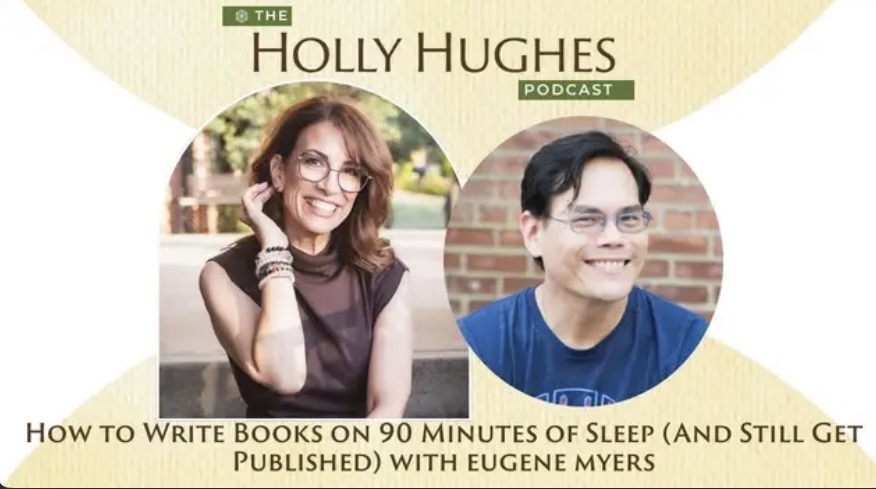


What does it actually take to become a published author?
In this conversation, Holly sits down with award-winning author Eugene Myers to talk about writing under pressure, creative discipline, publishing realities, and how to build a sustainable writing career while balancing a full-time job and family life.
Eugene built his career the long way. Querying agents. Surviving years on submission. Attending Clarion West. Writing through burnout. Auditioning for Scholastic series. Meeting tight deadlines. Revising on limited sleep. And continuing to publish consistently across middle grade, interactive fiction, and major media tie-in projects.
This episode goes far beyond writing tips. It’s about resilience. Community. Professional generosity. Imposter syndrome. Productivity systems. Creative identity. And what publishing actually looks like once you’re inside it.
If you’ve ever wondered, “Is it even possible to build a writing career without quitting my job?” this episode will give you clarity, structure, and honest encouragement.
What you’ll learn in this episode:
-
How Eugene landed his first literary agent
-
What being “on submission” for years really feels like
-
How Scholastic opportunities opened unexpected doors
-
What auditioning for a major series looks like
-
The Clarion West experience and how it transforms writers
-
Why drafting fast matters more than drafting perfectly
-
The TK placeholder strategy for maintaining writing momentum
-
How to manage overlapping book deadlines
-
The difference between drafting and revising energy
-
How to balance writing with a full-time job and parenting
-
Why community and generosity matter in publishing
-
The mindset required to stay in the game long term
We talk about:
-
00:00 Introduction + Meet Eugene Myers
-
02:00 Writing with an AlphaSmart and eliminating distraction
-
06:00 From pantser to structured outliner
-
10:00 Auditioning for Scholastic and landing the Ruby series
-
13:00 Writing media tie-ins under tight deadlines
-
16:00 Querying agents and selling a first novel
-
18:00 Draft fast, revise later philosophy
-
20:00 The TK placeholder strategy
-
22:00 Early reading influences and sci-fi foundations
-
25:00 Clarion West and leveling up as a writer
-
29:00 Publishing culture, networking, and professionalism
-
33:00 Managing multiple projects at once
-
35:00 Writing with a full-time job and family
-
37:00 Word count goals and interactive fiction challenges
-
39:00 Creativity under exhaustion
-
40:00 Slush reading and editorial perspective
Connect with Eugene
-
Bluesky: https://bsky.app/profile/ecmyers.com
-
Facebook: https://www.facebook.com/flipthecoin/
-
YouTube: https://www.youtube.com/ecmyersvids
-
Books: https://site.andrewsmcmeel.com/the-stream-team-pre-order-giveaway / https://holidayhouse.com/book/gamers-1-attempting-connection/
-
Website: https://ecmyers.net/
Connect with Holly
-
Instagram: https://www.instagram.com/holly_hughes_intuitive/
-
Get Holly’s book here: https://hollyhughesintuitive.com/my-book/
-
Website: https://hollyhughesintuitive.com/
#WritingUnderPressure #HowToBecomeAPublishedAuthor #WritingDiscipline #PublishingJourney #MiddleGradeAuthor #WritingWithADayJob #ClarionWest #AuthorLife #CreativeDiscipline #HollyHughesPodcast
0:10 Well, welcome to the Holly Hughes Podcast. Today I'm very excited to speak with my guest Eugene Myers, who is an award-winning author, a gamer, a streamer, a reader, a dad. He has everything in his bio. He is vicariously all over the Internet, but I was just saying before we even hit record that he's so quiet about it. So I can't wait to draw you out a little today. Welcome to my show. Hi, thank you so much for inviting me. I'm very excited. I don't know like where to start. I have 17 cards of notes of things. They're all scattered over here in front of me. But you're bookcase, I want to go on an adventure there because. You have Yeah, yeah, it's, it's kind of a mess. So this is my office and theoretically all of the shelves in my office are supposed to have all the YA and like middle grade books.
0:56 But when we moved in, I guess about four years ago, I think it's four years, when we were unpacking, things got mixed up a little bit. So there's some adult books back there as well, and some like miscellaneous stuff and like gaming books and things, but. That most of them are fun toys. Yeah, lots of tchotchkes. I do not collect toys that much anymore. I definitely scaled that back a little bit. But these are the things that have accumulated since the shelves were set up, and it's just array of interest, just like some Dark Wind Duck, a Twilight Zone, a bunch of gaming stuff. I've got my like consoles and my handheld. Yeah, that those are so cool. Those are so cool. I have quite a lot of Funko Pop. I'm not really a collector of things, obviously. I have a bajillion books and whatever. As actually before that we started today, I was telling my daughter I was going to be entering you because you signed her Ruby book.
1:41 So for her, she felt like, oh, I'm connected to what's going on today. But yeah, I Star Trek, Doctor Who, I kind of rotate them a little bit. And then Guardians of the Galaxy. So you and I first met, I can't even remember how many years ago, but it was at Highlights Foundation and you had this thing, you had your Alpha smart. Oh yeah, yeah, I still have it. I still use it. I am like tell me how that came into your life because when I saw you writing that first I thought it was brilliant. Second of all, I don't know that I could ever read a draft of mine on that because I typo so bad in a first draft that if I had 200 something pages of that many typos I would go wild. So how does it work for you?
2:22 Tell me how you discovered it. So I started using it, I think when my son was born. So that would have been almost 11 years ago. And I had a book deadline for the second book in my SOS series. It was against all silence and I needed to be able to write like very quickly because I have, I think two months to, to draft and he had just been born. So I was, I was really trying to figure out how am I going to be a parent? I was like a full time caregiver for him at the time I was freelancing and I still have a turn in this book. I had a book deadline and my laptop is really old and like very slow and I didn't know what to do. I'm pretty sure was another author who had talked about using an Alpha Smart, which is just this dedicated word processor. It has a screen that displays like 4 lines of text. They used them in a lot of like high schools and things like that for writing exercises and I decided to give it a try at the time.
3:07 I think I probably got it for 20 bucks. They've definitely gone up in price now and it was fantastic because as you mentioned, you can't really edit much as you go. So it really put me in the mentality of I just need to get down onto the page and just keep going that momentum forward. And then I export it. You know, I have to transfer the files over to my computer. I transfer them to Scrivener, and that's when I do the revision, like the editing and all that stuff. So really the focus is just like sitting down and like putting out the words. And there's no start time. Like you just press power and it's on and you can go. And it's incredibly durable. I've taken it to conventions and things when I had to write while I was traveling, I dropped it on the street once and I was horrified and it was still fine.
3:47 It has a backup battery. I only had one calamity with it when I was writing my Little Nightmares book where I somehow didn't transfer file over and then I started writing over it. Even then I recovered some of it. I was able to recover some of it because like through this arcane key combination, I was able to restore the file by end up having to rewrite like a chapter, which was really tough because I was again under a tough deadline. But I literally just was using it as as recently as last week. I'm drafting the sequel to my Gamers, and I just transferred the last file over and I polished it up in Scrivener. So yeah, it's been an amazing productivity tool. Now, most people are aware of the free, right, that kind of those dedicated word processors, or there's just like a whole thread on Threaded about writer decks where people are just trying to isolate their environment so that they're not checking social media constantly, where they can just kind of go and really focus. It's all about focus on the words and without distraction. So because like you also wrote the other day about about your deadline and that you only slept like 90 minutes because you have a deadline.
4:48 So I want to know why? Because you do these right? Like your own adventure things. There's 1000 different ways that things can go. Do you use Scribner then to organize all of that? Are you a major plotter? Because that makes me hyperventilate, like having to think that far ahead. I had always been kind of like a pantser, right? Like I would kind of have like big ideas. I kind of had like go posts along the way, so I knew where I was going to the midpoint and then the end of the book, but I was just kind of making up as I went along. And then there was one book that we haven't sold that I got stuck on because it was very complicated and I sat down and I outlined it. And then once I started doing the media tie in, like the right for higher books, I have to outline those because I need to get approvals beforehand. And I really have discovered that when I have very little time to write, and I really like a very short deadline, like two or three months to write a first draft of a book, that outline's been incredibly helpful because like, OK, I've got like 20 minutes or an hour to write.
5:43 What am I doing? And then I just look at the outline and I write that chat. Now, even with an outline, there's still some room to, I'm still making up a lot as I go, of course. And the story might change a bit as I go depending on how much time I have to do it. But it's really pretty, pretty linear on my Alpha Smart. I'll generally do like a chapter on a file and then that file becomes like a section in Scrivener. And I don't move novels around too much because they usually are fairly linear. But when I was doing my interactive of books, script was incredibly helpful because essentially every page, every page had a file and I had to make sure that things were linking around. So I'm not really a script or power user. There's lots of stuff that script can do that I don't know how to use it. I mostly use it in a more organized way. Version of my old workflow when I was using Microsoft Word because I used to just write chapters individually in Microsoft Word because from my background of technical writing, I had experienced enough instances where a file got corrupted that I just wanted to make sure that I had multiple copies of every file.
6:42 Many redundancies. Scrivener just is like a neater way of keeping all those things in one place. Sometimes I. Learned Scrivener. It had too many rules. I was like, I spend so much time. I'm like, I could be just writing. I'm like, I'm trying to like all the cards and all the notes and the character development. Like I could get lost in like that stuff. I'm like, oh, I'll just deep dive in here and then. I'm like, yeah, I think I started using Scrivener on another, the writing deadline. I didn't have time to learn it. It was just like, I just got to start working. And then I never went back because when do I have free time to go and learn like the Mystic arts of Scrivener? I just Google. I just when I need to figure something out, I just Google how to do it. Like how do I compile this thing? How do I find and replace like all those little things? How do I, you know, one of the things I really like about Scrivener is being able to like take a snapshot of your draft.
7:23 And that way you can always roll it back to like the previous version if you needed to without having generated like multiple files. That would have been really good for me in one book, because sometimes I'll do it. I'll name it and date it. Then I go to search for it. I was like, Oh my God, there's a way too many of them, but I wanted the oldest version because I didn't like all the edits I had done. And I was like, I'm overwhelmed. I didn't really help myself at all. Oh, yeah. Or sometimes there's a sentence I remember writing in one draft and I have to kind of click through all of them to find it. And then a lot of the time I discovered that I actually already used things that are worth remembering. You do remember them? You know, Carrie Ryan, she uses. I do. Yeah. OK, as a writer, you probably feel the way I do about AI. It's an evil, but it's here. What do we do? But she uses her AI to go through some of her books say how did I describe this two books ago? That's interesting.
8:07 That's really helpful because I had to reread, I had to reread Gamers just before I went into revision to make sure that I was being consistent character continuity, all that stuff, threads that I had put in there that I had forgotten about, that I needed to kind of go back to training an AI, saw some other author was training an AI on his own work. And I think that's a fascinating idea and a fascinating use of the technology. And as long as that's not getting out into the world and other people are, you know, profiting off of your writing, that's a whole other much longer conversation. But I'm going to have to look into that and maybe I'll check in with. Character, yeah, I thought that was kind of brilliant because she has like series like you do and she's like, wait what? How long ago? And she has a co-author, which you sometimes do as well. So that way they can keep track of who said what and how a character described another one.
8:55 Oh, I was like, that's just so smart. When I was working on some of my older books, I briefly entertain the idea of setting up like a wiki because I think Nora Jemison does that or did that with some of her books. Because when you have a lot of continuity and a lot of lore, like world building, stuff like having that. But again, it usually comes down to I don't have time to do that. I just have to write and hope that is going to turn out OK. So for me, like the little girl in me is, Oh my God, you're scholastic. You're scholastic guy. So like, how does that happen and how much pressure is that for real to like, I don't know how you're that prolific because I have all the luxury of the luxury that I give myself. Do you know what I'm saying? And if anyone goes to your website, right, they'll you're like, there's not like every month you're putting something out in one form or another.
9:40 I love working with Scholastic and I'm very happy, you know, to be there and looking forward to, you know, seeing some of the book fairs that hopefully will have some of my books. My son's just turning 11 next month, so his book fairs are a little younger skewed, and I've only just recently started doing some middle grade stuff, so it'll be interesting to see if some of my books start appearing at those book fairs. But how I got into it? So when my son was born, I finished up The Silence of 6 series and I had another manuscript that was out on submission and we didn't sell it. And I was really feeling kind of burned out because I was still working full time, I was parenting. So I still have a day job like my other job has always been writing and editing. At the time I was a development writer at the Children's Hospital of Philadelphia. And then I was freelancing for a little bit and then I started working at a family designed resources. They changed their name since in Harrisburg and then I went to Jefferson to work in their their development office. So I've done a lot of sort of healthcare related nonprofit fundraising, like stewardship type writing, but I don't actually solicit the donations myself, but I support the officers.
10:39 So that's been tough too because my day job's always been around writing or has been writing and editing for a while now. And so that all kind of adds to the burnout. So I ended up like just deciding I'm just not going to stress because it's like what I should have been doing was writing another book, right? To get out there. I was like, I'm just going to stop for a little bit, not stress about it, right? If the mood strikes me or sometimes people would ask me to send them something for an anthology, then I would write a short story. But I was basically on a break and that's when I started streaming because I was like, I need a hobby. But you can stream for a couple, that's why I just. Sleep. Sort of what brought me out of my, like, hiatus was my friend Nava Wolf. She is an editor, but she had recommended me to Chloe Fiboni and editor at Scholastic to perhaps be a good person to write the Ruby books. And I had not been familiar with Ruby at all because I had a kid and I hadn't been watching anything. So I checked out.
11:27 I was like, this sounds great. At least it's really great. So I auditioned for that project and they gave me the job. And so that's kind of like. What's the audition like dude? Like sample chapters or? I wrote, it wasn't like a sample chapter. It was I just wrote a story set in Ruby. Like I didn't really know how to audition for it. So I said I wrote a sample set in Ruby and sent that out just like a little idea that I had. And I guess they liked it. I tried to make it funny, try to hit the vibe, like I think I'm pretty good at matching the tone of a series and like getting the voices of the characters and things like that. They picked me and that was for three novels, but we kind of took them like one at a time and I got to work on that. And since then, I mean those Ruby books kept me pretty busy for a while. I ended up writing 3 Ruby tie novels and a book of fairy tales that were set in that universe. And I honestly can say that a lot of the other projects that I've been working on have all been linked back to that opportunity because Chloe moved on to Blizzard and now I have. She's been tapping me to write some short stories for different game series like World of Warcraft and Overwatch and things like that, which is awesome because she knows how we work well together.
12:31 She knows that I can write quickly and then I can what kind of quality she can expect. Both of my other editors on Gamers and the stream team also worked at Scholastic at one point, and I had interacted with them in the past. So when they went to other imprints, they look to me to see if I would be interested in writing books with them as well. So a lot of those opportunities really came from me not turning down the opportunity to audition for that Ruby series and then getting the job. And then I've done other things with Scholastic as well, like the Five Nights at Freddy's books came out from Scholastic 2. And again, because they have worked with me in the past, they know what I can do. Like how good is your first draft? Now I want to read a first draft. They have gotten better. I think I've gotten more confident in my first draft.
13:13 I used to not want to show anything to anyone until I had at least done like a pretty serious developmental edit of my own and Polish. But because of the timeline, I had to relax that quite a bit. And I think that because of the turn around time, they also know kind of what to expect from the first draft. So my first drafts when I send them out have a lot of disclaimers in them. It's OK, there's a bunch of placeholders here. I think I need to kind of, I kind of want to like flush this out a little bit later on. There's lots of room to punch up the dialogue, like all that stuff. My outlines tend to be fairly detailed. So they have a pretty good sense as some of my outlines all actually have dialogue in the outlines and paragraphs that are just like in very much detail. So I don't think there are any surprises when they get the drafts. I've gotten more confident in my first drafts.
13:54 You know, the revision process is usually pretty fast too. I, I believe absolutely all of this book could be better if I have more time, but that isn't really a luxury sometimes. But you know, the books that I write on my own that I don't have anybody lined up to publish, those could end up taking months or years of of revision before we even send it out on submission. So when did you first get your agent? For Fair Coin, my first novel back that. Was a long time ago it. Was a long time ago, so that would have been. Bad. I mean that in a good way, yeah. But we so I was his first. I was his first client as well. I wrote my first novel and I was prepared. A lot of people say that first book is gonna be in the drawer, right? You're just using that to. Practice. I hate when people say that it's. I hate that too, because have faith in your work, but I was planning to go as far as I could with that novel. At the time, I don't think self-publishing was as accepted as it is now and I didn't really want to go through that whole like business side of things.
14:41 Mainly it's because of how much work is involved with the marketing and editing and all that stuff on your own. So many, so much of respect for people who can do that. But but I had fair coin and I queried and I think I was querying for like 7 months or something like that. That's. Pretty average. That's pretty fast, even it. Wasn't too bad and it was like maybe I think my list had maybe 30. Oh, now go away 33. That's nothing. I mean, you know, I, I feel very lucky that it turned out that way. I was a slush reader, like 1 of Jabberwocky slush readers that picked it out and like showed it to him. And he was actually new to the agency. So when I queried his position didn't exist. Like he wasn't there. And then by the time I did query, he had been brought in to B specifically like the YA agent and we've been together for all this time. So it's for Faircoin.
15:23 And that was on submission for like 2 years. So whatever, whatever luck I had with getting the agent like so two years. On sub, well, you know, he, he was a new guy so they didn't know what to expect on. So how long did you have to edit that? Do you remember? I wrote the draft. I've revised it myself for I think probably about six months before I even started querying any agents. And then I wrote my query letter. I revised the query letter and the synopsis, like all that stuff over and over again until I felt like it was perfect. And then when we sold it, I had very light revisions on it. I believe the sequel had more revisions because I had kind of written it and then just didn't keep working on it until I knew if we were in sell the first one. But you know, they say enjoy being on sub with your first book because once you sell that book, then you're going to have those deadlines for your subsequent novels.
16:04 And if you want to make it a living, if you want to write full time as your job, which is not ever anything I really aspire to, you kind of need to have a novel out every year. It's a grueling pace. That's what you're doing. To do that, I mean, I've got, sometimes I have like two or three out of years, depending on how things stack up. But I mean, I wrote them very quickly and they're all just so like the side thing, my day job. But if you were out there and just writing your own work and submitting it to publishers, it's tough. It's really hard road to go down. We're beautifully delusional, I think. You have to be right. I kind of hate, I hate mentioning about versus Scott Card. I was reading his writing advice when I started writing science fiction and fantasy. And it's kind of like when you send something out there, you do have to be delusional. You have to you simultaneously believe this is the worst thing ever and this is the best thing ever because you have to do that in order to get your workout there. Otherwise you would never send anything out. Some of it is having faith in yourself, but some of it is also just like, if you're not believing yourself, then who will?
17:01 Yeah, how much do you re read from the day before? Do you let yourself read a whole chapter or a few pages? And then have you ever been like, wow, this is just a pile or like, Oh my God, I did so good. Like because we all have those days. Like some days like when I talk to my critique partner, she's like, well, and I was like, you know, I felt really good yesterday, but I read it. Nah, I'm just like, I just need a little space. It's like I get pouty, I'm really good at taking notes but everyone could be really honest with me. I don't like rude maybe Like have you thought about this or? That's a mean copy. Not the right direction. It's just like, wow. I have a very thick skin. Partially it's from like my critique groups and going through a Clarion W workshop like. Yeah, tell me about that too after. Yeah, the Office smart helps as well. I generally don't reread much of what I wrote before, like so maybe a couple lines or something to kind of get back into it.
17:50 Early on. I kind of trained myself, keep moving. I sort of know like everything can be fixed or revision, but you can't revise something you haven't written yet, right? So you have to have a draft done before you can go back and fix it and read it and figure out like this is work. Does this not work? Like how do I patch it up? When I was writing for a coin and it's my first novel, so I didn't know what the heck I was doing, but I was basically writing and as I was writing, I was outlining it. I was writing the outline as I was writing the chapter, so that I had a little summary of what happened in each chapter that I could refer back to you very easily. And that was. Actually brilliant of you. Thank you. That was really brilliant because then you can do your summary so much easier too. Yes, yes, it helped a lot with the synopsis. And you're a cheater. And because and because for Coin had like multiple realities, I had to keep track of which universe my main character was in. There's a lot of stuff to keep in track of. But as I was writing, I discovered, OK, I might be in Chapter 4, and I would say, oh, because of how the story was moving, I want this to be true to say I want him to be interested in this character now. But I hadn't built that in earlier on. So rather than go back to revise the first several chapters to add this character back in, I just made a note. I was like, put blah, blah, blah in, right? And then I just proceeded from there on as though it had always been that way.
18:58 And then I'd get to like Chapter 10 and realize, Oh no, this is a better idea. So rather than constantly revising it, I just kind of proceeded as though I'd already made the edits and made a little note to go back and fix it so that way I wasn't stopping and starting over and over again, getting hung up on what I had done before, which a lot of people, like rightfully so, can't get past. I tried. I got stuck near the end of the book. I knew where I was going, so I decided to try to skip ahead and write like the last chapter. And I couldn't do it. I've done that. I know people who can write in a non linear fashion, but so far it is not me. Except if I'm writing an interactive book. Wow. Well, you're interactive is like and now you're dead. Start over and game over like you're in all you have all of that. I don't know how you do that. I am non linear. Sometimes when I write my book to linear that muddy middle just past the midpoint is so boring for me. I was like, I don't know, that's that's my spot where I have to pay the most attention and revisions because I was like, I know what I'm setting up here, but it still has to be engaging in some way.
19:54 Like, come on, do better, do better. I mentioned placeholders before. I put a lot of TKS in, so I use it to mean to come. I guess it's an editor thing. But it's because the letters TK don't really appear very often in English language together in actual words. So when I'm doing my word search, when I'm doing revisions, I can find all the TKS, right? And I do that a lot, especially when I'm drafting, because what would often happen is, OK, I might be saying, OK, they're coming up to the Statue of Liberty and somebody says. There are TK steps to the top. Rather than stop and research to get all the information, I just put that little placeholder in and then I come back to it later. On look, you're inspiring me again. I'm stealing that line. Too, I don't want to get hung up on on the recent research and those rabbit holes that you go down. The rabbit holes can be great sometimes because they give you ideas that you didn't have before. But if you're trying to write fast, I just will just say TK. Or if there's anything that I'm not certain about, if I'm trying to quote something or trying to remember something from like the past book, just TK it and then I come back. Sometimes I have a lot of TK's to fill in, but the framework around it is there.
20:52 But that is so brilliant. I'm working on memoir right now. So even like when I get to a spot that I worked on a chapter before I went away with my family and it was so heavy and unpleasant. And then I was like, Oh my God, I'm, I have to go there. I have to go there as a writer. I have to go there as observer. I have to like make it interesting and not just be in the trauma of whatever stick atk in there. And like, when I'm in a better space or a different space that you could fill in some of the stuff that's just brilliant. Yeah. That is that. You've just changed my life. I'm like, not even kidding you. Just. This will be the clip for everything. I was like, TK, baby. I can't wait to tell Nikki, my critique partner, about TK because I can lose myself from rabbit holes sometimes. And I know I'm avoiding like the other stuff, but it doesn't really help.
21:34 I also want to tell people who doesn't know what this alpha smart actually looks like. It kind of looks like a typewriter with the itty bitty screen. I highly recommend looking it up because it was the coolest thing and you're really focused. So I met you. You were working in, what would we call that, the barn at highlights, right? It was the barn. Did you just go by yourself or were you in a writer's thing? That time I was by myself is one of their unretreats, I think they call it or yeah, UN workshop retreats, right? So just because I was just there by myself. And then we all bothered you so ha ha ha. But that was great. Getting to meet other writers is just as inspiring, getting to talk to other people who know what it's like to live in that world. So I want to know when did you start reading? Like do you remember the first book because you are so specific about what you write in your genres?
22:18 Was there a story that you read that just like stuck with you? My older sister taught me to read when I was very young. We used the Bible for some reason, and she would make me read a line until I mess up, and then I'd have to go all the way back and start again. So maybe that's how I learned, like my persistence or like the mentality of like playing video games until you get it right. But I just always read as a kid. I don't remember my mom reading to me too much, but I have specific memories of like teachers at school reading to me, like Stuart Little and the Trumpet of this one. And a lot of the kids books. Like I have this theory that a lot of people's favorite books are children's books, like the ones that they read when they were younger. And I loved Narnia and Hardy Boys and the Great Brain. I just read everything as a kid and then I started getting into older books as I got older. But The Silver Crown by Robert C Brian's one of my favorite books, and I think a lot of those, like if I look back and William Slater's science fiction books at a certain point though, like as I was getting to fantasy and science fiction, at a certain point, I pivoted and went more into the science fiction side of things than fantasy. And then of course, once I got into Star Trek, I was reading like Star Trek novels and just I read a lot of Piers Anthony. Some of his books are fantastic.
23:24 Like the first three books of any of his series are amazing. And then you kind of get diminishing returns. Sorry Piers, if you're listening, a lot of that stuff can't help but form your writing. But I also watch a lot of TV as a kid. I watch like Thundercats and He Man. And those are all weird mashups of science fiction and fantasy, which I've I think I've always enjoyed. I'm a Trekkie, but I was like original. I'm like way back I have had the Star Trek Barbie and Ken in the box as if it's going to like be something whatever I hadn't followed in all of the universes anymore. Because there's part of me that just, I'm so nostalgic about some things for me that I'm like, I don't know, I know some of the special effects makeup artists on the show that's kind of cool, like 1° of separation. But I also don't have Paramount and I refuse to pay for more channels so.
24:05 I'm very conflicted about my Paramount subscription, but I'm finishing up Strange in the World right now and it's fantastic. It's probably, I'd say, the most nostalgic of the current Star Trek series. There's something about that universe because we're so human, we're so flawed, everyone goes adventuring and we're like smarter. We're going to bring all of our know how, but don't mess with their where they kind of stuff. And I'm like and you're all so flawed. You're all so flawed and I love that. OK, so you also did that was a Clarion. Did I get that right? Yeah, Clarion West, so that. So why and how? Tell me about that. When I started writing, I was, I was focusing most on a short fiction, science fiction, fantasy, sending out to magazines and things. I actually had always wanted to write for television or I was thinking about writing for television or film, but I didn't want to move to LA and like do that whole thing. I knew that I could send out short stories from wherever and like they would be published theoretically based on the the quality of the story, worry or not, because of like who I knew right.
24:56 I think I found out about the workshops through like the magazine, like that magazine ads and things like that. But it seemed like this amazing experience. The clan workshops are like the six week intensive writing workshops where you go with 17 or 18 other students and each week you have a different instructor who's like a writer and editor in the field. And it just sounded amazing to be able to go away for six, six weeks and just focus on writing and have that be your life. And so that's what I was really excited about. And I actually applied to Clarion and Clarion West and was rejected by both of them. Although I think Clarion, I think they'd give me like a weird wait list thing. And then the following year I applied and Clarin E accepted me, but I really wanted to go to Clarin West, so I let Clarin W knows, like, Hey, I have an acceptance from Clarin E. Do you know how I'm doing?
25:40 And then they then they called me back and offered me a position there. So that that year of my instructors were, I mean, this is this was the dream lineup. It was Octavia Butler the last year that she taught. And then she passed not much longer after that, you know, L Timmel to shop, who's an editor at Aqueduct Press, Andy Duncan, who's fabulous short story writer, Connie Willis. Connie Willis, Gordon Van Gelder, who was the editor of fantasy and science fiction at the time. And then Michael Swanwick, another fabulous writer, both short stories and novels. So that was the dream. Like I was there mostly for Octavia and for Connie. Some of the others were new to me, but you know, I thought they were great. And it was just a transform, transformational experience. Like sometimes they call it like a boot camp for writers. They sometimes will say, oh, in six weeks, you'll learn six years of writing.
26:24 And for me, that was true. Like my wife, my girlfriend at the time had seen my writing before I went to the workshop. She saw it like during the workshop and then immediately after. And she was like, you have changed already so much just in the short time that you've been there because every day you're reading two or three manuscripts and critiquing them in a round table with people. You're writing a new story every week. And I had to break myself a lot of the writing habits that I had that meant that it would take me months to write a short story. You know, I had felt like everything had to be perfect, like had to have worked out all the details you. Didn't figure out TK yet. I hadn't figured out TK yet. I revised a lot back then as I was writing and brought pages like I would throw out like 10 pages and start over again. So I had to break myself of a lot of those habits and learn to write faster and learn how to critique other people's work, but then also be able to apply that to my own writing.
27:06 First of all, know that something isn't working and like, figure out why it's not working. And I have critique groups as well, writing groups and things like that. And that was kind of my inroads to like the community. But a huge part of it was the validation. Before I went to Clarion, WI was actually thinking that I wasn't going to make it. I had been writing for five years on my own and I felt like I had plateaued, like I wasn't going to get any better than where I was at that point. I had sold anything and I wasn't feeling, I wasn't seeing that I was getting better. So I'm starting and I was actually literally deciding whether I was going to take a new job, which would have been like a management position with a long commute, or go to the workshop. I couldn't do both, and I had to choose which one I was going to do. And I went with the workshop. And some people were like, you're nuts. And then other writers were very supportive was like, this is he's taking a shot, like he's betting on his future. And so I'm so glad that I did that. But it was a weird, it was a weird time. It was a weird time.
27:55 And. How long ago was that? It's 2005 that. Workshop wow, it's amazing like those little impacts. I talk a lot with other writers too about how your critique group is important, but also meeting new writers is super important because you get in your bubble and then I don't know if you ever have you ever noticed that there was one person in this one group who seemed to forget that she kept stealing the names of other characters of the critique group people or like situations. And we would be like, are you really not aware that we read this six months ago from this person over here? And they would pretend not to be. And I was like, there's no way. There's no way. But I think that was like that part of that one brain thing that kind of happens in a group. Have you ever met another author that you really were looking forward to?
28:44 And you're like, oh, that was surprising. Like good or bad way? I've met some authors at events. Most of them are the types of stories where I met somebody, you know, before I'd even really published something and they were just completely dismissive and not interested in me, you know, So I would go to a reading or something and meet this author and just kind of get the brush off. Or going to some of those like parties, like going to the tour party at a convention and you can see as you were walking through the space that people were looking down at your name tag to see if you were worth talking to and then moving on. And a lot of that was shifted my approach at these things because when I came out of Clarion West, I started going to some conventions and I was, I still had a little. Bit of the much young like to say like you were like what, 20?
29:26 220 something because don't make me do the math. OK, no math. No math. But I, when I first started going to conventions, I was like, I have to meet all these people. I have to meet this editor, I have to meet this person because in my head it was like, then they will Remember Me when I send them a story or whatever. And that was really stressful and really not like genuine. And so I sort of mellowed after that and decided I'm just going to have fun with the people that I know. And through that, I started to meet the people that they knew. And so then I didn't have to force the networking. I was meeting people organically and in a much more genuine way and without any expectation of any sort of exchange or benefit from it. And when my first novel came out, I was surprised and just touched because a lot of people reached out to me with like podcast opportunities and like blogging opportunities and things like I didn't have to ask anyone because they came to me.
30:19 They're like, you have this book coming out, do you want to be on my blog or can I interview you or something like that? And so I've tried really hard to try to pay that for it as well. Like I want to help other people promote their stuff. It's become impossible to read everything that everyone's written, but I can re repost something or recommend something if I have read it. So that was the thing. It was really nice to not have to like beg people because when I did have to beg and then when I did have to beg people because I was sort of I had to beg people for blurbs the 11th hour around the holidays, like people responded as well. They were like I'll do what I can, but I got some great blurbs from that too for. Your first book or for? The first book. Yeah, I was like, because when I met you, like you are, if people can't tell, you're very nice.
30:59 When I met you, I was like, I met Nova and I was like fangirling because I had followed her for a while. And I write magical realism and dead girl stuff and I see dead people, so there's so many ghosts and that there's so many ghosts at Highlights Place. I was like, I got to clear my room and Nova was in the creepiest bunk there. I was like, girl, I got a she's like Lolly. I was like, I just gotta, but like, you are super personal. What I found in the Wyatt community. So I was in LA, right? I did production, but not writing for film and TV. No one is generous in that. Everyone is like very territorial. I'll just say that. And then I knew, and I still know adult writers and I took classes because I always wanted to write. I just didn't believe in my talent whatsoever and I had forgotten how to write.
31:43 Starting over is always humbling, right? So I'm like 28 learning to write again, taking these classes, but they're people like they I've also interviewed on the podcast who I've kept in touch with, but they also knew I wasn't ready. And I always got along better with agents that I had no desire to sub to because that pressure, just like you were saying, that pressure was gone. But everyone like would the really advanced or like people who had multiple books published, they're like, where you at? What are you doing, blah, blah, blah. I think for me, because I started at NYAI, still have, I'm staring at the book and draft that I'm ignoring right now, but I think the generosity was super what I needed.
32:27 SCBWYI think is really good for beginners and really good for people who have all their books, but all the people like midlist. I wish they would do more for midlist. I was like, there's like people with one book who have an agent who aren't like, what about that? Like how do you get through that? And not just from the people who've been super successful. So that's part of like why I'm having these conversations because how many books do you have? Like how many do you have honestly. So many dozen or so. Yeah, Yeah. I was like, and then all your articles, so you're everywhere. And just like I said, there's videos of you writing in cabs in Denver, like on your way to commit. Yeah, I went there. If you don't think I didn't do all that I did. I was like, oh, you're everywhere, and you're always kind and you're always generous and you're always just like, yeah, what?
33:14 Like, what do you want to know that makes a difference in the process of wanting to build a career? And then to hear that you still have another. I don't know how you do it. Another job, Married and children. No wonder you slept 90 minutes for your deadline. Do you have certain hours? Are you like regimented that way? I used to, I mean, kids kind of change everything, right? Because my, I used to just write mostly on the weekends or before work or, you know, evenings or whatever. Since having the, the crushing deadlines and everything, it's, it really depends sometimes on my wife's schedule, like is she around? Because she's very busy. She works as well and she does a lot of community theater and she has a pretty active social life that so one of us has to watch the kids. And then if I'm watching the kids, I generally can't really work until at least the toddler's in bed asleep. And a lot of the time after that whole process of putting her to bed, I'm really exhausted.
34:05 So my, my evenings are not the most productive, the most fabulously productive. And I'm constantly changing. And sometimes I'll go through different phases where I was like, OK, I'm waking up earlier to write, although, you know, so I've been trying to do that more lately. But a lot of the time I was discovering I would wake up early and then my kid would wake up early too. So it's not as regimented as I'd like, but I try to block out the time. And my wife who works with me, so drafting isn't so bad. I can do that in short bursts, like whenever I have the time, but when I'm doing a revision I really need larger chunks of time because it's a lot of very, very thinky. You have to fill in all those TKS. Man, well, there are too many. Well for that first pass revision of like a first draft. But when I've gotten my editor letter back and all his notes and I have to kind of do some structural changes and things like that or a lot of rewriting, I really need more time to focus on it. When it's really direct, I will take like days off from work to focus.
34:52 So like I took a week off earlier in the month to like make sure I could stay on track. Like I I have a whiteboard up over there that you can't see that has. Like a calendar. On it, yeah. So it's got a calendar and it shows all my upcoming projects and like sort of my target word counts. And I check off on days that, you know, that I write so that I can kind of see this visual of like, oh, I'm falling behind. So that helps me kind of stay on track. So like usually like how fast do you get your edit letter back from when you like send? Something you know, it depends on the the book and the editor. There's usually it could be anywhere from a couple weeks to like a couple of months. And so sometimes the scheduling, like I might have figured out my writing plan, like my schedule for multiple projects.
35:33 And then one thing ends up being late, and not necessarily because of me, but because of the people reviewing it, that then pushes it farther back. And then I now have overlapping projects and overlapping deadlines. Right now I have two books that are staggered such that I wrote a draft of The Gamers 2. And then I sent that to my editor. She sent me notes, but I was, while she was working on that, I was writing a draft of Stream Team 2. And then I just turned that in. So now I have to revise Gamers 2. And by the time I'm done with that, I'll have notes on Stream Team 2 to get back to. So how many? Voices are in your head. How many boys? Too many and it's funny because this messed me up in some of my drafting. The gamers books are first person present. Each book has a different character, POV character and then the stream team is third person past. So there were some some chapters where I was drafting when I went back to revise that I was like, what am I doing? Like this?
36:24 Like half of the chapters in first person present and I had to change it because I was stuck in my head. Like it just kind of came out naturally that way. So sometimes that sometimes that happens, but you know, that's why you revise. How many notebooks do you have around? Like I have a lot of little notebooks when I have an idea or a lots and lots of post. It notebooks. I still have a stack of notebooks that have every idea that I've ever had and different notes from like different stories or like critiques and things like that. I usually have one notebook that has everything in it, although I recently set aside a separate notebook for a separate project that I haven't really spent much time on that I wanted to just be for that project whenever get back to it. But mostly I have one notebook that often I'll carry it around with me if I have it in my bag or otherwise I end up like texting myself or emailing myself things. I used to call myself when I had an answering machine. I used to call myself and leave messages when I'd have an idea out in the world and I didn't have time to write it down. Because the one time that I had an idea and didn't write it down, I was like, this is such a good idea, I'm going to remember it.
37:18 And then it completely left me. And I'm convinced that would have made me like a blockbuster writer if I'd ever managed to do that one. You are a blockbuster writer. I know sooner then. Sooner. I like that. I like that one. Yeah, I am. Do you have a word count that you try to get to like? Depends on the the project. My most recent books have all been middle grade, so those are in like the 30 to 40,000 right Rant, Rome and. You just made me feel good about myself. I was like, oh, I got 6000 words the other week. Yeah, no, that's a huge chunk of it when you think about it. So Five Nights at Freddy's, one that I got, they gave me like a word count. They were like 60,000 words. It was like, OK, when I started actually thinking about the project, this is like the first interactive book I've written. I was like, I don't need to know the number of words that I have.
38:00 I need to know the number of pages that I have because each page, like one page might have a paragraph because you're dead. I'm not going to write a full page of Cadetsy necessarily doesn't need much, but some of them might. Some of the branches might go off or go on from page to pages, so that's how I did that one like it ended up being. That's another favorite quote. You're just dead. You don't get a whole page. You're dead and but. I think I ended up being close to 60,000 anyway, but it was 250 something pages and so my goals were to stay on track because it was a super tight deadline. I had to write 20 pages, 20 page. It might have been 20 pages a night. Some dude. I mean, some of them were very. Short, I just duted you. That's some of them. Were very short, of course, but that was sort of they stay on track and those were very late at nights. I can't really, I'm trying to go to bed earlier, just wake up earlier.
38:44 I think, I think the clarity is gonna be better in the morning. But I think for that book, I think the sleep deprivation helped. Like when I'm really tired. So I don't really do drugs. I don't do, I don't do any of, I don't even really drink except maybe socially. But when I'm very tired, I get very punchy. And so if you get an e-mail from me at 2:00 in the morning, it's probably going to be funny, or at least I'm going to think it's funny. It worked really well for that book that I was writing it two or three in the morning because some of the endings are like hilarious and it frees me up a bit in the way that mind altering drugs probably free other people. Yeah, I'm not. I don't do drugs like everyone's. I'm like, why would I, right. Like, why would I? I see things sober like I don't understand people. I don't even have that excuse, but. I like I do, but like this is literally how I drove my family crazy. We drove up to Maine like to get into cooler temps just like last week, whatever.
39:30 So I like I see faces and things. I was like, don't you see like this rock looks like a fish and my family would be like it. It doesn't. I'm like, no, but look and I take a picture. I'm like, do you see it now? They're like, yes, like I see like little faces. Like it's just kind of fun. I'm like, I just think that's because we have an imagination, right? So we just see the. World I've read an entire story based on a billboard that I misread, which was I think it said don't fade and it was like a Gatorade ad or something like that. And I ended up writing a story about people who fade. I love it. Fade away unless somebody reaches out to them. It kind of helps them. So it's like they they just disappear and then nobody remembers them. And I read a whole story about that one, and that one actually got published in Shimmer, and I think it's one of my favorite, one of my favorite stories.
40:12 I targeted Shimmer particularly for that one. I really wanted to write it as a Shimmer story. It's kind of funny, like I once auditioned to read Slush for Shimmer a long time a long while back. I've read Slush for other magazines like Nightmare Magazine and Sybil's Garage and some of those things. I've sensed up to some of them and I've gotten lovely quick rejection. Yeah, we tried to be fast and we tried to give you something, right. We tried to give you some feedback. I always try to give some kind of feedback because I know what it's like on the other end of that. But Shimmer was interesting because they gave me these stories and I hope I'm not divulging any of their secrets, but they would, I would see these stories and I would give them my recommendations. And my recommendations would be like, don't publish this one, don't publish this one. This one maybe has potential and it was completely the opposite of how they would do things because their approach was very different. Where the things that I would have rejected are the ones that they would have accepted because they want to work with the author.
41:00 Like they're more interested in the idea of the story and sort of like the voice of it. And if they saw something there, then they felt like they could work with the author to make it work and. It is super opposite. It is super opposite, like my mentality and the mentality I think most magazines is if it's not perfect right away you reject it because you have other stories that you could publish instead. But shimmer, I think, cultivates a particular vibe, right? So you're telling me that I was too good, is what you're saying? That's what I hear. Is that my story about you'd have been too good? Yeah. So that was really kind of kind of interesting because everything was like flip-flopped. So I did not read slush for them. And then I, you know, I don't usually write to a market unless it's like an anthology or something. But in that particular case, I was trying real hard to kind of get that vibe for them.
41:43 I think the fade thing is perfect. So is there a story that because you have a lot of work for Hireright, like does it work with Scholastic? OK, we have this because you're adding to stories or in that. What was that? Wait, you did that? When I wrote it down, you said, oh, you choose your own adventures even like you had that iconic logo. So are they like, hey, these are the stories we need written and you write this one or? No, they usually come with me with to me with a specific project like Ruby. They're like, OK, well, we want somebody to write these Ruby books. But then I was able to kind of I pitched story ideas at them and at Roosterteeth, like the studio that had the property at the time. We kind of work together to figure out the the story for the book. And then I outlined it and then they approved that and I wrote it. Sometimes you have the freedom to come up with the story.
42:23 And those are the ones that I usually feel really invested in. I think that a lot of the books, even if they're work for hire books, if you read them, it still seems like something that I would write, right? I mean, obviously I wrote it, but it seems like the kind of thing that I might have written if I had that idea in the 1st place, right? As opposed to a Cam just coloring in the numbers or painting by numbers or whatever. I've had other projects and I've auditioned for other projects where the outline was already given to me and I kind of had a right to that. And sometimes it's a little bit more challenging because maybe it doesn't quite work. And then how much freedom do I have to change this? The Chu Jo An Adventure one was interesting because the editor just knew that they that he wanted to work with me and thought. I want, I want you to sink. Does that sink? And you're like, Oh my God, this editor wants to. Work Oh it was amazing I. Was like, yeah, yeah. Like I would be like, it's great.
43:04 You know, and you're like, I don't want to mess this up. You're talking so fast. I was like, wait, that is a big deal. So I pitched like 6 different ideas and I was thinking about the more of the older Chu Jo An Adventure books. And one of the ideas was I was kind of riffing on the current trend in anime titles. I don't know how current it is but it's been going on for a while. But they have these long titles that are just kind of goofy. And so my pitch was I woke up as a Kaiju and I don't even know what that is. And. Sorry, that is fucking hysterical. See, that's why it's an adult content, so I could say that. I love the idea. Wait. Did you write that I. Wrote a pitch for it, right? I got a paragraph pitch for it. But they liked the idea of a Kaiju. Like the Kaiju thing triggered something with them and they said, oh, we need more the junior books, the younger reader books. Would you like to write a book about like a baby Kaiju? And when Shizu an Adventure says, would you like to write this?
43:53 The answer is yes. It doesn't matter what it is. So, but yes, I'll do that. And I was very excited about getting to write about Kaiju and just getting to write a Shizu an adventure. So I was like, yeah, I'm going to do that. So so I did it. I would love to write more books with them. I'd love to write some of the older ones, but just having the book with the. The I don't know, I think they should be tapping you for AK pop Demon Hunter books I would write. Yeah. I would write a thousand of those. And it's kind of interesting for me because I have had this, like, journey in my writing to explore my own culture more, you know? But I come to it sometimes like an outsider because I didn't grow up. Like, even though my mom was Korean, I wasn't steeped in Korean culture growing up. We went to Korea a couple times.
44:34 I was too young to really appreciate it or really take a lot of it in. So some of the time when I'm incorporating these things, the elements into my stories are basing a story around like a Korean folklore or something like that. Sometimes I feel like I'm appropriating my own heritage, right? Cuz I have to do research just like anyone else would have to do. I don't know this. I have to learn what it's like. But I've been trying to do more of it because I want to see more of it. I want to see more of the stories. I have two questions because I don't want to take you all day because I would. I want to know like what's the secret book inside of you that you want to write That maybe the doors aren't open for you yet, but you're going to have to do it. And I'm going to start emailing you to make sure that you get a word in. There's a few stories that I want to write and the door being closed is only based on like my time.
45:17 Right. Yeah, like because that's. What I mean because I've had all the the you know, but the problem is I, you know, it's. Hard being in demand and asking to be writing a book every four months. Whatever. Yeah, exactly. I mean, then people will sometimes ask me like, how do you write? Like how do you make the time to do it? Like it's deadlines, Like I'm joking, but it's also true. Like I probably wouldn't write if I didn't have the deadlines. But what happens if I have those intense deadlines? And then when I'm sort of between projects, I have a little bit of time to recover, Then I take a break And I probably should be working on like my own thing. But I've got a few books, like the one that I was writing at highlights, I haven't finished and I need to go back and probably start over again and like really outline it because I was definitely pantsing it on that one. And it's about a magical lost and found where a boy appeared there one day. He's grown up there, so he's only known this space.
45:58 So I've I've partially written that. Hello I want that Wait wait what? What? What age bracket is that? That would probably be middle grade. I was thinking middle grade for that one. And then like I have, I want to do kind of a, a retelling of Harriet the Spy. But but I've been doing more. I've been integrating gaming into my stories more. I've noticed you. Know and so it would be somebody who makes a video game about people at the school. The weird thing I want to do is I want to I kind of want to explore playwriting a little bit. I kind of want to figure out how to write a play. I have an idea and I probably should just start writing it after this next book after these two books, I currently don't have any contracts. If anybody's looking, now's the time to get me, but I also will probably just pick some project and just go with it. What is it about a play that makes you want to go there? Is it actually seeing?
46:43 It acted out. I think part of it is actually I'm not even looking that far down the road. Part of it is just learning to write something new. Like I really enjoyed when I was learning how to write novels and then it's like submitting novels. It's like learning a whole new business, like a whole new side, you know, aspect of writing. So I think just the just the element of like just trying something. Different the script part. Of it, because I don't, I can't imagine I'm going to. It's a particularly lucrative field. I can't. I don't know that I'll ever see anything performed, but that would be awesome if it happened. I've had a couple of books that were supposed to be there was like the silence of 6 was was actually a development to be a Netflix movie. And then the publisher was like acquired and it just went away. But I've seen I've seen drafts of the script and I talked to who was going to be the director for us.
47:25 So it really feels like a missed opportunity. I'd love to see more of my stuff kind of performed. I did get to write an episode of of a Ruby short series, which was really cool based on one of my fairy tales and I've written some podcasts and things like that. So it's been really fun to get to see and hear things being performed that I've written. So I guess I'd like to see more of that. Yeah, I'll have to go look. I actually interviewed her on my podcast too. Her name is Michelle Brooks and her play is Hitler's Tasters. That's gotten been all over. It's there's irony. It's funny, although not funny, right. And she told me, I can't think of the name of it, but I'll go look in the episode. And it's a place where playwrights can go and like, read other playwrights work. I'm on there, it's a new play exchange.
48:07 No, it starts with an oi think Oh. OK, it might be a different one. We Play Change has a bunch of plays up there as well. Some of them have been formed and some of them are just for people to to share, but. Yeah, I just like love connecting and inspiring. OK. So we spend a lot of time together, but it's the time for my favorite question, which is if you came with a warning label, what would it be? It would probably be puns inside. Watch out, especially late at night. Especially late at night. Yeah, yeah. Fortunately my son is at the age where he will laugh at a lot of my jokes. So. So my my wife A. Few more years of that, yeah, a little bit he's. He's making puns too, so he's learning. It's actually almost time. I think it's almost time to introduce him to the Phantom Tollbooth. He reads anything.
48:48 He started reading one of my Ruby books. He read Roman Holiday. He read a good chunk of it. I don't think he kept with it, but yeah, probably more middle grade. He was reading the FNAF book, which is thank goodness because I wrote it for him. Like when they invited me to write it because this one I didn't have to audition for they they Scott invited me to write it. But possibly because they had such a short turn around, I should have said no because I was writing Gamers and Stream team at the same time. You never say no. Though, well, you never say no. I did say no to some other project, which I won't mention, but it depends on the project. And but yeah, overall, I would, I tend to not want to say no because I don't know if they'll ask again or what the opportunity to be. But because they said it was Five Nights at Freddy's, that's one of my son's favorite things, like in the world. And I was like, I have to do this because I've always wanted to write an interactive novel. And I also, this is like my chance to write something that my son will actually think his dad is cool. You know, because of this, he's aware that I write other books. Like I think he on some level he thinks that's cool, but I haven't read anything that he's like really interested in right until the FNAF folks.
49:47 That's pretty cool. I did like when I did my Ted Talk, my daughter's school asked me to like speak in front of people who want to be speakers. And they're teenagers, man. Don't. I don't like high school, like I don't know that the smartest thing I've ever done that wasn't really enjoyable for me if I'm honest, but whatever. I'm always honest. But I just remember the how the whole room turned. They're like, so how much did you get paid for that? I'm like nothing. They all like every collective, like creative person just left the room. I was like, yes, it's important to know your worth and get paid. And that's my little soapbox. I think Ted X can do better by the people that they asked to do all that work for. But it was like a fascinating thing to see like some creative people being like, what? You're not paid millions of dollars or you're not rich, famous. And like, no, man, I'm in this high school auditorium with you right now.
50:29 Like, what are we? How are we going to inspire you to like, go share your voice in your story? They're like next. One of my coworkers at a job when I when I worked at the hospital of Philadelphia and it was in an office, right? One of one of my coworkers came up and he's like, so how's the book selling? I looked at him and said, well, I'm still here, you know, that's my. Go. I know that's. The bookseller, I don't know. Half the time I don't know. Half the time the answer is bad or it's like, yeah, I bought a pizza last night or something like that. I've gotten decent money for some of these books. The work for hires, of course, are like you get paid once for those. Like I never will get royalties for most of the projects. But a lot of the time, like that money is already, I'm going to pay bills with that money, like you're going to pay on credit card debt or whatever, like it's already spent half the time.
51:16 That's my pet peeve on every movie about an author. Oh my God, the luxury and their book tours and everything. I was like please. I usually will buy myself one like luxury item, like one stupid thing with a book when I sell a book like a game console or something like that that I probably wouldn't otherwise buy or would feel extremely guilty about buying because it's expensive. But that's how then I remember that yes, I was paid Once Upon a time for this because that money's gone and then I got to pay taxes on it. It's. Oh, and then your agent gets a fees. Let's not depress the people listening. Where we want you to be creative. We want you to share your stories. I mean, there are lots of success stories out there and people you do get those book deals and then get movie deals and that's just it can't happen and you have to keep thinking that it might happen for you. Otherwise, again, you have all those voices in your head. And it also might take a long time. It might take 20 years.
52:04 You don't know. You don't know who's going to find your book when or what opportunities are going to come from that, you know? That is very, very true. Yeah. Don't give up. All right. Well, OK. So how can people find you? Where do you want them to go to get your books? See you. Read more about you. Yep, I spent a lot of time on Blue Sky. That's where I'm probably most reachable. I have a website, ecmyers.netand.com, where you can keep up. Like I have a blog there that I don't update very often, but that's kind of where you can find all the links to my books that are coming out and stories and things like that. I do have a Facebook page, Flip the Coin. But yeah, generally, like the website will point you. Actually, I have a link tree now. I did get a link tree when all the social media was sort of fracturing. I was like, I need some place where people can go. And on YouTube EC Meyers vids, I stream old video games every Wednesday night at 10:00 PM Eastern. Because that what time you start. It's that's when I start at 10:00 PM Eastern and I go, I'll go as as late as I can go, usually at least a couple hours, but.
52:58 Sometimes you. Do I'm really into a game and I don't have anything pressing the next day and I'm not completely tired, then I'll go a little later. You're really good at interacting during that by the way, too. I don't think I could multitask like that. Thank you. It's a an acquired skill. It's very weird when you start out you're talking to like nobody, but it's been fun. It's been that's excellent fun experience. Like I said, that's my hobby and I just needed, I needed something to do that doesn't make me money like that, that I'm not trying to make money yet. I have other things that I that don't make me money. But yeah, I'm not trying to monetize it. It's just, it's just for fun. It was like, you know, I love gaming so much, but when I get really busy, I don't prioritize the gaming because I can't. And setting up like a regular stream at least once a week forces me to play a game for an hour or so. So that's kind of how I settled on. On streaming.
53:44 Yeah, and it's been like 8-7 or eight years and I'm actually pretty proud that I've only missed it like a handful of times for various life reasons, like I'm sick or, you know, we're away or something like that. So it's one of the things that I've done like most consistently for the longest time aside from writing. That's good. Well, thank you so much for joining me today and thanks for listening to the Holly Hughes Podcast. We'll see you soon.