Love, Sweat, and Wine: Misha Fair Talks About Growing Up in a Musical Family, Making Music Her Own, and Connecting Across Generations
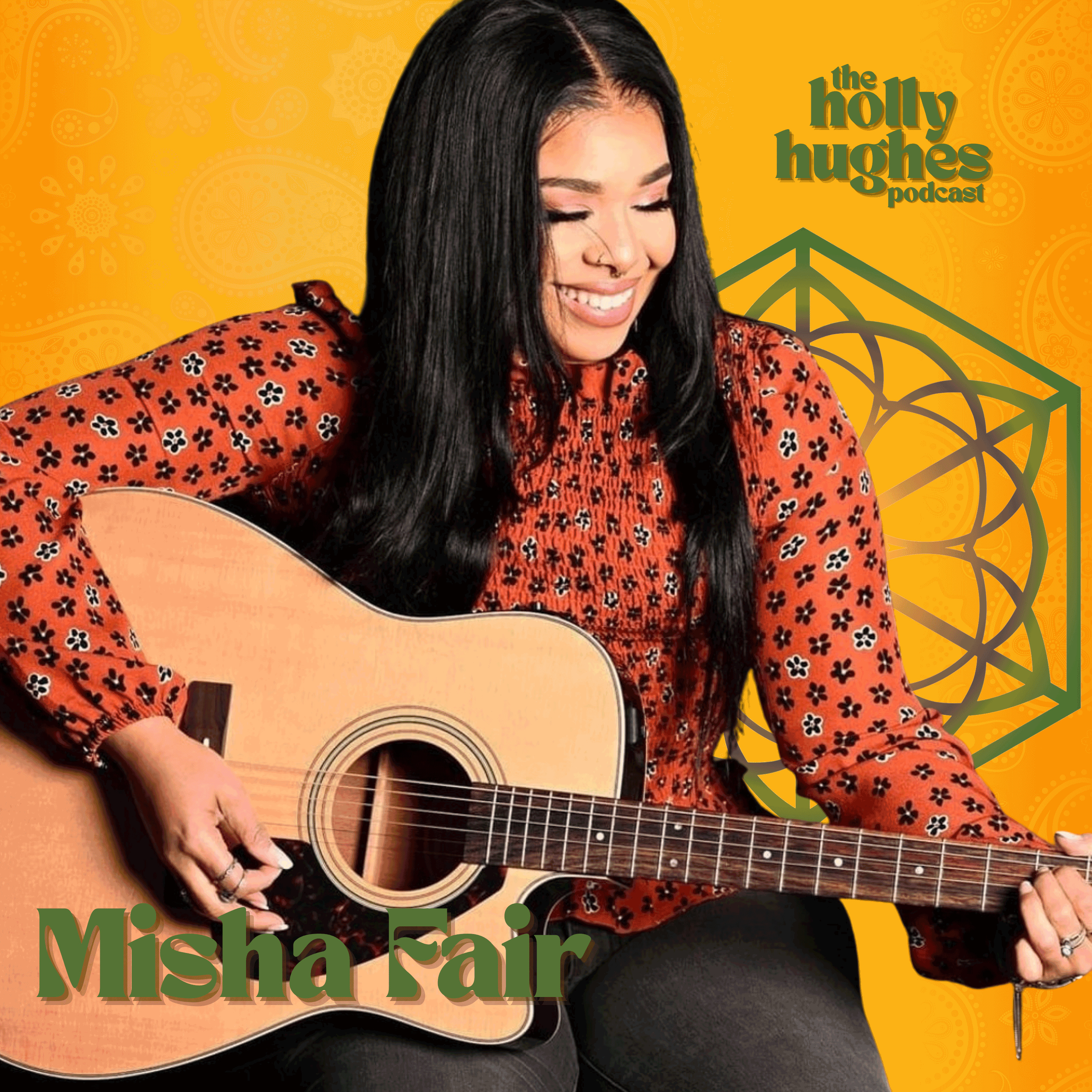


Misha Fair is no stranger to music and the industry surrounding it. Growing up in Georgia, she was raised by a family that had deep connections to music, including parents who were in the SOS Band, a grandfather who was friends with Sammy Davis Jr., and another grandfather who was nicknamed “King of the Stroll.”
It’s no surprise that Misha has learned a lot from her family about the music industry, and today is a singer, songwriter and producer herself. Misha records and performs under her own name and draws from those intrinsic experiences to create her own brand of country music that resonates with a diverse audience.
Misha Fair joins host Holly Hughes on today’s episode of The Holly Hughes Podcast to talk about her experience growing up in a rich musical family, breaking into the industry with her own unique sound, mentoring younger artists and connecting across multiple generations through a shared love of music.
Visit Misha Fair online at mishafair.com.
Chapters
00:00 The Creative Journey Begins
02:56 Musical Heritage and Influences
06:02 The Role of Family in Music
08:57 Finding One's Voice Through Music
11:56 The Power of Songwriting
15:01 Emotional Depth in Music
18:06 The Intersection of Pain and Creativity
20:45 Crafting Songs from Life Experiences
24:04 The Evolution of Musical Identity
27:11 Live Performances and Audience Connection
29:59 Balancing Emotion and Discipline in Creativity
32:13 Creative Processes and Inspirations
36:59 The Role of Rituals in Creativity
41:14 Writing for Others: The Songwriter's Journey
46:32 Nurturing Talent: Mentoring Aspiring Artists
50:12 Defining Success in the Creative World
56:50 Family Connections Through Music
0:05 Welcome to the Holly Hughes Podcast, where creative people get together and talk about living a creative life. I'm exceedingly excited to have Misha Fair here today. She calls herself an alt country artist and songwriter. But I think you're a soul country artist and songwriter, and so I wanna call you that today, if that's OK. Yeah, because your music just feels that way to me. And your voice and your vibe and your sound has all got that hmm in it, right. Do you know what I'm saying? Like, do you consciously right that way? Like is that where how music feels in your body?
0:47 It's interesting, I come from a background of jazz and soul and funk with my parents and grandparents being in music, in those sectors of music. And so I think that is definitely in me. But I'm classically trained, so I, I'm always thinking melodically and, and I don't know, I think that's, it's just how it comes up. I think from a really young age, because I also was really exposed to like pure Americana, old timey, you know, country. And then going through, you know, I think as we all did, the 90s country boom, I don't know, It's like some days the music comes out and it's so country. It's all dulcimers and banjos and mandolins and everybody's like, oh, you sound like Dolly.
1:44 And then there's other days where I'm squalling and I sound like Etta James, so you know. I do, I do because I listen to all yours dogs. So like for me, like with beg and love, sweat and wine, right, like you know, I'm listening to it. I'm like, like, just wanna, like, I just want. I'm with you. Do you know, is that OK? There's too much I want to back up. So I want to talk about your family and your background and being exposed to music. I always say my appreciation for music or being able to read it or, or whatever the instruments I grew up playing is because in elementary school I had a really good music teacher, right?
2:27 And so that opened the door, right? Because that wasn't really, not that my parents didn't play music, but I think that was probably a massive luxury for them growing up. It was like, you can even consider that we have many more important things to do. But I think when you are exposed to music, musicality and sound like that at a very young age, it shapes the world. So I want to know what your world look like growing up. Oh my goodness, I think I had a pretty unusual look. So first of all, I grew up on a street. It was the only St. in our neighborhood that didn't have a music name every. It was a color and I can say it because it's really cool. So Indigo is the street that I named that I grew up on. And all the other streets were like lyric and Symphony and, you know, things like that.
3:21 And so, I mean for like the entire neighborhood, but we were the first family in that neighborhood. But that was not like the correlation. It just happened that way. And my grandfather was a jazz musician who he opened, well, my father's father, he opened the Playboy Club in Atlanta and was like a really integral part of that scene of jazz. He was friends with Sammy Davis Junior and you know, there was a lot of that. And then my mother's father was this sole pioneer. His name is Chuck Willis and they call him the King of the Stroll. So whenever we do like the Soul Train line or even on American Bandstand, when the teens would line up and go down the line, the Stroll was like his thing.
4:13 So, you know, a lot of his music got sung by Conway Twitty and Elvis and and Otis Redding and all these people. And so I always knew that, you know how people say it's in your blood? Because outside of just knowing, I had like, professional musicians and my parents were with The S.O.S. Band. And during the 80s they were like everything, you know? So at school, we do show and tell. They were partly I did not like that was not in like shut up. Yeah. Let's see, that was my era because I'm older, but like, shut up.
4:54 So yeah, like other kids would come to show and tell or go to. I remember Parents Day in kindergarten and there was one other kid whose dad was like a really big radio DJ. So when he showed up and then my parents showed up and they actually brought other members of the of the band, but they came in there like concert gear, like fresh off a tour. And I mean, it was crazy, you know, I, I was just, I was that kid, but my parents were really, my, really grounded, you know, my mom and well, my grandmother, she was a music teacher. So for her it was like, you got to know how to read music.
5:36 So I'm, I think I've known how to do that since I was like 4, because that was just important, you know? And wait, did you do like did they even do like the do re MI with your hands do or not just just the? Music. It just, you know what I'm talking about, yeah. Like, I don't remember those systems. I just remember. So I, when I tell you I was primed in a very interesting position, like at my church, the the minister of music was like over the Morehouse College Glee Club. And so everyone around me was so deeply embedded into the music community. And so even when we were like, if we were on hard times, people would like come together and make sure that I can have music classes and join like choirs and I had access to auditions and things.
6:25 So for me, it was therapy because I had a really rough go at socializing. Like I didn't socialize well. So being able to while my dad was on tour was that. I mean, I was really with my grandma the whole time. She made sure that I was in children's choirs. There was a, a touring choir called Kalenwald, and they would give you sheet music even if you couldn't read it. You had to have it with the notes. And I think that's a logical process happened where I'm like, OK, the notes go up on page and the voices go up and the notes go down and the voices go down. And, and, you know, people started, you know, giving me tips about how to find those notes, you know, but I don't recall having a formal music class until high school where outside of just being a chorus and my parents, they were just doing their thing.
7:27 You know, they were young and they were, you know, musicians. So we didn't like, play together. I actually didn't play with my dad until recently. Like never even practice in the house. Like was there like any pressure? Like I'm thinking if I came from a musical family, what if I sucked? No like what if, like what if I am like I'm kind of tone deaf. I think I can, I think I can sing like 3 notes actually on key, but I'm always singing. I'm the girl in the car singing loud. I don't care. I realize when I exercise right because I'm always taking dance classes. I'm sing. I'm like why am I so out of breath? I'm like I'm singing Oh my God can the person next to me hear me? I hope not like I do it as like a release, but I am not creative that way. So how I experienced the world, the world and like horrid moments as a writer.
8:21 I'm so fascinated by like your process of doing that, especially again, because you came from that like my mom's like she was a stay at home, you know, mom, that was like which her option back in the day, but always an artist, right? Always painting, always doing something. So I was exposed to art really young, right? So going to a museum or going to see something, I get really hungry for it when I don't get to get that fed into me, which is like why I dance every week, whatever. My my dad was chemical engineer, so totally different kind of mentality. They both grew up really poor, right? And so for us it was go to school and do better, right? So growing up it was like, well, how you want to write? How do you make a living doing that? Like there was no blueprint for, you know, children of first or second generation Americans at that point. So I'm fascinated being in this beautiful pot of music and sound and and like, and then having that in your body. On a very strange side note, if you know jazz, do you know the name Eddie Palmieri at all?
9:34 I'm not familiar. You ask your ask your parents if they're still around. But he was my neighbor growing up and he is a jazz pianist. And he would come home and out of his house, you would hear and we would all just sit outside. But like listening to this man and his son is also Eddie Junior, whatever this big family in there making music, right that. So I'm assuming your house must have been like that for the neighbors. I wish it was. So, you know, I think growing up they gave me options because so my dad, my dad became a musician because I think when he graduated high school, he ran out of options. You know, it's like, all right, everybody else is going off to college and doing whatever and he's been like surviving and taking care.
10:28 While my grandfather was away working and someone introduced to him, he found an old base and he got, you know, he kind of taught himself. He's self-taught. I think he holds on to that because he didn't go to college. He's only been a musician. And he wanted me to do other things, so he never pressed. And when I was about to go to college, we sat together, you know, talking about things because I started getting really discouraged right close to the end of graduation. And I asked him, you know, should I do music, too? Like what? Just asking questions. And he said he would tell me what his dad told him. And he said, you know, if you love it, you'll do it for free. But be so good you never have to. And.
11:20 We snap on that one. That was good. It, I mean, it was like he's telling a 17 year old this and I wasn't sure because I didn't have good practice habits because growing up my grandfather got me a saxophone and I was like third grade and I learned then that I mean, do you still? Play. No, no, I So I through the years I kept picking up instruments and putting him down. I had really, really poor practice skills. Like I wanted to do the act of playing. I did not want to do the work and I didn't know that that was what it was because with singing, I was singing all the time.
12:02 I and I didn't just sing. I, I was very creative. I did hair and I did like I did all the hair in the neighborhood and prom hair. And you know, I, I did, I made clothes and jewelry. And, you know, the funny part is my grandfather, Chuck Willis, his wife, she owned a salon that did Dionne Warwick's hair. And like, we were in that kind of just that early Atlanta culture, but we weren't rich. So it was one of those things where my grandmother was struggling a lot because my dad was often, you know, working. And she wanted to just make sure that I was, I think that I was balanced because because I wasn't like, you know, it's like you hear someone on the radio, you expect them to look a certain way, carry themselves a certain way, have certain things. And I didn't.
13:01 So I was bullied a lot. And my outlet for what I was experiencing was music. And I didn't care about it for everybody else. But that's just kind of I wrote songs for myself since I was really, really little. I had that one saxophone that I never played and a karaoke machine. And I learned that I preferred the karaoke machine and the tape that I had had Whitney Houston and Billy Ray Cyrus on either side. And I taped over Whitney Houston and kept Billy Ray.
13:43 OK, yeah, in that crazy. Well, her notes are hard. It doesn't matter if you're good, right? Hard. They're too hard. Yeah. You know how you could put tape on a tape? You know that tell my age. You put tape on a tape and you could record over it. So I would like record my own songs over the other side of it and play them for my grandpa. Like, tell me if this is good music to you. And from there, I'd probably, by the time I was nine years old, I was in studios because my dad was recording, doing other like gigs outside of The S.O.S. Band. And I started doing demo singing. So I learned how to imitate.
14:24 They would tell me, you know, do you know how to sound like these R&B singers that were coming up like Monica and all these? No, I know them all. You can go there. I'm their way. Actually, I played The Boy is Mine the other day. It came up on something and I was like, it's like, I'm like, why do I still know all the words? This is just like a weird thing of mine. Anyway, sorry, keep going. Yeah, no, that's, I mean, and all of those singers, they didn't sound like me. I knew they didn't sound like me. And and I think I feel like I whenever I tell this, I I kind of skip around a bit. I think the biggest point of it is right before that occurred, I had like a really weird life altering thing happened and I was really, really young. I think I was about 8 years old and I was sad. And you know how adults when they start noticing that you're sad, it's they try to like place it and figure it out, but they don't know.
15:17 And the music teacher at my school gave me a solo to just kind of play around with, but it was Hank Williams. I'm solo, so I could cry. And I think in the choir we would sing a lot of Amir Khanna. And this was the first time that I think I had heard a country song that resonated so deeply with me. And I sang it all the time. And not only did I I sang it, I mean, just all the time. And if I met people who I felt, you know, would receive it, they would get that song. And from there, I think I started to shift to wanting to hear more country music.
16:04 And I think that's where everything kind of turned for me, where I wasn't just listening to what my parents were listening to, but I was trying to hear more, you know, music from other spaces. And yeah, I, I went into the studio to do, I have so many random stories and I don't want to like bog this down with those random stories, but no. I love the random. I think I'm, like listening to your story and like, I'm like the grown up mother that I am, like, wants to cry for the little girl who felt so alone and bullied and isolated, who was probably introverted because right. And without safety and protection. And yet you have this gift that brings people like I'm. My eyes are literally and like, yeah. And I'm a smush.
16:59 I know, I know. Yeah. But like, I want to scoop you up. And I know you're a very petite person. You're petite. You're. Yeah, you're petite. So like, I'm thinking it must have been even smaller, right? And like, I just want to shove everyone back. I've always wanted to explore the idea of that there is some sort of pain point in our lives for everyone who's creative, right? There are some really sad, horrendous, sometimes uncontrollable moments, right, that we either like, use it as fuel for our creativity and why we go forward, or it can like, nail you back in a spot and not let you grow right like that.
17:49 I think sometimes tragedy has that, but I really haven't met a successfully creative person who hasn't. It hasn't. I'm sure plenty of regular people do, too. But I, I write about a lot of my, like, sad stuff because I don't want, I don't want you to think of it when you see me, right? Right. Look, the beauty of being a writer that gets published in papers, you don't even know who's doing it right. But you as a singer, as a musician, it's your face and it's, it's your voice.
18:30 And I think claiming your voice is so beautiful and powerful. And I mean, I, I would imagine if I was A at 8, I was flailing like literally, I danced so hard because that was my way of getting, I have all these things that no one knows what's going on in my head or whatever. Like no awareness about. No, that would be not. And I would was really good at masking. So you would never know that I was unhappy, right? I was the good girl. I did all those things, but I would burn. I my body would burn literally like every muscle to get to get it out now if I could with my mouth open and sing like that's like a whole other level. It's like a, it's a whole different dimension. It's like it's sound, it penetrates, it's so many other things.
19:25 I can't create that I So when was the first time that you wrote a song? Oh my goodness. OK, probably it was early. I I had have been like six the first song, like the first actual song, because it was in that mixtape for my granddaddy. I was like, do you? Still have it? I have no idea. Every few years when I'm like doing stuff at my parents house and unpacking, I run across the tape and then I say I'm not going to lose it. I know it's here and and then I can't find it. So I know it's there, but like. I would, I think, and even my, my daughter now, like since she was, I have video of her at 3:00 and 4:00, like creating these songs that are very cohesive and saying things that you wouldn't expect a little person to say. So I feel like I was doing that probably before, but I think the first time I was aware that I was saying what I felt like that it was emotion and not just saying words and imitating or mimicking what's on the radio.
20:35 After I got that karaoke machine though, I started, you know, learning how to record myself because my parents had studio and they were we were always in studios And I learned how to take a boom box and my karaoke and record myself on one side and then take the tape and play it back and record a harmony. So I had to been about 10 around that time and just experimenting with sound and I, I would say things that were so deep for a kid, you know, I, I do remember a song about having like 5 steps for you to like 5 steps for you to love me.
21:24 I think was like 4 step like I counted down and I remember that feeling and now thinking about who was I crushing on? I don't that I don't know because because I'm like, why don't you see me? That's a but you just made me remember the the the name of the boy I had my first crush on ever. He was so not interested. He's like, yeah, no way man, and I not interested. Yes. That's what's important. Music is like that, right? You like I can smell like smells of like I wrote a song about my grandmother and when I sing it, I have like a visceral response to things that I remember about her that may have like faded a bit.
22:07 I think music is kind of that thing. You remember old names and faces, so. So, So what do you want people to experience because you play a bunch of live shows? Like what do you want them to experience when they see you? And is it the same thing that when they just hear you? I think as of late, especially in these last couple of years, I've wanted people to see a softer side of me, which is probably a more complete view. Because when I wrote the songs that are out and available that are country songs, because I've done features and other things and actually had a cool emo pop album that was out a few years ago. And when we went country, you know, officially with the published music, we pull those down. And I realized that when I wrote them, I was in a different space.
23:03 I was changing a lot with my social circle and my music circle, and I was struggling with feeling heard and seen, which kind of explains some of the lyric. Like, who do you think you are? Like that screen was a real moment that had happened where I felt like I was, I got kind of brushed away or aside rather. And I was like the head of a department at that time. So I'm like, how dare you put me out of my. And I was, you know, and I wasn't really mad, but I just wanted to feel assertive and feel heard. And I think that people think that my music is a little angry, like a little revengey sometimes. So because it's so like, I'm very boisterous. I'm very present, I'll say, I think. I wouldn't say Provenge I, I think it's look at me. Yeah.
24:06 You look at me when I say to look at me. And this is who you'll see of me. Yeah. Oh. That's like that. That will be the special clip of it. You look at me and see, yeah, no, I think that is controlling your narrative. I think that's like a moment of saying this is who I am. Yeah, right. Like it's just like my whole saying about like don't put me in a box cuz I'll smash it and dance on top. Yeah. We're not one thing. Yeah. And creative people have to do the dance a lot between day jobs, right? Yeah. And earning money or doing whatever. And living and loving their art, whatever it is right like to have your voice, that you have sung and had a voice and let it transform and grow with you is a gift instead of just being one.
25:01 One note. Literally. Yeah, yeah. I like that because it's, you know, ironically, when I said it out loud, I realized, you know, when I released Memphis, that was the first single that we put out in 2023. The first message I got was like a hashtag revenge country. And I never heard that, but I owned it. And I was like, OK, but I, when I wrote it, that wasn't what I was thinking. I actually had written that thinking I was going to sell it to somebody else because I'm a songwriter, you know, and I knew that their persona was a lot more forceful and like, but when I wrote big, I really wrote big for me.
25:44 And you know, the other songs that are out, not one. They all have that common theme of empowerment. And that was the central theme for me in that time of my life is like empowerment, like I'm and I'm here. You articulated perfect and now I am here. But I'm not mad. I'm not sad. I'm I'm often feeling very loved. And I knew that during that time I didn't write very many love songs. And I don't know that I've even in love. I'd never wrote love songs. I always wrote about all the other experiences.
26:26 I would write about someone else's experience before I'd write about my own. And I found in this last couple of years that I've written more songs about my experience in loving others and loving myself, whether it's my daughter, my son, my parents. Like I write these these kind of homage pieces. And that's the music that's coming out in the next the rest of this year and the next year. And so I think when I play live, I play a lot of the new material to test it out because I need for people, even if it's out, not out yet, I need for them to see that there is depth in the stories and just the emotional, like the landscape.
27:15 I think of the of the music that I'm writing, so. Isn't that what country is though? Like it's storytelling like country music as a whole is. I know there's pop like, but I know there's a million different things. Whoever's listening, don't get mad. But I think at the heart of it, it's storytelling that my husband used to listen to alternative rock all the time and he was he was angry all the time is like, hey, babe, I was just saying we're in the South now, let's try some country. And it's totally chilled though, right? Like, you know, it's, it's really changed. And I think in the last, I don't know, 15 plus years, there's way more options of country music out there. So I think that's interesting.
27:56 I want to ask you, do you, are you more prolific when you are in an emotionally heightened state, happy or sad? Or are you just disciplined like you were like how you weren't when you were younger and you just make time to practice and write X amount of times a week? Wow. OK. So I think I cycle through both of those spaces and, you know, emotional regulation, it's a. Real. I never claimed to have it by the way. Like, you know, I, I will say I, I, I unfortunately, well, it might be very fortunate.
28:37 I have ADHD pretty seriously. So my focus is like always like, and I use those surges to create because I know that, you know, I'll get into a mad dash, like really a mania of writing where I won't sleep. I'll get into a project, but I'm also, I'm a painter, so I will throw that in there. And when I'm painting, I do the same thing. I will paint for two days and not sleep until the piece is done. So music is like that for me. If I'm recording, it's like my manager will walk in and my eyes are like buck wide open because I haven't slept. And I'm just trying to get it all out because I don't want to crash and not be as creative as I was the day before.
29:24 But then because I'm also a music teacher and, you know, I've been doing artist development for like 13 years I think now. And you know, I have to practice for the artists that I'm working with and the students that depend on me, my practice skills and my dedication to like sitting in a system. It improved my life as a musician and my skill set probably in a way that I wouldn't have done just being a musician and just playing because just playing out is it is just OK. I've got a gig and I really love this song, so I'm just going to jam. And I've had good examples.
30:10 My dad practices. I watch him all the time. You know, we don't play together, but I do watch him preparing for gigs and, you know, he's always prepared and he has to because again, he's not or he doesn't read traditional music. So, you know, to compensate, I think, for those things. He's always very, very, very meticulous about the practice. And I do that too. You know, I will make time now to sit and go through all my songs and do charts when it's time to create. Depending on what it is though, because I do write for other artists and I write for sync music for like film and TV and different things like that. I make a schedule for myself to sit down. I don't force it though.
31:02 And I use a lot of like psychological stuff like the little lists, you know, when you say, hey, here's a word and what does this word make you think of? And I do a lot of that though, to keep me like going so that I don't have to rely all the time on that heavy emotion and, and just pouring out all of the things that are personal to me. Yeah, I think sometimes for me personally, I give my, I do the five minute writing exercise a lot. Yeah. Right, cuz I, I am pretty good at procrastinating. I hate laundry, but damn if suddenly that laundry becomes really important and I'll be like just sit for 5 minutes and then the 5 minutes almost inevitably is an hour and a half to two hours.
31:45 Like I just, I just you just get in the zone. Also depends like where I am in a book or an essay, like is it a first draft, second? Is it editorial? Like all of those different, different thoughts. Are there that many processes to like writing a song, right? Like, because I know there's structure to a song. You have to get to the hook. You have to like all of those things that I don't know, but I know. So like, I wonder, like the first draft is like, Oh my God, this is the great idea. Or are you always listening and you hear a sound or a tone and you're like, yeah, that I've. It's interesting. I feel like you just, I described a lot of a lot of processes because depending if I'm riding by myself, sometimes it's it can be the last way You just describe it where it's a sound.
32:36 I'll pick up instruments because I have like a instrument rack that has all these little teeny things that I like, very interesting sounding string instruments, not necessarily just a guitar. And I'll play around with melodies there. And if something strikes me, I mean, it could be the washing machine like booming. I've, I've recorded the washing machine just for like a bass drum and things like that can, can make me feel like, you know, inspired. And that'll start something. I just always keep like a recorder of my phone or something so that if I get that idea or I hear that sound, I can record it and and then see if something comes of it.
33:19 And I learned a long time ago that I do a lot of my writing when I'm really not able to write it down. So yeah. So like if I'm driving or like in the shower. So I used to have a this idea that if the idea stuck past that moment, then it was more it was really worth me working on if I remembered it walking down the hall and could make it to where I can, you know? I so disagree with you. I so disagree. I love but I love that this is my favorite part. I disagree because I have notebooks everywhere and post its I like colored paper like everywhere.
34:04 I'm very color makes my brain OK, right? There must be a thing about that. So I have 2-3 blank notebooks and they can't have lines. Bless you all who like to write with line paper, but I can't line paper and I write diagonally. I write diagonally like this across the page. So diagonals creative and if it's A to do or mechanical thing, it's straight. But I have this because we all know I'm clairvoyant and all those funny things. So I have there's this moment when you're when you're not fully conscious, like right before you fall asleep, right? So 3 notebooks in the room and I've had I've had to get much better. These are my favorite pens.
34:44 What is? This. Hold on, hold it up, hold it up. It's a pen. Tell you're my person. I am your person. This is what I've been. Yeah. Anyway, Pen tell. It has to be this one. I have a box of them. If it's, I don't write in black ink, I can't even read my handwriting in black ink. It has to be blue or I have a bajillion colored markers. Because again, but I learned if I don't put a marker next to my bed and I go to write in the middle of night where an idea comes to me, sometimes I write and I I will show everyone who's watching on YouTube because why aren't you watching on YouTube? It might look like this. It might be like a squiggle, but part of it gets erased because the pen isn't down. So clearly you need a marker and they don't always make sense when I wake up, but almost always it's that piece that I'm missing. Like when I'm writing and I'm stuck and I know I have to get from point A to point B and I really love point B, but the the muddy middle of how to how do I get there? Like what is the whatever, all the writer things, I take a nap. I become narcoleptic.
35:44 I'm like, I need to take a nap. And then I put a book on both sides of me, an empty notebook and my pen and almost always an idea will come and I'm like, that was it? So I used to think like if I wake up and I still have it, but if it's like clairvoyant message or if it's a message from somewhere else, you're not going to keep it, right. I also have notebooks in the car. Not I don't recommend that there's better technology now, but I have I also have notebooks that I think are too pretty to put bad like my words in sometimes and I like covet them and I just I literally have a stack of those. Don't judge me. But I think that's also part of the creative process. It's almost like here's an empty space. What are we gonna fill it with?
36:24 I've struggled through times of feeling absolutely not creative and thinking that I suck at everything, right? Whatever. It's the creative person. Not that I suck as a person, but that like my art or what I'm trying to do is not not good enough for what I wanted to be and always getting judged right? Because artists are always being judged by people who don't do it. Whatever, Don't even get me started. But for you, what? What is that like? Like you have to be on stage and present and be and be the woman and be the face of this. And what if you're having a bad day? What if you're not feeling it?
37:06 How do you like? How do you do that? You know, I still don't know. I, I, you know, there was a time when I would because I'd have such a hard time to just be up there with so much energy in the room. I used to carry because I make, I make jewelry a source crystals and stones and and I would carry like carnelian and, you know, tourmaline. Like I'm like please like block this stuff that I'm feeling. Selenite you need selenite like do you have selenite? Older things, I think I have some say I have all kinds of stuff, pyrite and like just I'm like, where's my money and where's my disc?
37:50 Where's you know? It's just high vibration. Just high vibration. You know, and, and I would try to place myself in the space where I felt more confident and, you know, also always trying to protect myself too. You know, there's so much of that that I think I'm, I know that I'm extremely empathic and I feel a lot. And so to keep myself like focused and in the space of delivering whatever the, the musical message is, I have to block out everything else. And now, you know, especially going in, you know, into country music and I'm always wondering what people are feeling and thinking about the music.
38:38 And that can be overwhelming, you know. So, you know, I do have, I don't know. Have you ever seen? There's a book by Julia Cameron called The Artist Way. Of course it's right there. Oh, that's like literally right. Like right there. So like between that and like Atomic Habits, that kind of became me walking myself through what my day on a show day or really a regular day, but especially when I have show days, I really have to do my morning pages and like clear everything out and have and create a clear path to the stage and visualize that moment and what I need and what I want, what I want to give to the audience and what I want to receive back from them prior to actually going on the stage and doing the job. So it's your ritual, would you call it a ritual or is it self-care or I don't like people have things to double check. I think in seeing you, I know you were exceedingly to open right as an empath looking at another empath. So for me, I'm just like what color? Like what wall?
39:53 But I feel like part of your ADHD lies to you that when you take away feeling some of everyone else's feelings, you're gonna be left with all of yours. And then you'll have to like finish processing some of that, which is fine, but it'll make good art. But I also think some of it is like old. We could just clear it away, be like, oh, like that old thing that doesn't matter anymore. I don't need to connect with anyone through that feeling in my audience, right? Because you're like even the heck that you said earlier, like you're Misha now see me hear me bitch. OK, sorry. I just had to add that. I know I was like, it's like I'm all soft and fuzzy and exceedingly emotional and squishy, but I have a good like there's a here at first just and I keep a lot more, but you are again in front of people way more. So I admire that.
40:54 And maybe offline, I will share what I want to do for you. But I also really want to touch on, like you keep saying, how you write for other people. And so like for me as an author, that's ghostwriting, right? So and that what is it like to have someone else sing your song? Have you always liked it? And do they stick it as good as you? OK, all right, so I and. You don't have to name names because you know, obviously. I enjoy the process because I get to get outside of like, I'm still infusing pieces of myself. I think the challenge is always like they always say, don't give them the sauce.
41:35 Like if you're an artist, don't give them all of what you would do because now you have someone copying what you would do. And now they've become you as an artist inadvertently. And so when I started writing, initially, people would say you've got to tone down the vocal. And it used to be because they're like, nobody's going to do all of that. Nobody is going to be able to reach hot, sing is high and sing is low and do all of these harmonies. And over time, I started learning how to communicate with the artist prior to the, you know, like the writing process or during it and really listen to their stories, not try to write songs with them, but get to know them and there's and know their real stories and then interpret that. Not necessarily what they say, but sometimes it's just the feeling like the core choices.
42:37 If they're melancholy, there's something in not necessarily using sad chords, but choosing even the juxtaposition of something a little bit lighter can like affect people in a different way. And so I think about that all the time I'm looking at a person and, and things that I think I know about them versus that vulnerability that you start to see when you're really genuinely asking them about themselves. And, and that helps me with the writing process. And I tend to get like really authentic songs from that. And then watching them sing the songs in the last few years, it's, I think it, it got a little bit hard because I was doing more country stuff and I wanted to keep a lot of the the songs that were going out. Honestly, it's how Memphis came to be. It's like some of the songs that I have now, they're mine because I, you know, got strong at the end of the decision and said, you know what, everybody here wants to sell my song but me and deciding that I would sing those songs and that that artist or whoever it was for was not going to be able to do what I was able to do.
44:00 And I and I wanted the chance to do that. But I do write songs that we call them throwaways. We're like, it's OK if they don't, you know, if it doesn't sound like me, that's the point. It's art. I want you to interpret it. I want to see it through your eyes and your lens. And so we leave space for that as a songwriter, that's we should do that, you know, like give them the opportunity to be collaborative in the the storytelling and the the presentation of this art. So yeah, that's. Is it true that songwriters, you you, I'm assuming you keep your rights because that's how royalties are paid? Is that how that works?
44:42 Yeah, Yeah, as a songwriter. So, you know, I'm also a producer. And as a producer, you can give people songs. You know, you can sell songs exclusively. I mean, that's ten. That tends to be the case. But most of the time you are reserving the rights to the master recording of the song. And as a songwriter, you know, I copyright everything. And, you know, I make sure that, you know, I can do what I want to do with the song. But I I do share, you know, with artists often, which you don't see that a lot, you know, where you'll give something to the to the artists.
45:22 But I'm like, if you are adding to the art and interpreting your way, like, you know, we usually try to work things out and, and, and the business I usually leave to my manager. But I, but I do, yeah, I, I've set things up pretty well or we set things up pretty well where I'm able to still retain like my name recognition and then whatever percentages that we agree on for having written the song. Yeah, I think a lot of artists don't talk about like, money or like making sure you own your stuff. You keep your stuff, man. Just keep it. I think that's my biggest because you can always reuse yourself. Like that's my biggest.
46:04 Also want this is a burning question is a little snarky, but like you work with artists and you work with younger people who want to get better at singing and whatever. Have you ever run across a kid who or an artist who their whole heart and being is in it, but you know that voice is really not going to like what? What can you do for that? Because we all know there's plenty of very famous people who are all auto tuned right? Like that exists. Not we can't deny that that happens. But I'm curious about someone with all the heart who has the burning passion but maybe not the skill. Like, how do you manage that as a person who's mentoring them?
46:47 Well. Or do they not get you because you're like, I only deal with people who are this good? Like how does that work? I think I've what I learned, especially when working out of Atlanta, was that there are a lot of people who won't take an artist unless they already are at a place where they can take, you know, the credit for having help to them get somewhere. But for me, I actually like when I get a singer who is a little underdeveloped because, you know, talent is one thing. You know, there's things that you just, you know, we know kids that just hum and it just, oh, OK, they must be able to sing. But then skill is something that you can grow just like you can learn how to type.
47:32 And I treat the voice like athleticism in a way, you know, like if you, I mean the whole body, it's all muscle and tendons and all that. And so the same way you can be out of shape and go and train to be stronger and more flexible and more agile, you can do the same thing with the voice. But it all starts with clearly understanding what you want for that voice. So I do evaluations, doesn't matter if it's a child or an adult. I always evaluate where I listen to them just sing something naturally. And then we talk about if in a perfect world, what would you want to see happen with your voice? And then we compare that against where they already are. And then I try to put together a plan that builds up those skills that they say that they want or that I think that they need. And we would do it just like a track coach would do for a kid That's, that's slower, but not slow because they're, they're just slow.
48:31 I mean, they need muscle to be built and they've got to do, you know, there's certain exercises they can do to be, to do, I guess sprints, for example, versus long term running. And the voice, again, it's the same thing. And I try to look at it like that and never assume that where someone is today is where they'll be in two weeks, a month, six months or a year. I see people grow all the time and become like incredible singers, but they have to be willing to address things and do the work to do it. I love that you, I love that I love all of that. I mean I don't I didn't even know that was an option that you can build the skill and get I I think that's hopeful.
49:17 I I'm a big believer that I think everyone should be doing some sort of art. You don't have to monetize it. Singing, pottery, dancing. I mean, those are some of my things. I bought a bunch of watercolors. I posted a video like a month ago about how awful my picture is. And it's the whole point was I just had fun doing it. Yeah. And it's OK to it's amazing to pursue a creative life, right? But it's doesn't mean that it the end game or this is winning, right? Like So what success for you? Like what we're going to give you every dream that you want. What is it? Oh my goodness, it really is.
50:01 And it's such a simple goal. I want stability for my kids, for my family, for myself. It's, it's very simple, you know, like my, it goes back to that first thing my dad said, if you love it, you'll do it for free. If I couldn't do anything, you know, I've had speech problems in the past, like from health and all these things. And they took my voice for a while. It took my speech. And I remember someone saying, well, if you can't, if you can't talk, you can't work. And I was still was working like a regular like day job thing. I think I was working at a hospital, ironically.
50:42 And, you know, the therapist realized somebody had said, like, talking to family, that I was a singer and I was stuttering so badly. And she said, well, today we're going to sing some of these things. We're not just going to talk. And I couldn't get through a single sentence speaking. And we started singing. And I watched and she watched as day by day my speech started to just smooth itself back out because it's just not the same side of the brain. And I, I learned then, yeah, really speech and music, like there is in something different about language and music. And I feel like that's what they always say about music bridges both of those hemispheres.
51:28 And I'm a linguist as well. So like the the threat of losing my voice was so insane to me that I might not ever sing. And then knowing that I was singing songs but still had a stutter, like a debilitating stutter when I spoke. And I still stutter when I get nervous or tired and things like that. And I just know that there's so much just wonderful stuff that the body can do that we can do as people. And I always want to make sure that I'm looking beyond what people think I can do and what I think I can do and pushing and pushing and not giving up, you know, So it all for me, it always comes back down to that as a, as a singer, as a writer, and just knowing that if I couldn't write, if I couldn't sing, I would have been writing.
52:24 You know, if I couldn't write, I would have been putting colors on the page, you know, something to help me create the pictures in my mind and in my heart. So I love that. So there's like, there's no way you wouldn't be a creative person because it's just in you. OK, so the burning question I have is like, have you played with your dad like this? Hearing how often you didn't? I'm like, what? What the hell do I have to facilitate this? What is going on? Please tell me that you 2 have collaborated in something. I had the sweetest moment with my dad last week. So last week I every Oh my gosh. So my birthday just passed and my son is like my birthday twin.
53:08 I had him just like a few hours before my birthday. So he's the 4th, I'm the 5th of July. I went home so that I could, you know, be with my parents and all that stuff. And I play dulcimer, which, you know, I had like a stick dulcimer and it's really cute and really easy to play for the most part. And my son, every time he sees me with anything like, you know, that's guitar, like he'll pick it up, but he doesn't usually know how to play. And, and he took a liking to this thing and he just played around with it. And I sat with him for about an hour and just showed him this chords and things like that. And the next day he picked it up and I picked up my guitar and I was just kind of just leading him and singing through like progressions.
53:56 I would sing the progression like go to the one four, you know, 5-1 and just singing and he starts playing along and it was right. It was so good. And then so I was like, let me show my parents. So I go and he and I are sitting there and I have the guitar. This first time my son and I had done this. He's playing, my dad goes and grabs an acoustic bass that he never plays, by the way. He just, he used to have this deal with Fender and they gave it to him and he just keeps it. But that's what you need for like country music. And we end up playing the greatest country jam.
54:38 It was so good, and I was fighting tears the whole time because my son didn't know. This was the first time that I was doing this with my dad and to be able to do that with three generations was overwhelmingly powerful for me, especially because we don't come from the same music style. But but he has played country, you know, he has with other bands, just not with me, you know, and, and it was nothing, no shots to me. He just, we just, I never made the time and you know, that's how it went, but whatever.
55:20 Excuses, excuses. This is a magic moment. Did you record any of it or is it just a beautiful memory? Now my mom recorded it. My mom recorded it, but I was literally just waking up and I was and you know, being, I don't want to call it vain, but literally I'm like, please don't post it anywhere because I looked. So I just, I just rolled out of bed. But for me, it's one of those things, it wasn't even about my core memory. I just kept thinking about the core memory for my son. You know that he's able to do this with his mom and his grandfather, you know, and I don't know that he'll ever forget that.
56:01 I hope he doesn't, you know so. It's beautiful. It's that's that's like one of those magic moments in life. I would assume right that not like family thread, the Thai music and I also think for you. I think you downplay it too much, like from just like listening to you. But I love, like for me hearing you tell that story, it's being seen by the men in your family for your musicality and your gifts, not just the nurturer of what they need. Like, that's that's amazing. Yeah. I want you to like, put that in your coffee and drink it Like, that's some good. That's really good stuff coming out. I like that.
56:45 I can't imagine what that's like, honestly. Like I that's like a a new goal. Yeah, it is beautiful. I, I will say that the support that I have from my dad particularly, and he's always been that way. I think that I've always hidden because to me he's like here, you know, and I've always hidden like, like I don't do enough. And you know, that they call it imposter syndrome. And I really have lived in that space. And he's always tried to remind me there's in his eyes, there's nothing wrong that I could do, but I always wanted to be like, he's like, he said so good, you know that.
57:26 And I just, that was the first time that I think I didn't, I didn't shy away from the opportunity to play in front of him, but really, because it wasn't in my mind, it wasn't about me, It was about my son. I wanted him to have a moment, you know, so. Those cancer women, I'm telling you, they're givers. They're just givers. So like, I want to throw this out to any artist listening. I love the quote. Like, you know that you would do it for free, but I got to tell you, a lot of industry every They asked artists to work for free all the time. And it's really scary to say no. But say no because the minute you own your worth, you get paid. You might have to wait and you might think you're missing something. But in today's day and age, when there's a bajillion ways for you to get your art, your music, your sound, your stories out, you are not dependent on the free thing. If it's free, you could do it yourself. I'm just saying like that, that grinds me because people don't think about your rehearsal time, you getting there, How do you practice you'd like?
58:27 There's so much that goes into any artistic endeavor that people who maybe aren't inclined to be artistic, they don't understand. So I want to rah, rah you to ask, and you can always negotiate, by the way, but you could just ask and you never know what's going to happen. OK, so we're coming towards the end of the interview and I get to ask you my favorite question. If you came with a warning label, what would it be? That warning label? Oh, it would probably. Be. Don't tell me I can't. He'll never tell me I can't do it because the person, not only will I do it, the person you get will be drastically different from the person you would have gotten if you had a little confidence in me at the beginning, you know? So yeah.
59:24 Because now I'm, I'm like a bulldozer coming to break that, that wall down. So yeah. I love it. Thank you Misha Fair for joining me. How can people hear your music? Where do they need to go? How can we connect with you? You can find my music everywhere if you go to just type in Misha Fair and Google search and you'll find all links to me. All of my music is listed as MISHAFAIR. So that's Instagram, Facebook. It might say Misha Fair Music, but if you type my name in, I promise you'll find me. Thank you. Thank you.