Speak Easy: Voice Actor, Speaker and On-Screen Talent Brian Lafontaine Talks About Using Your Voice to Stand Out from the Noise
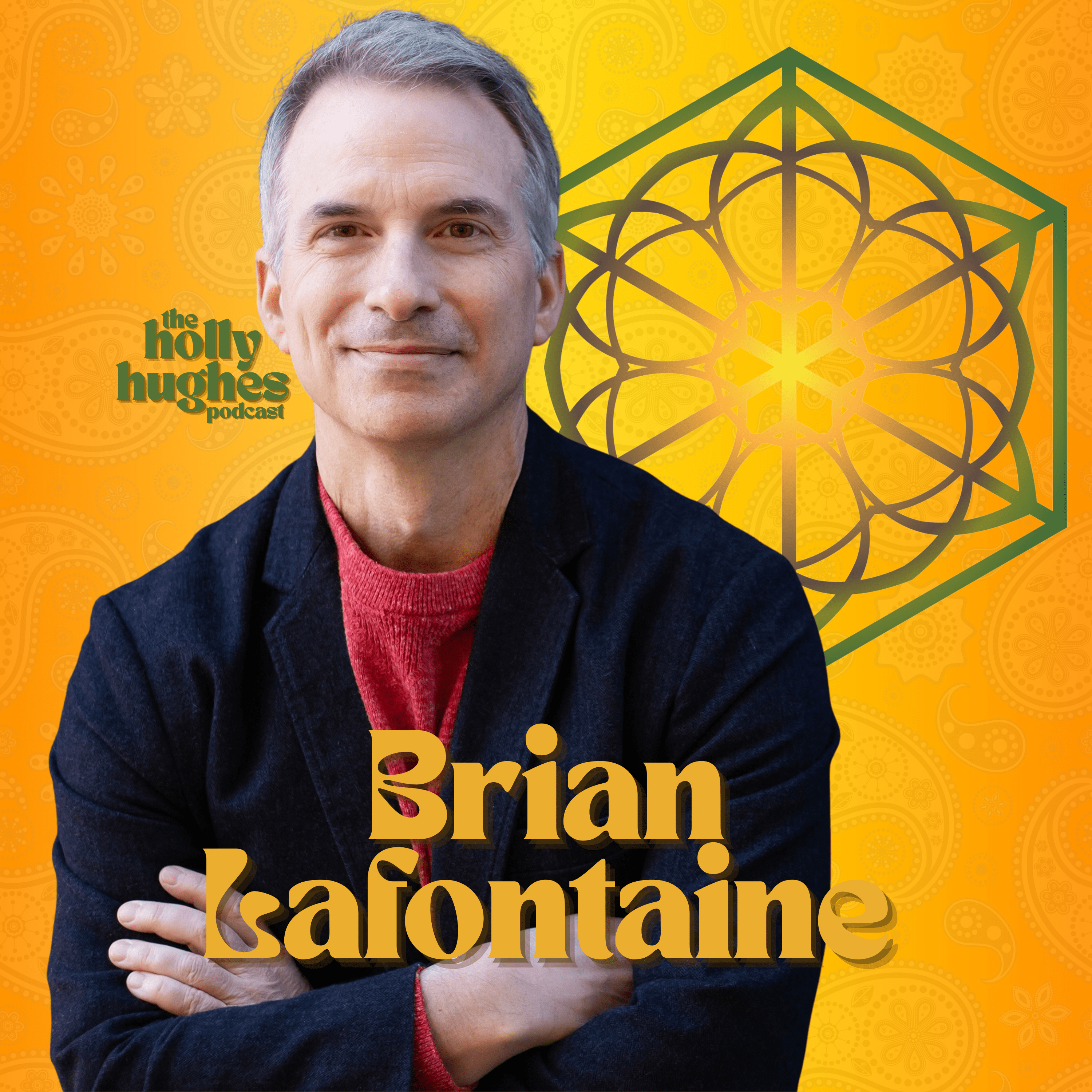
Brian Lafontaine and Holly Hughes sit down for a conversation about how Brian uses his voice professionally. Brians talks about his background in the arts, particularly his love for live theatre. He also shares some of his philosophies for creativity, public speaking, and tuning into your own unique perspective to help you stand out from the crowd.


Constantly throughout the day, our brains are filtering out all sorts of stimuli, visual, auditory, etc. One of the few things your brain is tuned into and prioritizing is the sound of the human voice. That makes the ability to speak well publicly such a valuable tool.
Today’s guest on The Holly Hughes Podcast has spent his entire professional career using his voice to tell stories, communicate ideas and to bring art to life. Brian Lafontaine is an actor on stage, screen, and voice overs for more than 30 years. Today he also helps other creative professionals find footing in voice acting and public speaking.
Brian Lafontaine and Holly Hughes sit down for a conversation about how Brian uses his voice professionally. Brians talks about his background in the arts, particularly his love for live theatre. He also shares some of his philosophies for creativity, public speaking, and tuning into your own unique perspective to help you stand out from the crowd.
Follow Brian Lafontaine online at brianlafontaine.com.
Get your copy of Holly’s book, Real Not Perfect: How to Become Your Happy, Authentic Self.
Chapters
00:00 The Journey of an Actor: Beginnings and Influences
03:03 Storytelling in Acting: The Art of Performance
06:08 Stand-Up Comedy: The First Stage Experience
09:00 Hecklers and Audience Engagement: Navigating Challenges
12:04 Family Dynamics: Support and Understanding in the Arts
15:01 Voiceover Work: A Unique Career Path
18:00 The Impact of AI on Voice Acting and Creativity
23:51 The Art of Standing Out
25:00 Vulnerability in Creative Expression
27:54 Navigating Authenticity and Safety
30:42 The Challenges of the Creative Industry
35:19 Physicality and Standards in Acting
41:16 The Magic of Live Theater
46:05 Public Speaking and New Ventures
48:23 Mastering Public Speaking Techniques
52:33 The Importance of Authenticity in Communication
58:22 Exploring Creativity Beyond Public Speaking
01:02:56 Finding Your Unique Voice
01:09:07 The Power of Sharing Your Story
0:05 Thank you for joining us today at the Holly Hughes podcast. Today I have, I'm really excited about speaking with Brian Padgett because your career is not only an actor and a storyteller that you speak on your website about dealing with hecklers and the like, which I want to get into, but you also help people step into their own spotlight. And as a TEDx speaker and knowing how exceedingly uncomfortable that experience was for me, I'm so excited to talk with someone about all of that because that's quite a journey. That's quite a journey.
0:45 So tell me, how did it all begin? Like, why acting for you? Why, like when you were 8 and you saw, you know, that Dunkin' Donuts commercial, you were like me. I want that. I want the donut and the coffee. I it wasn't a Dunkin' Donuts commercial, I think it was. It was just more from watching actual TV shows or movies and seeing people on there and just thinking, like, how cool is that? Like, they get to do that. They get to tell these stories. Even as a kid, like my brain kind of worked that way. And I was the, you know, I was the entertainer in my family.
1:25 I was the dinner table comedian. I was the, I was the tension breaker, you know, middle child syndrome, whatever you want to call it, being the third of five. Yeah, I was the one. Oh. Third of five. That's impressive. Oh yeah. Oh yeah. I don't know who it's impressive for. It's for me because I just think of my body doing that. I think that's where my brain goes. It's like, wow, she's good. Wait, where did you grow up? Like where? Where in the world? What influenced? You Where in the world did you grow up? I'm from Rhode Island, the great state of Rhode Island. Yes, the tiniest state in the country. That's fascinating to me. So, so you speak of, of acting as storytelling.
2:09 I've never really heard another actor say it that way before, honestly. And I was in LA for 18 years. I've never, I never heard someone do that. So I'm fascinated by that and your interpretation of that and how you take story and then recreate it as a character. Good God. I know. Well, I mean, it's, you know, it's, it's more applicable for theater than it is for film and television especially, you know, in the level that I've worked at in film and TV, which is on, you know, the lower level. Let's just be honest, I've never been, you know, really above the credits. I'm not the guy that you're tuning in for necessarily. I'm not the guy that you're. Working actor. I have been a working actor for a very long time.
2:50 You know, as as loose as that term is, yes, that has been my entire career for the past, you know, 25 years. I don't think you should belittle that. This is like a big thing. When I first landed in LA, we were talking about like when you got your like, not that I ever was in front of the camera, not my cup of tea, not I'm not that I could dance, but I couldn't like no mark, speak words, not move my hands like this. All of the above bad. All of the above bad. Well that reminds me we had I worked with someone rather famous now who was so bad at hitting their mark we had to put a stack of sandbags so she would literally hit the sandbag and stop. But anyway, I won't mentioning because. Everyone. Really. Likes her? Did everyone of us start with this? Editing, baby, editing.
3:34 So what is all there for good lighting and editing? I think she was pretty enough that people didn't really care, honestly. But we would talk, especially when I was working with the DGA, which for people who don't might not know is the Directors Guild and the trainees and anyone who got to sit background. Helping people get their SAG card, even through extra work or being a day player is a big, it's a big deal and not that many people actually survived to do it. So I I would never downplay a day player. Right. What I was just ultimately getting at is that, you know, coming in for a scene or a few scenes or just a couple of episodes, there's, you know, you're always a part of the story and you're always telling a story in some way. Even if it's just that one scene, that one moment, there is still a storyline in that moment.
4:18 Otherwise, why have it in there? There's no point of having it in there. But it's been I haven't had as many occasions on camera to truly have that full arc from start to to be a bigger part of the production where, you know, you really do help move the story along for everyone. So that's why when I say, you know, storytelling more applicable to theater for me, because once the, you know, the lights go up or the curtains open or whatever and you're on stage, you're there until either happy or sad ending. So you get to go through that whole, you know, emotional journey every night as opposed to, like, you know, with film and TV, it's like, OK, we're capturing this moment today.
5:00 We're going to go back and capture three moments before that moment tomorrow. It's impossible. Put it all together and they'll never know the difference. They'll never know. So when was the first time you stepped on stage? How'd you know? Like that bug really got you? Well, I mean, first time I stepped on stage theatrically was in 1992. It was when I did, you know, my first play. The first time I stepped on stage though, was when I was doing stand up comedy. I started out doing stand up. That was my introduction into show business I had gone to. And I've told this story a bunch of times, but I'm happy to share it again with you. I went to Catawba College in Salisbury, NC on a golf scholarship, a very small golf scholarship. What was your handicap?
5:54 Fake my handicap was phony. My handicap was illegitimate. It was made-up and it didn't take long for them to find out they're like, oh, you suck at golf. I I was I was a single digit handicap back in the in, but I was never North Carolina good. I was never North Carolina. Good you. Were Rhode Island good? I was a. Competition smaller. Statement was Rhode Island. OK? You know, I wasn't even Rhode Island good, but I was definitely not North Carolina. Like you, you know, the barista at Starbucks is like, you know, a scratch golfer, you know, like it's amazing how many people play here and play insanely well. So when I got down there, they were going, what are you doing? Get out of here.
6:39 So yeah, they kicked me off the team, took my scholarship back and I decided to go into stand up comedy because that's a natural transition. Obviously. Student athlete stand up, someone's calling me. It's a scam likely. So we're going to delete that or silence that. Yeah. So that was when IA comedian came on campus one weekend and I was had become kind of the house MC for the student activities committee. So I was just introducing the acts like ladies and gentlemen, Holly Hughes and the the the staff member who was the director of student activities. I think he not, I think he saw that there was something there and he would always try and kind of like nudge the comedians or performers who would come on campus and be like, you know, Brian's going to be emceeing you and Brian, Brian, Brian and I had a conversation with one of the comedians who came on one weekend and I made this offhand joke and he said, if you don't say that on stage tonight, I'm stealing that joke from you.
7:41 So it was really kind of, you know, challenge dropped sort of thing. So I had to decide, you know, am I going to be courageous enough to step on stage in front of all my classmates, people that I go to school with, people that I see every day of the week that I live with eight months out of the year, and give them an opportunity to truly see me and hear my thoughts, my ideas, my, you know, my twisted sense of humor. My hands are getting sweaty the more you talk about that. I'm just like what? I mean, you know, there's nothing harder than stand up. I don't care what anybody says. I argue with you all day long. There's nothing harder than stand up because you have one goal and one goal all day. And that's to make people laugh.
8:22 And if it doesn't go, then you're the you're all by yourself. If you succeed in stand up, it's because of you. If you don't succeed in stand up, it's because of you. There are no really other outside factors. The whole like, ah, the audience was dead, maybe more dead than the previous ones, but they didn't show up there to have a crappy time, you know, and. They're drinking and. They're drinking. So it's, you know, it's what you're bringing to the stage. It's what it's what you're giving up. It's what you're putting out to the audience and how you're connecting with them or not connecting with them. But that's solely on you. So yes, the first stand up experience was honestly pretty damn good, all things considered. I mean, I got hit with that first wave of laughter and it was.
9:05 Yes. I want more of this, yeah. I want to ask you some now. I'm like more fascinated than all these notes I have in front of me because I want to die. I have a friend who also used to do stand up comedy in Ireland. I love that. Yeah, yeah, I can. Yeah, She's amazing. And then she doesn't do it anymore. But like, she and I used to talk about, like, rhythm of the performance, right? You know the high, the low, where you go, where you don't go. So is that where you met your first Heckler? Like out there in school or? No, it was really, I don't remember it so much, you know, when I would do it on campus, which is odd.
9:49 I don't know if it's because I just kind of gave off the nice guy thing, but what I was doing, you know, when I started playing actual clubs, actual comedy clubs, I ran into obviously hecklers and things like that. Yeah, I know you made that reference on my website, and I'm sure that's on there. If you're saying it's there, I'm sure it's there. I don't remember specifically what it said or what I said, what I went on there. What if I say on my website? Wait. I'm going to find it. Wait. I think it also says that I'm 64, you know? Obviously, Yeah. Oh, it was, you know it says. Yeah, you say you face hecklers, blank stares and nerves. Sure, I have it right there. Yeah, yeah, proof. And I think it's honestly, it's more applicable now as far as dealing when I say hecklers, it's more, it's a looser term than it was when I was doing stand up, you know, the public speaking stuff that I'm doing now. You will get that person who will, you know, you ask a question to the audience and they will respond and then they will respond again.
10:49 And it's, it's much easier now. I'm also a lot older, you know, I'm not, I'm not as afraid as of as much as I used to be. When you're younger and you're on the stage for a different reason and you think, you know, there's got to be this sense of perfection and you're still dealing with a lot of that, that self-awareness of, you know, do they like me? Do they hate me? Do I suck? Are my pants on fire? Am I wearing pants? Are there pants? I mean, it's a podcast. You might not be just. I mystery. And it's a mystery. The people have to tune in and like, listen in really carefully. I'm really curious if also exploring when it comes to comedians, a lot of them are actually not you, but many are dealing with big depressive issues, right?
11:36 Like there is they're drawing from a pain to make you laugh. In general, you don't come off that way. You got that middle child thing, but I don't know. But so like if you were always the bridge keeper in your home, because I love exploring the topic of home and what was saved and what brings creativity into the world. What was that like? What was like growing up then for you? What was your household like? Were they funny? Was it serious? Were you trying to lighten the mood? I was trying to lighten the mood. I mean, look, I'm just as fucked up as anybody. I come from just as much of A dysfunctional family as anybody does. And I love my family. They're wonderful, they're great. You know, my parents are still married after 60 years.
12:18 Siblings and I are pretty damn close, all things considered. So I'm very, very fortunate. But yeah, my family is just as dented and damaged as anybody else. Beautiful as beautiful, yeah. You know, because when I started to go into, into the show business route, my parents weren't necessarily enthusiastic and supportive. And it's not because it's not because it's like they had dreams of me doing something else. I think they just it's it was so far removed from what they knew that they didn't know how to support me except to say, OK, you know, there are actually times where we like when I first started doing stand up and after I had those first few experiences on my college campus and I came home for the summer and I said, I'm going to get up on stage at a comedy club.
13:09 I still remember as clear as day my father saying, I don't know about that. And he's not. He wasn't saying I won't allow you to do it. He was saying in his brain that was like, you can't, you can't just go into a comedy club and get on stage. There's got to be like, you have to know the president. You know, I think that his brain and both my parents were like, those are things for other people that we don't have connections to, that we're not a part of that world. So they didn't know how to support me in that way. I mean, and don't get me wrong, my parents have seen every movie and every TV show that I've done. They saw me do stand up a number of times. They've seen a number of my theatrical productions they've, you know, come down or gone to New York or wherever I was, you know, doing a play at the time. And so they are, and they couldn't be prouder, but there is still that thing like when I come off stage or when the movie's over, where I can tell that they're looking at me and they don't really know how to talk to me 'cause I think their brain is still going like what just happened. I know that feeling.
14:12 I know that feeling. What did you do? How did you? What are you doing? And it like, they don't know what questions to ask me. All they can say is like they're beaming with pride, but they don't know how to verbalize it and they don't even know how to inquire. Like what's the process like? How does it feel for you when you're up there? None of those things. I think they're just going like it's short circuiting for them. I love that answer. I I also know that feeling when like back in the day when I just wanted to be a writer, my mom was like going off to college. How do you make a living? Yeah. My dad, you know, plumbers, what they they were all plumbers, right? So, like, what is this writer doing? What? What do you? What do we do with you? I had a house in Charlotte and an apartment in New York all on my own. And my dad at one point, literally, he asked me where is your money coming from?
15:02 And I'm like, what are you talking about? I'm like, do you think that I'm like selling drugs or something like that? Again, the idea of that, you know, he's like, well, you don't talk about like the jobs you book. And it's like, do you really want to hear about every car wash radio ad that I do or they. Do this is the perfect segue I want. I want to talk about voice over stuff because or commercial work, right? Because back in the day there was also industrials. I don't know what they call them anymore. They're still industrials. Yeah, Yep. And I did a ton of those. And it's like, yeah, it's not sexy work, but it's work. And I'm happy to do it. But I'm like, do you really want me to talk to you about, like, you know, sexual harassment in the workplace at Bank of America? I don't know if they're going to let me air that bar because, you know, it doesn't happen in Bank of America.
15:46 Because they made videos to prevent it. Obviously it was your own voice. I want to talk about voice because you're so fun. I'm so you're funny. First of all, you're just funny. So I'm glad you're not depressed on camera. I appreciate that. I had once sat next to Richard Jennings. I mean, he he is someone who ended his. Yeah, I don't. Know how to say that? Richard Jenning. They. Yeah, yeah, yeah. So I don't know if that should have a trigger warning in nowadays, but he passed away by his own actions. But I had sat with him on a flight from New York to Lai mean, it's just yapping me up. And I was like, OK, let's yap it up.
16:28 I sat next to a lot of really interesting people on those flights. I have so many stories about those. But he in particular was friendly. Alan Alda was the least friendly. He thanked me for not speaking to him the entire flight. When he left, he turned to me, said thank you and got up and and he was reading the Woody Allen script then. So that was a long time ago anyway, but he was talking with me. He's like, can I drive you home? I'm like, Nah, you know, my friend is coming, but thank you. And down at baggage was his girlfriend, so LA And then like a week later, I saw him at a comedy club down in Redondo Beach. And then he was like white because he's still with his girlfriend. I was like, oh, it's good to see you. And I said that to the girl.
17:08 I always speak to the female person so they know that I'm not, you know, it's like nice to see you, good to see you, great show kind of thing. It was soon after that that it happened and I was so sad because I got to kind of know how introverted and quiet he was and like some of his thought processes that was that was a swish. I want to go back to voice over because I have a funny story too. Come on. This is excellent. So for people who don't know, you're the expert, right? My podcast is about living a creative life. Explain how voice over is an amazing way to have a career and it because your voice is distinct and listening to myself now on my podcast, my voice is like, but you have that voice. You can do this voice and I can do that voice and whatever. So talk about voice over For people who might not know it, how would you describe it?
18:03 Well, first of all, you're a crazy person. You. Have I Am, But that's what makes me artistic. Yeah, you have a phenomenal voice. It's so interesting that you're asking this question today in 2025, because my answer is going to be very, very different than it was a few years ago because it has changed considerably, considerably in the last few years. It's nothing close to what it was like because of, you know, technology and AI or whatever it is or the fact that any person with a microphone and a laptop truly can do it. If you have the equipment to record yourself audio wise, you can get in the game. So the talent pool and the, you know, the casting net is so much bigger now. It's truly you against the world for every voice over job. So as you can imagine, I have people on a fairly regular basis throughout the year, especially with on The Voice over side, want to talk to me about voice over work because just like I've said to you, you've got a lovely voice. You could absolutely work in the voice over business. And when someone says that to someone else, they and they stop and think, wow, do I have a wonderful voice that I could make money off of.
19:15 And they'll come to me and say, people tell me that I have a really nice voice. And my response is, yes, you do. They're not wrong, but I also want to make you aware of something. You know who else has a really nice voice? Most people. Most people have a really nice voice, pleasant sounding speaking voice. Most people don't sound like you know you're dragging A dumpster across a parking lot when they speak, and if you do, that person's probably going to work a shit ton. Yeah, because they are unique. Yes, yes. So it is it, it, it, it has been a great way to make a living. It's been a great way to supplement, you know, the career. Because I mean, I literally have my, my big ass booth right here next to me. Because voice over is done primarily in commercial scripts, which is going to be 1530 or 60 seconds. That's short stuff.
20:07 You don't have to put on makeup, you don't have to set up a camera. You just need a microphone and you know enough of a quiet space that's acoustically treated so that it sounds. Professional grade when they edit it that again, you don't even have to put on pants and you can crank these things out. Obviously I'm a fan of not wearing pants. It's a theme. It's a theme, but I mean, these are things like, you know, normally as you know, you do a commercial shoot, you're shooting one spot, maybe 2 spots in a 10/12 hour day, voice over. You can bang out a half dozen sessions in half a day, you know, and never leave your house.
20:47 So yeah, it's a it's it's been a great way to, you know, to make a living for a long, long time. But it is changed drastically in the past few years. And the competition is so much higher. And now you're dealing with advancements in technology that are truly playing against you. I'll never forget when the whole AI, you know, voice thing started coming that I started seeing ads on YouTube that literally said why hire a voice actor when you could purchase this? And I'm like, you're targeting fucking voice over actors. Yeah, we're all struggling just to fucking make a living. You're targeting us specifically. Jesus. I have so many things with AI, just like as a writer, because it just, it just steals so many people's content and rejiggers it. But Rick Rubin, I've been listening to him a lot lately. I guess my my something in my soul must need his advice but his quote I'm going to keep and I might misquote so everyone get over it.
21:46 You can fix it in the comments for me. Basically AI has no soul. So if you give them an input, all AI will eventually give you the same answer. But as a storyteller, musician, artist, even a voice over artist, there is no soul behind it. I know a content creator who uses AI sometimes because they're so busy to fill in the script and speak for them. I could tell the difference. They're like don't tell anyone you know when the difference is. I was like, I understand when you need it. It is an interesting tool. I just think I've seen too much sci-fi. I think we've all become a little too much like actually, I think we're in the world of wall-e right now. Did you know like that Disney movie wall-e, like we're all hitting the button, we're changing our thing, we're floating along. We're we have to start free thinking again, right? So being creative, that's.
22:32 My hopes and not combating AI because it's here and it's you know, we're going to find a way to work with it but I, I am a firm believer that it's never going to capture your essence. It's never going to capture your spirit and you're right it's never going to have a soul. So I don't think it's ever going to fully be able to capture, you know, human behavior and human emotion in that way. But unfortunately, I also feel like we're in a a time of, yeah, it's good enough and, and good enough is, you know, good enough is cheaper. And, but my argument with that is like, if everybody's doing what's good enough, then how do you separate yourself? How do you stand out? How do you make your product different from anybody else's? It's the same thing when I'm working with people, you know, in public speaking, especially now, it's like everybody's got a platform, everybody's got a message, everybody's got a story.
23:22 And if everybody's just doing basically the same thing, then what are you doing to separate yourself from the noise? The example that I use is I used to use it in regards to auditioning where, you know, it's you and 1000 other actors that compare it to being at a football game, but a Panthers game, we'll say everybody is there, they're wearing the same colors and everybody's up and they're shouting and screaming and jumping around and whatever. And you look in the crowd and there's one person sitting still. Who are you going to pay attention to? The one person who's sitting still, most likely because you're going to go, what's going on with that person? Why aren't they doing what everybody else is doing?
24:03 So it's that same sort of, you know, idea. It's that same sort of mindset of what can I bring to it? What can I do that only I can bring to it? That's that it's not going to be like everybody else. And that means you have to be willing to take that next step of vulnerability and exposure. Like going all the way back to the beginning of our conversation, when you're asking about stand up, is you've got to be willing to let them see you. Truly being open to letting them see you. Truly being open to letting them hear you without judgment, without apology. Yeah, unapologetic you. I, I can roll with everything and I, I'm, I'm non linear. I, I think that's an honest conversation. That's the whole point why I'm doing this.
24:44 I started this because I wanted to have conversations with creative people about the reality of a creative life. And it's, it's a high, high and a low low. We're all little manic. We all have our own process to get to that authenticity, which is my whole thing, right? Real, not perfect. But then authenticity became a buzzword, which made me not want to do my healing as much publicly because I guess we're going to jump for me, like, especially during this, like, public speaking. Everyone's like 05 years ago, Holly, you should have a podcast. I was like, yeah, it's a lot of work, man. Like, you don't know what I'm working. Like I have three books in draft over there. I'm like writing essays. I'm helping people. I'm doing workshops like, oh, I'm a mother. Like I'm busy.
25:26 Like I know I might not look it like I might just make make this look so easy, but I'm busy. And I was scared because I as a writer and even in production, I was producing right? So I was, and having my control issues over here and letting the creativity be there, but I really wanted to be a creative producer. Like when Amelie came out and, and when you talk about the tone and the color and how that story was told on all the nuance level, I could go and I could talk about that for 10 hours. Like when just like hair, makeup, words of color, green, this, what's this? Like? Just give me that. And I wanted to so I would give all my ideas away, never get credit. And then I got bitter. I became what I hated in LA, which was a bitter woman trying to make it in the business because I felt like I was never heard or seen in the way that I wanted to be.
26:15 And part of it was I wasn't able and I couldn't really play the game. Kissing ass. It's just not inherent in who I am, and it's necessary in that. But when I started trying to publicly speak, which started performing my own essays, like in a show, what surprised everybody was is that when I got on stage, my voice was this loud. I was so scared that my voice literally would disappear. And everyone's like, you're loud. I'm like, I'm actually an introvert, so I'm not loud. I have a microphone like I'm going to tell you a story about my miscarriage. That's scary for me, that's insanely vulnerable.
26:57 And then even though I'm not in pain walking around every day to call upon that feeling. So I'm being real with you while I discuss it is something that I have not found exactly a safe space anytime I've done that. But that's kind of like what I was doing there. So that's kind of fascinating in that you're talking about authenticity. And then I go to, but are you safe to be it? How do you tell a story over and over again in a room with many people and then but feel safe enough backstage to come out and deliver? And I think that is part of one of the things about actors I've I admire and slightly hate.
27:43 Well, I mean, you know, you want to make sure obviously, and I'm saying this as actors as well, is that, you know, we certainly want to make sure that we're not going into therapy land when, you know, we're performing some of these scenes or digging to relate to this, you know, character this moment. Yeah, I I know that we've certainly been accused of that at times of like, you know, yeah, it just like you're like you're going through therapy for yourself. Good. I'm glad this is working for you. And I think you've got to be careful of knowing that, you know, they're, we're obviously multifaceted and there's so many layers. I think to authenticity. You can have an honest moment without, you know, dumping, without dumping your purse out onto the, onto the table with all your deep dark secrets.
28:28 You can share and connect in a moment that's genuine and sincere without all that stuff. And at the same, at the same time, for the person who is sharing that authentic, you know, moment or, or, or telling that very personal story, hopefully you've gotten to a place where you've healed enough to where you can tell it and share it and make sure and you know that I'm going to keep the audience safe. It's not Even so much about keeping you. I know that I'm already in a place where you don't have to worry about me. I'm sharing something with you that's it's going to be a little touchy. It's going to be a little sensitive. I'm going to make sure that I let you know from the get go that I'm OK. And I'm actually going to take care of you while I'm sharing this information with you.
29:11 I love. That I love that that's going to be like my keeper for the day for me. I I love that. And I want to clarify for anyone listening and being like, Oh my God, the bitch is a hater. No, it was like as a producer, I would have to make sure literally the environment was good and safe for an actor, a go down for trailer food. Who's going to talk to them? Who's going to be around them? Who's dressing them, how they're going to get to set. And some people get to be persnickety. All those stories that you heard about, like not that color Eminem, they're true. I had someone playing Favored Nations game with me one time, and I was like, OK, like we're filming. Can you just, can you just whatever.
29:52 I had another actor who lost their script. Every day on episodic television. I'm like, really, your job is to know these words. But we were so used to it. We had five scripts a day just waiting for. I'm like, we're on set. I don't know where you're losing it exactly. I'm pretty sure they're all in your bathroom, but that's OK, we have another one for you. It's just like when you're on the production side of that, that gets tedious. And I think that is more old, bitter 90s holly, but it's fine. Well, you know, it's unfortunate that that a lot of those or or at least that some of those stories are still true to this day. That's, you know, we're even after as much as we've evolved and everything that we've gone through and continue to go through just as a society that you still have, you know, Academy Award winners get on the van to go to set and say something like, do you know who I am? Do you need me to know who you are? I think you're #1 on the call sheet is all I'm saying. You're right there.
30:45 Your name is on everything. Thank you Do. You know who you are, do you? Do you remember It's all good. OK, so I'm going to jump back to voice over at work because I have this is my funny story. I'm going to light in the mood again. So back in the day, do you remember Red Shoe Diaries? Yes. Are you old enough for that? I remember that they existed, yeah. So they are, they were like, how should I put that? I think for today's standard they're probably PG13, but for back in the day. Right. Yeah, they were pretty. They were racy. They were like we called it. So I worked on two I want. I worked on not Red Shoe Diaries proper, but HBO had a version and Skidamax, that's what we called it, had a version. Right.
31:30 So I I produced those. It was great money, by the way, and I was like 25. I was like, yeah, sweet. So anyway, so I'm directing, I'm producing 1. And we filmed it near the Playboy Mansion. It was like this very bizarre world, whatever. And the director calls me one night he's like, I didn't get a good sound on set. Can you come help me now being strangely naive because I, I know. Look at your face. Look at your face. So I was like, OK, his name was his first name is Gareth. Gareth is like, come, come to the studio. And we lived in North Hollywood, right?
32:11 We're in the valley. Because although I'm making good money, it's LA and I'm whatever. Yeah, me and my 4 roommates. So we go, I go and I go to the the editing place and he's like, I need M&G. And I was like, I don't know what MNG is like do you want me to say her line? Do you need footsteps? Like what are you fully? What are you talking about? Moans and groans, moans and groans. So like I'm smirking and laughing and he's like, I we have I was like, is this set up? But it was true. He didn't he had horrible sound. So then so now I very sheltered girl, like super like I know I'm LA weird, but like, no, I'm going to moan into a mic with two men next to me on the other side of the glass in a booth and and the director's like here, I'll help.
33:08 And he's like, I was like, no, not not helping and I'm not not helping because he was doing the males like part And I was like, I just wanted I think I lasted. See, I can't even do it with a straight face and I'm fully, fully past middle age at this point. But do you? Want me to like cover this? Exactly exactly cover the camera. But I will never forget doing MNG in the valley for a skin Max. I don't think I got paid for that part. I definitely wasn't paid enough to do it. I'm just, I think was that an episode with Shannon, though? It might have been. I think that was it.
33:49 Shannon, the one who's married to Gene Simmons, but. In a tweet. Yes, yes. Heck yes. Worked with her a couple of times, but yeah, so M&G but not for her because she she's a professional. Well, sure. She gets right up on the on the on the microphone. She you're going to get this M&G. Oh yeah, I want to make sure you get this. No one's, no one's looping, no one's ADR in mind, you know. What? We don't need the Holly MNG. So anyway, that was yeah, I am. Maybe that's part of why I don't enjoy, though. It's like this is this is so awkward. It's just so but this such a so quintessential LA like Hollywood story. Oh my God, you lived the life. I did I also my hand is in a shot, the close up the cut, an insert shot one time on a computer, my hand very exciting. So OK, talking about LA and actors. Yes.
34:41 OK. Physicality. Yeah. Like, because there's standards for what women need to look like. Do they exist for men? And does that exist in theater? And is it changing your experience? What's your experience? I mean, I know you're 6. 4. I I am 6/4 and I weigh 37 lbs. You know, I've always stayed pretty fit. That was always a big deal for me because I did, I had aspirations of trying to break into the leading man category, you know, and not realizing that it's like, oh, well, you're not 64, you're not even 61.
35:23 You're not even 5-10, you know. So that was like, you know, there, there, there. There are not very many Tom cruises in the world, you know, who are the tiny leading men action stars. So but staying in shape because I fit into that type for the most part was always was was always kind of a a priority for me. So I never really got to test the waters of hey, and I've had people try and get me to like just grow your hair. I'll grow a beard, stop working out and just see what it'll do for you. And I'm like, it's, and it sounds really, really interesting because there have been times where I've tried to sort of dip my toe into that.
36:07 And it's like you're still, you're still too, you're still too fit. You're still too well put together. We don't, you can be dirty, but we, you don't look dirty enough yet. You know what I mean? It's like, I can do dark and I can do dirty. And I, you know, do surprise people at times, but they're like, but we look at you and they're like, you still look. I, I'm just going to say it now because I'm, I've been in this business too long. You're still too handsome. You're still too, you know, clean cut. You're not messy enough. You, you don't have enough, you know, scars and bruises and grossness on you, even though you can go there and we can get that from the look in your eyes. The rest of you says, here, let me take those bags for you and hold the door.
36:52 You know, so I don't really know. I've never been able to see it necessarily. I don't, I think it's obviously very different for women than it is for men. I think guys can get away with that with a hell of a lot more. I mean, you know, you look at the, you know, James Gandolfini was a leading man, for God's sake. There were a lot of guys like that who weren't necessarily all Brad Pitt's who had phenomenal, you know, leading careers. Women, I think those numbers are much smaller and those windows were much were much smaller as well for any of them that did you know, I think the the pressure on women to maintain a certain physicality is yeah and it's and it sucks. It really, really sucks because you know, you take, and I'm not going to name names because it's not like I've necessarily worked with them, but you watch them over time. Who some of the most beautiful women who have ever graced the screen, whether it be on TV or movies, get to a certain age and then they start fucking with their face and you're like, what are you doing?
37:55 Oh my God, what are you doing? And at the same time, I can't understand what kind of pressure that they're under to possibly see their career truly just disappear when they are still one of the most beautiful women, you know, walking the planet. I think that's why I. Like Kate Winslet so much lately, like, you know, like, well, first of all, she's phenomenal actress, but and she's brave. Like she's done some of the roles that might have been smaller on her way up even. Like she's brave and her face is her face. And as like as again, like as I'm in my mid to late 50s, it's like like, you know, in Atlanta, like crack a lot or whatever, like, you know, and fit and healthy, but but you're like, oh, that outside that thing is happening. Shit, I'm aging.
38:42 Right aging is. Weird. Yes, it sucks. I'm not a fan. Not a fan. Highly recommend but not a fan. Right, right, right, right, right. Yeah, the the alternate is not a very good option. I guess I also was like, I was thinking about this thing for me as an audience member. I saw Mean Girls when it came through town with my daughter. And for me, at one point on the show, I got very emotional because of all the shapes and sizes and different people that were on stage, which didn't exist. Like when I was in the business or when I danced or like I had to be a certain way or whatever.
39:26 This is what beauty is. This is what a dancer is. And, you know, to say that I want to see a ballerina that is wildly not ballerina. Like I can tell you I'm a traditionalist a bit that way. You know, I, I think the line should look like that line. That is why it's ballet. But watching that play and seeing all that talent like it, I was so happy. Yeah, I think in that respect, in that regards, the they have opened up the casting window to a little bit more of yeah, the different various shapes and sizes, obviously, and racial backgrounds and, you know, sexual orientations obviously that we didn't, you know, prior to five years ago. I would say no, Hollywood still Hollywood. I think there's been a huge shift, which is wonderful, but I still feel like in the leading roles necessarily that it that probably hasn't changed as much.
40:25 Money. Right, Right. But I think it's great. Yeah, truly, in theater especially, you can see that and I think it's fantastic. I think it's fantastic. What's your favorite medium to work in? Theater, it really is. If I could make a living, well, if I could make, if I could make the same living doing theater as I have, you know, doing commercials and movies and TV and voice overs and on camera work, then I would probably do nothing but theater. It's just there's something about it, you know, it is that that whole live theater thing? There is that whole sense of, yeah, once the show starts, you're you, you are, you're taking this journey from start to finish.
41:07 You're covering in two hours what a movie covers over the span of, you know, three months of shooting. And you have to do it, you know, every night, every night, every night, a movie you hit play again and you're going to see the same movie every time and theater you go to the next night. And it's not going to be exactly the same the next night. Something's going to be different. And there's just obviously something just very electric and alive about that all the time. You know, my partner, she tells me she's like, you're you're a different person when you're doing a play. And she doesn't mean that she's like, in a good way. She's like you. She said you light up on a stage like no other time. And so anytime I'm doing a show, I think she's probably just as excited, if not more so, than I am. I get that, yeah.
41:56 I totally get that. Anything you ever took from set? That you can. Admit in public any wardrobe did you ever like like a favorite like something like that from. From, from theater or from I, yeah, I, I kept, I played, I played Oscar. I played Oscar Madison and The Odd Couple. I kept the New York Mets hats. I've done a lot of Neil Simon and I. The first one that I did, the first show that I did was I did Brighton Beach Memoirs and Broadway Bound way back in the late 1900s and I'm trying to remember if I kept anything from that show. I don't think so.
42:40 Not too much. I'm always fascinated by like. So how you did 8 shows a week then? No, it was regional theater. So it was either 5 or 6. Yeah. No, I didn't. I've never, I never did Broadway. I did. I did, you know, Off Broadway and off Off Broadway. And so you were running a regular, you know, four or five, sometimes 6 shows in small spaces in New York City, but no regionally. Same thing. Yeah, we weren't necessarily running an 8 show week. I have hopes for you. I have dreams. I, you know, I, I taking. This into being man, that's all. I'm saying, yeah, when you see these tours come through, it's like, man, I don't, I can imagine how exhausting that must be.
43:22 But let me just do it once, you know, let me take it all around the country for six months or a year and have that just sort of elite athlete level experience theatrically. I spoke with a playwright not that long ago, and she calls the A Crucible, the Crucible of creation. She's just like that intense environment when you're in the dark and you're there and you're experiencing it live. I really liked that. Yeah, I'm keeping that one. I love it. I absolutely love it. I think of like those people who tour, not only are you giving that energy a performance, but traveling like that is exhausting. I don't know how they're not all sick. I think several of them are and do get. I'm sure that they do.
44:11 And you have understudies and people go on for you. And yeah, I think they prepare for that. All right, so when are you getting on stage next, where we where we're all going to go with our little signs. I don't know, because now you know, because you can't make any money doing theatre. So I'm very, very selective about the shows that I want to be in. Especially. I've been doing more directing in the past few years, which has been a whole ton of fun. I'm supposed to be directing a play next spring over at Theatre Charlotte doing God of Carnage for them, which is a great show for people. I actually did a production of it back in 2013. And then I saw the original Broadway production with James Gandolfini and Jeff Daniels and Marcia Gay Harden and Hope Davis, and it was ridiculous.
45:02 Yeah. It was incredible. So, yeah. Yeah. But as far as being on stage, I don't know. I don't know. I this, I mean, to be truly, really real, this whole public speaking side of the business is still so new. And when I started offering this service or you know, even just offering my services as a speaker as well as a speaking coach, I thought it would just be another offering under the Brian Lafontaine Incorporated umbrella. And it's really a completely, completely separate business entirely because the clientele is completely different. Tell me about it. You do. The Speakeasy meetings in Charlotte. You were those Speakeasy events the first Monday of every month. Is that like a?
45:47 Stand up comedy roast What is what is that? It's honestly, I try to no, I understand that, but I've had people ask me, they're like, oh, I've got some stand up friends who might want to come and it's like, cool. This isn't an open mic for stand ups necessarily because there are plenty of those around town. This is really more for people who are interested, not really more. It's for people who are interested in speaking in any capacity outside of stand up per SE. It's like, honestly, you want to come and test your, your, your, you're set. Cool. But that's not the line up that I'm trying to create. It's for people in the professional world who either just are paralyzed when they get up in front of an audience or want to work on, you know, one-on-one communication skills.
46:29 Or if you are working on a keynote speech or a TE DX talk or you've got a corporate presentation or, or pitch that you're that you're doing. How often do you get the opportunity to work on that in a group setting in front of an audience before you actually do it on the day? Never. So. And to actually get feedback and coaching in the process. So, so yeah, it's, it's because the clientele from the public speaking side of the business are more in the corporate and professional world. And then everything else on the acting side is all entertainment industry related. That's why when I started pursuing that, I realized, oh, I don't know anybody to offer this service to.
47:10 I have no corporate connections. 0 so. You have so many more. Like 7-8. I can hook AI, can hook a girl up. I have the most interesting, eclectic group of people in my world. So as clients, as my intuitive business, I had a lot of corporate people. But The thing is, they don't like to tell people that they see me. Right, sure, I get that. So I'm just like what, you know, it's referral just saying, but but you know, I think how do you OK, this is a question. He's like, what's coming? What's coming? I know I'm a throat talker. OK. Right. Like how do you ease up on that?
47:50 Because I think public speaking, if you speak that you're just going to lose your voice so fast, no matter how many girthers you take. And I can be told to go into my chest and then I can dip down, but I can't stay there. It's just it's practice like anything else. Practice. Give us a tip. Come on, give us a tip. The pressure's on. So I want to explain to people what is a throat Tucker? I literally, I can feel my throat constrict while I speak. I learned this a lot. I probably say this too much, but I was trying to learn, am still trying to learn Korean, and it is a language spoken at the front of your mouth and in your chest. And I don't do that. And so I am. I was trying to learn.
48:33 Or even during the process of my Ted X. My coach was like chess voice Holly, Chess voice Holly. She also made me talk with my hand in my back pocket, which made me forget so many of my words because I was too emotive at first. I'm going to, I'm going to find that Lady and I'm going to wrestle her a little bit because I never would have made you put your hands in your back pockets. I would actually tell you to take your hands out of your pockets. You would like her? I actually really like her. She was my favorite part of the experience. I'm not. Going to be there. But yeah, how would you give the even someone who's just speaking, maybe in an office meeting, it's like. Yeah, I think you're. Talking you, are you taking more seriously if your voice is a little softer? I know when I'm really mad or in production to get someone's attention, I would talk this loud. I would make them lean in.
49:23 Sure, yes, that's a, that's a, that's a strategy for, yes, getting someone's attention when they can't hear you, certainly. But when you are in front of an audience and you want to project your voice, then yeah, it needs to come from your chest. And that comes just, again, it comes from practice. It's like anything else. It's like working out. It's like. That's. Like my for real warmups, vocal exercises that you can do true classic, state-of-the-art old school, but your camera's frozen and not the best photo. There you go. OK, much better. It's. Like it freezes, but it doesn't freeze on the other end. You were stuck in. I'm pretty. It's. One of those things I'm getting over in this podcasting thing is like, I kind of want to do a whole series on my Instagram of the awkward face.
50:10 That's my sense of humor. So yeah. But yeah, good old fashioned theatrical vocal warmups and there's a million of them out there. And there are things that you can do on a daily basis or, you know, multiple times a day. That's one keeping your, your vocal cords warm, getting, you know, the air and the sound more down here and coming from your diaphragm as opposed to just let me just go up there cold and open my mouth. And, you know, it's, it's no. If you're going to go and play a, a game of, you know, if you're going to go play soccer, if you're going to go play baseball, if you're going to go play football, if you're going to go for a run, you're going to stretch, you're going to warm up. You're not just going to go if you do cool, there's a good chance you might damage something.
50:58 You've got less of a chance of hurting yourself if you warm up and prepare properly. And yeah, you can. I can find you a bazillion different vocal exercises and you should probably do several of them on a semi regular base on a regular basis to, you know, get into that practice of hearing your voice down here and getting the air, yes, moving from your diaphragm. I think it's part of excitement too. I'm like, I'm so excited. I'm like. Yes, because you're and you're also trying to express that and share that as well. If you're a speaker and you're not excited about what you're talking about, no chance your audience is going to be excited about what you're talking. About that'll be our opening frame, that face we just both made just like that awkward.
51:41 Do you ever coach like students or in college or in even high schools? Because in town, we're in Charlotte and they have the Bloomies. Thank you. And so I'm curious if you help any students ever or you prefer dealing with full grown people. I I prefer full grown people I've worked with on the acting side. Are you talking or public speaking or both? I have not had the chance to work with anyone under the adult age on public speaking. Yeah, I used to work with, you know, high school kids and teenagers when I was teaching, you know, more studio classes and things like that. The little ones, I never really had a thing with the younger ones.
52:26 Not because I don't like kids, it's just that I don't know how to handle. Like, I think it takes a special person who knows how to communicate with kids. And I'm not one to real like, yeah, I'm not going to get roll around on the floor with a bunch of seven-year olds. And yeah, that's not my thing. No, you know, yeah, there are people who are much better at that than I am. So I prefer to work with adults just because I have more patience for that. I get that. I totally. I get that. It's a cutthroat business out there in the Bloomies. My toe dipped in it last year. I was like, OK, there you go. Now I know. Yeah, I mean, the Bloomies, I think are a little bit different.
53:07 Those kids are pretty hardcore, man. They're they, they have the commitment of adults. So that certainly helps with their work ethic and what they want to do. They want to be good. You know, it's not like one of those things where my mom's making me do this, you know, which I would get in some of the other classes. Yeah. So what other like ways are you creative in your life? Do you write? Do you paint? Do you play music? I, I started playing the piano in my early 40s. It was something that I really wanted to do for a long time. And I finally, you know, it was just like, I've got the time, I've got the means, why not? So, yeah, I, you know, I don't play nearly as much as I would like because of other things that, you know, take precedent, unfortunately. But I did, I, I, I learned how to play the piano and I was doing that on a semi regular basis. I even I even performed with the School of Rock. With song.
54:06 Yeah, we did a whole set. We did a gig, we did a show. We did. We performed over at Hattie's, over in Plaza Midwood, which is this great dive bar, and we did an 11 song set. Me and a bunch of other middle-aged people who had no right performing rock music in front of other people. Yeah, a few years ago I was the Yeah, I was obviously, I was the the keyboard player and. And the MC or just the keyboard player? Yeah, just the keyboard player. But I also did realize I was like, oh, wow, these people who I was playing with who were very, very talented musicians, I'm like, oh, they have no actual stage presence. I was like, I'm the only one who knows how to be up here. Oh, so if we were actually abandoned continuous, like, I would have become the bandleader. I absolutely would have become the bandleader. What was the favorite song you've learned to play for that? Well, I did.
54:56 I did 100 years by 5 for fighting. Nice. It's yeah. I mean, I would sing, but you don't want to hear that at all. Yeah, Yep. Who's saying that? That's a pretty high pitch, Just saying. We had two female lead singers and it is, it is. It's still. Yeah. It was a hard song for them to sing. You know, there's something about having that high pitched male voice that you just always look for. It's not that a woman Can't Sing it, but it does change it without the guy. Because I feel like even the story is more of it's coming from a guy's perspective. But yeah, that I, I worked my ass off on that one. And I also played the and I played on every, on every song we did. The theme for the for the show was millennial rock or millennial rock.
55:43 So it was everything from 2000 up was fair game. So you know, we did. We did a song from Pink, We did a song from Avril Lavigne. We did Florence and the Machine. Nice. I would have been down for all of that. Yeah, we did ship to wreck the machine and she I. Got it. Maybe I should reach out to her. She's a badass too. Her voice is like. You can get Florence in the machine if you can get Florence on there. Damn, I'd be impressed. You I got some pretty interesting people coming. I'm gonna surprise you. That's that's that's the magic of me. I'm just like, I go for it. Fuck it. I love it. I love.
56:23 It you tell me no or don't call me back, Oh well, next, next there's someone else next. I was like you said, Pink and I told someone else. I interviewed a rock musician, which was so fun. But growing up, because it was the 70s and early 80s, I learned to play the organ to, you know, foot pedals. I know sexy in the basement with the panels. So. But as an adult, of course, when I had my kid, I was like, music is big. I just think it's so important and creative person. So everything in the house was that way. So I made her take music lessons, of course, and piano. And she had aptitude, which was just amazing to watch. Like she had the right, like, you know, her hand was right. You know, that you can't teach some things. You either have it or you don't.
57:07 And then I was like, well, maybe I'll be brave enough to see if I can still read music, really. Or. And I learned Just Give Me a Reason by Pink. And yeah, wow, I really had to grit my teeth because that was hard for me. And I was like, because left hand and organ is chords, but left hand and piano was not. It's a lot more, there's a lot more movement. So that was a a big one. So, yeah, and I, you know, I dabbled in woodworking. I, I, I've painted in the past. I used to be able to draw really well when I was a kid. You know, I think there's just a lot of things. I'm, I'm a fairly creative person. Writing is the one thing that is just really, really tedious for me. Really tedious.
57:51 And that does not, you know, play well when you're trying to put a speech together. You know, like, yeah, I wanna, Yep, I wanna put a keynote speech together. Could someone else please write it for me please? GPT there you go, add your soul, add your. Soul right I mean yes but no you know cuz again ChatGPT is it's never going to capture your voice it's never going to capture your essence or anything like that so it's you know you got to be careful for those of you out there ChatGPT warning you can sure there's always a shortcut but. Yeah, do the work right. Everybody's using ChatGPT, so it's not as big of an advantage as you think it is so.
58:32 How do you help someone find their voice if they know they want to say something but they don't know how to get there? That's a great question. And that's when we start to explore their true, like again, your true personality. That's when we get back into the authenticity stuff. And I know that that's again, a big buzzword, Authenticity. Everybody's saying it, everybody's using it, but I feel it's the same as most things. Some people are better at authenticity than other people are. Everybody's using it, everybody wants it. Some people have no fucking idea what it is or how to get there. And that's, you know, and it's not your fault, but just know that there are people who can help get you there. But you have to be willing. Is there a?
59:16 SO should you? Ask people to see if they're if you're a good fit with them, because right, you can't. Like not everyone is a good fit. I don't necessarily ask that question. I let them come to that, you know, assessment on their own. But that's when I start digging into, OK, what do you like behind closed doors and what do you like in front of other people? You know, what do you like when you and I are just talking one-on-one? And then what do you like as soon as I turn the camera on? Does your personality change? Is, you know, do you go into performance mode? And while as you know, just from doing a teedx talk, that a teedx talk is a performance, but I think performance has has gone into, well, I've got to, I've got to put on a show.
1:00:03 I've got to be entertaining. Yeah, you do. But we're not asking you to become someone else in order to do that. You know, I've had people say I'm boring, I'm this, I'm not funny. I hate to tell you, you're wrong. You're absolutely wrong. Even if you have the most dry, flat, introverted sense of humor, you've got a sense of humor. You find things funny. You say things that are funny. You may not be the life of the party and you're not, you know, putting a lampshade on your head, but there's shit that you do that's funny. So all the things about you that you think are quirky or weird or your little idiosyncrasies that you don't like or that people have said, you know, have made you feel self-conscious about, I'm going to make you lean into that shit, not run away from it.
1:00:48 It's like, no, we're going to embrace those things because those are the things that truly make you stand out from everybody else. Those are the things that make you different. Those are the things that make you unforgettable because nobody can do that the way that you do. So, you know, I always create one of the things that I do pat myself on the back floor is that I always do create a, a safe space for people to explore these things. I hope if nothing else, you've picked up on the fact that, you know, I'm a pretty approachable guy. I'm not intimidating because you're 64II. I am for a guy my size, for a guy who's 64, I'm really not very intimidating. My man Candy is 6 five people are always like, he's so angry. I was like, he's pale and he turns red when he speaks. He's just, he's just big.
1:01:33 If the same thing came out of a shorter person, you would not be so freaked out. So. Yeah, You know, I'm very, I'm good at disarming people and making people feel comfortable. And, you know, and when I'm working with them, it's like, look, this is just you and me here. No one's going to see this stuff. No one's going to know what we're talking about, so let's just explore it and see what happens. And how do you feel when you get permission? You give yourself permission to just have fun, to just be you. The idea of letting somebody see you the way that you are when you're with your friends, the way that you are when you're with your kids, the way that you are when you're at a cocktail party and you just, you don't give a shit what you look like, which is when you're your most interesting. So yeah, I, I tap into help.
1:02:18 I help people tap into it that way as opposed to saying, you know, follow these five steps and you know, everybody can't follow the same fucking 5 steps and get the same result. No, you need to, you need to be able to work with the person on where they're coming from, you know, on their level from wherever that might be, from whatever their experience is. No two people are the same. So I'm not going to treat you the same as with this other person that I work with. I've got to find a way to be able to connect with you and relate to you. It's no different than directing actors. Yeah, acting is acting is acting. But I mean, you know, I've learned the Strasbourg method. I've, you know, do Stanislavski. I have the Bryan method. Whatever it might be.
1:03:00 Every actor works in their own way. So if I'm directing a play and I've got 6 actors who were approaching the material in their own way, which is 6 different ways, I've got to get them all on stage to make sure that they're telling the same damn story and they're in the same environment. So I'm going to be able to connect and communicate with them individually before I put them all together. I love that. I love that. I think you should do more directing too. And I need you to see Joe on more on the theater stage more obviously. I'm working out, I'm working, I'm. Going to have a big banner. I'll be the girl at the on the encore. Go Brian. I know him. And he doesn't really know me, but hey, now we're friends. Psycho girl.
1:03:40 The audience, OK. It's like, I love that you talk about how you see everyone in their way. I like to wrap up each episode asking everyone the same question, which is if you came with a warning label, what would it be? And I I'm so curious as to what yours might be. I have. I mean, there's a couple of warning labels that I would know. I mean, you know, one would be warning comes with Catholic guilt. There's that one, you know I. Like that? One still, that one's still that's still in there trying to get rid of it. It's still there. Warning. Yeah. Explosive or warning. Combustible warning.
1:04:23 May break into song. Do. You have a good voice. I used to have a goodish enough voice. My voice has gotten a little deeper in the past. I want to say decade. I don't know if it should be, if it's from age or from drinking coffee. And urban, Yeah. Bourbon, baby, it's bourbon. But like, yeah, I used to be able to sing pretty well, and now it's like, I'm not a big karaoke fan, but people would kind of drag me up on stage because they knew that I could sing pretty well. And you know, some of those songs I Can't Sing the way that I used to be able to sing them. And it's like, no, I used to do a pretty damn good Sings from an Italian Restaurant by Billy Joel. Yeah, you don't have to say who was. I know who that is.
1:05:04 So I can't hit a lot of those notes anymore. So it's like. Damn, it's a long song man, you were there for a while. It was a great model of red. A model of white. Now I'm gonna that'll be in my head for the rest of the day. Thanks. Thanks for that. OK, so our time has come like we're at the end. So where do you want people to find you, meet you? What common do we want them to leave here so we know that they actually listen to the end? I think they should write the word pastrami. I listen to the end pastrami. I don't know, I'm kind of the mood for deli right now. I'm sorry I missed that whole. Thing I know I jumped. Welcome to the Holly job. That was a good one. I even lost you on that one.
1:05:46 That was fun. I liked I liked the confusion on your face. From where do people find you to pastrami? I'm hungry. What can I tell? Pastrami. Most of the time I have. I'm a huge carnivore. But yeah, you will find me eating meat somewhere. You can find me at my website at brianlafontaine.com. You can find me on LinkedIn. You can find me on Instagram and they. Should explore public speaking. They should confine you, obviously. They should confine me because here's also the truth. Every person is going to have to speak at some point. Everyone's going to have to. Most people either don't really enjoy it or not that they don't enjoy it.
1:06:28 They don't know how to enjoy it. Yeah, I want to get you to a place where you can enjoy it because it should be enjoyable. I mean like, I'm like, I want to sign up just because I don't find it enjoyable. I love conversations. This is why I'm doing this, right? Like I could talk, give me a panel, give me some people, give me something like to feed off of, but standing and going blah blah blah blah blah blah blah. It's just so fear inducing. You got to be able to mix the two together, because if you can do this, you can do the other thing. I believe you. Say if you can talk to one person, you can talk to 100 at the same time, because it's the same thing. You're still just talking to people. You know, everyone's going to have to speak. Most people it, it, it drives them crazy or it scares the shit out of them and, and, or, or you, you genuinely are just not very good at it.
1:07:21 You suck at it and you're still finding yourself in that position to where you have to speak. Let's find a way to get you out of that. Let's help you get past that because I use this on my website and I say it in almost every workshop that I give, is that everyone has a story and everyone's story is worth hearing. And I absolutely believe that. So if you've got something that you are interested in sharing or if your company or organization is making you the face of at least a certain moment, there's a reason why you've got shit that people need. You've got information that can help someone. You can make, you've got something that can make their job easier, their life easier, their day a little bit better. You can give them hope or inspiration in some way. And if you can do that and you're holding it on, you're holding on to it and keeping it to yourself, OK. But think about how much more of a benefit it and you could be to whatever it might be.
1:08:20 Yeah. The world can use a little bit more light right like it's it's crappy out there people. Let's let's connect and be real authentic. Let's Share your story. Fine, Brian, obviously, because he can help. I mean, if I had another TE DX, which I would, I would never do, but if I would, I would be like, I would call you in a heartbeat. I would. Maybe I'll just just help you get help. You help me get over some of my own little fears, my quirks. And my Speakeasy event is always the first Monday of every month. And you'll find that on my website and on my social media stuff as well. But I would love to have you, even if you're not a speaker. I only leave room for five speakers and everybody else is a spectator.
1:09:02 So you can just come and, you know, have a beer, have a glass of wine and just enjoy the vibe. And we'd love to have you in the room, OK? Thank you so much for coming and joining me today. It was great. Everyone go listen and follow Brian and drop a comment. Let us know what you think. Welcome to the Holly Hoos Bye from the Holly Hughes Podcast.