The Rest of Our Lives: Author Judy Goldman Muses About Writing Memoirs, and the Effects of Aging on Identity and Creativity
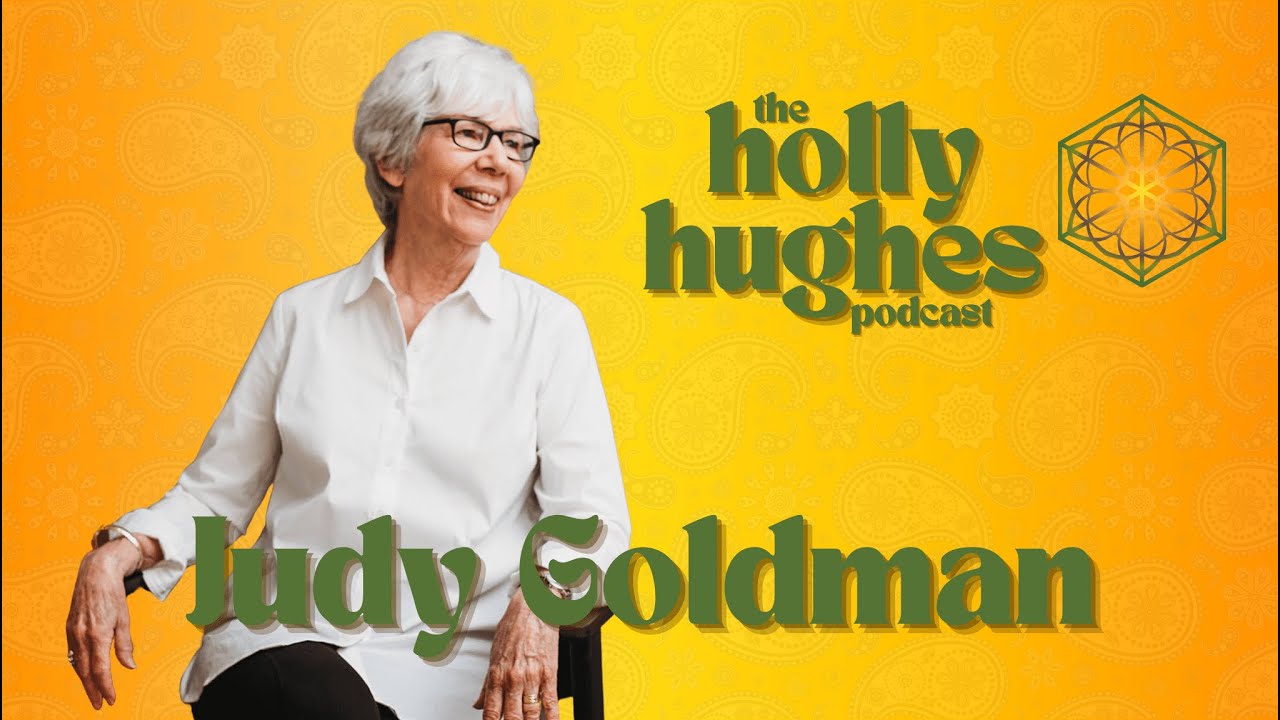
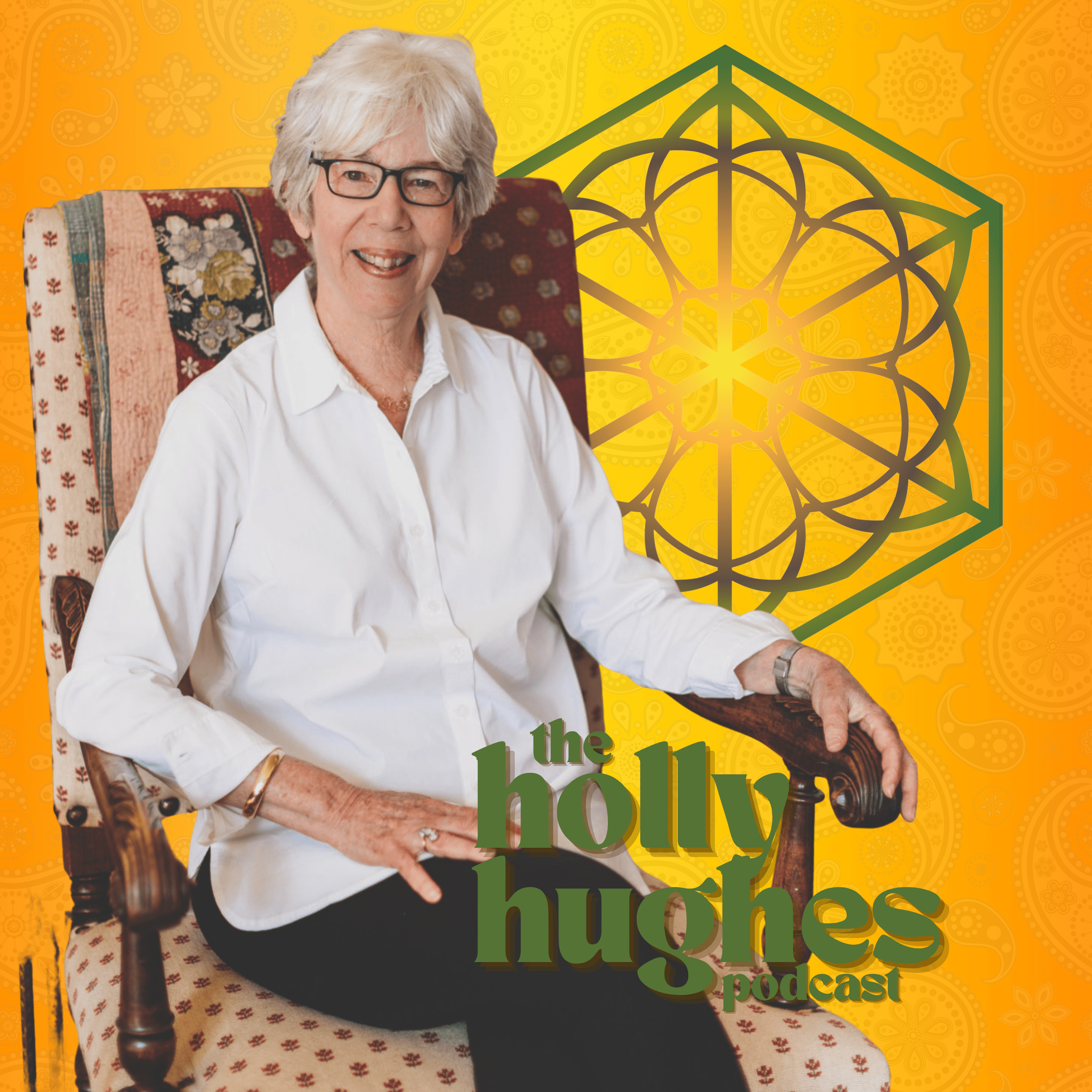
Today’s guest on The Holly Hughes Podcast is author Judy Goldman, an author of eight books — four memoirs, two novels, and two collections of poetry. Judy has recently released a book called The Rest of Our Lives, a reflection on the aging process no matter what stage of life you’re in.
Judy joins Holly for a discussion around different perspectives on aging, evolving feelings about self-image and confidence, and the beauty of writing memoirs.


For those lucky enough to reach old age, the process of aging can be an ongoing adaptation, a warm reflection, and a bold step in a new direction - all in one.
Today’s guest on The Holly Hughes Podcast is author Judy Goldman, an author of eight books — four memoirs, two novels, and two collections of poetry. Judy has recently released a book called The Rest of Our Lives, a reflection on the aging process no matter what stage of life you’re in.
Judy joins Holly for a discussion around different perspectives on aging, evolving feelings about self-image and confidence, and the beauty of writing memoirs.
Connect with Judy Goldman online at judygoldman.com. Get your copy of Judy’s book, The Rest of Our Lives, here.
Get your copy of Holly’s book, Real Not Perfect: How to Become Your Happy, Authentic Self.
Sign up for Holly’s email newsletter here.
Chapters
00:00 Introduction to Judy Goldman and Her Work
00:35 Exploring Aging and Belonging
04:00 The Concept of Home and Its Evolution
08:37 Family Stories and Their Significance
11:49 Genesis Stories and Their Impact
17:58 Beauty Standards and Self-Perception
23:47 Friendship and Support Among Women
29:44 Reflections on Aging and Life Changes
35:39 Personal Experiences with Home and Family
39:12 Surviving Disasters and Finding Home
39:40 The Meaning of Home and Sentimentality
43:22 Reflections on Memoir and Self-Discovery
46:38 Aging, Invisibility, and Self-Confidence
52:25 The Power of Writing and Creative Expression
01:06:43 Legacy, Sentimental Objects, and Family Connections
0:05 Well, welcome to the Holly Hughes podcast. Today my guest is Judy Goldman, who I'm so excited to have a one-on-one conversation with. She's the author of over 8 books, 4 memoir, 2 novels, some poetry. She's a woman who did New York advertising in the age of Mad Men and with the most beautiful Southern charm. Actually broke out my nicest southern girls sweater. That I owned too. I see that. I see it soft, like little clouds or hearts. Yeah. They're, they're fuzzy little hearts. So I did that just for you. I was like, oh, I, I should try to be as southern as I possibly can. I'm raising a southern girl, but I, I am not really, but that's OK.
0:49 But thank you for joining me today. It's so nice to see you, and I really want to start off our conversation today talking about the rest of our lives. And I already know you've talked to Wiley Cash, which is exceedingly intimidating for me to come after him. But I'm bringing such a different perspective because I really am so curious about your family and sense of belonging in aging as a woman. And, and I am, I'm going to go there with you because I think that's the heart of this book. So welcome, Miss. Judy, Thank you, Holly.
1:31 And I love your perspective. I really do. Nobody has talked with me about my book from that perspective. This is new. This is new. So I really appreciate it. And to me, it is the heart of the book. I think I'm talking to other women. I really am. I'm happy to have male readers, but I really think I'm talking to other women and saying, look at us. Look at the experiences that we have. Look at our world. I love that you're saying look at us because so I cry when I get feel connected to something so you will probably see me and tear up.
2:16 But like for me in my past mid 50s now and my mom is the same age as you but we have an agreement that she never ages past 42. My mother's 42 and I am 50. 6 a little bit older than she is right? If I do the math right, I think I got it. Yeah, exactly. I think that for me, in this phase of life of really knowing who I am, but not knowing where I'm going, not knowing where I'm going to live, not having a plan for it, because I used to make a lot of plans and they didn't work. And those horrible creeping feelings of invisibility. Yes, like, yes, right.
3:06 Well, I want to go back to what you said right before that about not knowing where you might live next, because when I started writing this book, Holly, I didn't really have my premise yet. So let me circle to that and then get back to housing. So my premise for people who have not read my book is that we tend to think of old age as something foreign or alien, right? But really it just echoes all the stages we have passed through on our way from then to now.
3:47 And each stage brings with it the fear of the unfamiliar and the exhilaration, the excitement of trying on a new kind of existence. And but I didn't have that premise when I started writing the book. I just knew that I was going to write something about aging. I had those 3 words in my notebook, something about aging. Question mark. That's how I started. Exclamation. Point first I started. Yeah, exactly. First I started talking, though, about home and what home means, how we can each visualize the rooms of the house we grew up in, Right.
4:32 I mean, I often put myself to sleep with that. Here's the entry hall. Here's the den, here's the dining room. But I started thinking about how old age is really a lot like young age. They're all these parallels. Where are we going to live when you're first married? Now I moved into my husband's bachelor apartment with rented furniture. I don't recommend the rented furniture necessarily, but it was a cute little apartment. But each stage of life. Then we have a child. Do we need a bigger place?
5:14 Can we afford a house all along the way? Where do I live next? What does it say about me where I live and then now what your mother may be dealing with and what I'm dealing with is where do we live now? Do we stay in this condo that we moved into 11 years ago or do we move to a retirement community? Every one of my friends wants to talk about that dilemma. So and maybe my mom. Has a rule. There's no talking about aches and pains. There's no getting together and talking about aches and pains. She's like talk about anything else but that she's like, that just brings me down.
5:59 But I think you also like the spark of your novel, that beautiful, like lovely thread throughout is Genesis and Uncle Irwin, who I want this man in my life. I don't know, like every time you mention him and he gives advice, no one listens. No, no. And and he's just the well, he's dead now, but he was this wonderful person, I mean, a really favorite uncle and smart as he could be. I don't know why we never took his advice, you know. So for those who haven't read the. You have to read it. Don't don't spoil Uncle Irwin because.
6:41 OK, don't spoil Uncle Irwin. And it's such a perfect name too. It is. This is like when he's, I was at your parents house where they had to walk through both of your rooms to get to their room and he was like, that's not such a good choice. Right. And it wasn't, it wasn't my father was hard of hearing. And so to get to his and mother's bedroom, they had to cross through my sisters in my bedroom, the bedroom that my sister and I shared. But like I say, my father was hard of hearing. So he would knock on our door first, of course. And we'd say no, don't come in. And he'd say, come in and I would say, no, don't come in, OK, I'm coming, you know, And that that was repeated forever. It was a terrible arrangement of rooms. Uncle Irwin was absolutely right. Don't buy this house.
7:31 And we love that house so much. I have written about it in many of my books. It that house means so much to me. Sorry, Uncle Irwin. We love you, Uncle Irwin. I think I, I think, well, I had a favorite Uncle Ray and he wasn't like that, but there was something about that man. He was my my grandmother's sister's husband, right? And I know that's why I. Don't. So he was your great uncle. He was my great uncle. He was in Pearl Harbor. He was there at Pearl Harbor. And I have his ID, his military ID, and he got. Was it a Purple Heart?
8:15 Yeah. And I have that. I don't know why it landed with me. I just think, like, out of all the relatives there, you know, But there was these memories of him, of being so kind and caring and he, they never had children of their own. And there was just some magical connection. And I'm sure Irwin didn't look like him. But like, for me, me, that's what it conjured you. You brought my family to life. And my family is nothing like yours. And like, for me, I'm always struggling with this sense of home and what is home and safe. And in your storytelling, you talk about how you always had this group. You still have a group of women who you like are like central and you have this nucleus of family that you're still so close to.
9:06 And like, my family was on the East Coast and I lived in California for 18 years, right? So like, for me, your ability to be near and loving is delicious, fascinating. And I, I can't imagine it. Like I, I'm like, like, I can't. And I want to. So what? As I read your work, I get to live it and it's so fun. Like it's, it's warm and and inviting for me because we're also both Jewish, right? So like for me, I can hear the little bit of Yiddish or I could hear what I assumed. Share in the background. Yeah. So like, that was interesting. So how did that idea of Genesis finally bubble to the surface for you?
9:53 Well, I was thinking about how much my family love stories. I mean, everybody in my family, the family that I grew up in, love telling stories. And so I was thinking, but we don't just tell any story. It's stories that have some kind of a spark, often the beginning of something. You know, the the way that my parents met, you know, the fact that they really disliked each other immediately. I mean, it was hate at first sight and then it was love at first sight when they met again. And so I knew they had this wonderful genesis story. And then I always thought, I hope my husband and I in the future, you know, I'm thinking this growing up, I hope that my future husband and I have a great genesis story because those are the stories that everyone in my family told so much, these stories that mark beginnings and how important those beginnings are.
11:10 Well, they might not seem that important to other people, but they did to us. You know, I mean, my brother and the snake that he killed at camp, I mean, that was an important Genesis story. We had a photograph of him and the snake on the wall of our den. You know, now that's not so important to other people, but to us it was sort of. My brother was never bar mitzvahed because he got a cold before his bar mitzvah and somehow it got cancelled and never rescheduled. I don't know, It just got forgotten somehow. And so maybe that was like his bar mitzvah, you know, killing the snake or something. I don't know what it meant, but that's what I'm saying. The Genesis stories were only significant to us, not necessarily to other people.
12:06 But I think that's true of families, don't you, Holly? That the stories families repeat aren't necessarily the most important stories. That's a really good question. I think while you're talking about the killing of the snake, I realized I was raising a Southern girl. One time we were down in Kiawah and my daughter was little still right elementary school, like maybe 8-6, maybe younger, 6 or 8, something like that. And we were fishing and she had a Tinkerbell fishing pole. But every night as it got sunset, we went to this part of the marsh and we would go fishing. And we met Mr. Ernie.
12:52 And she was sitting next to Mr. Ernie, who owned one of the really giant houses back there, but was very unassuming. And then then my daughter looked up. She goes, Mama, Mama, there's a babe, a Gator. And that's like, whoa, what just came out of your mouth? That was, that's a genesis for me that I have this Southern. No, she doesn't. Her accent isn't really. But sometimes, just like when I'm very tired, I will say the word coffee, like, oh, when that comes out of my mouth, you know, I need to go to sleep. I, I am tired. I think the genesis story that I remember hearing was of my great grandmother Clara, who came over from Russia.
13:36 And they were poor, of course. So they were at the bottom of the boat and she always told the story that they were too poor and they didn't really have food. And what they ate was what the rich people threw down, which was bananas. And her story is you'd never found a banana in her house after that. She would like never eat it. But to me, she was that really strong woman who escaped what she escaped to survive and come here. And she was tough, right? She was super tough. So like that's my idea of her right is like this strong woman who came across on the IT makes reminds me of the the movie Brooklyn right when they came when like that. Whole thing, I was like, in the book, yeah. But what's interesting about what you're saying, Holly, is that when you're imitating your daughter and her voice and her accent, so she's Southern, you are not OK Flip that for my family because obviously I am very Southern and my children do not sound Southern at all.
14:45 And my grandchildren make fun of my the way I pronounce people like when I just said daughter, they cannot. They roll on the floor when I say the word daughter. So. You know. I like it. It's it's just family is like that. It's just funny to them, you know, that or they'll or they'll say somebody is really Southern. They sound like you, gay, gay, you know, I mean, I'm the quintessential Southerner to them, you know? And yet they are my grandchildren, you know, we're so close. And Speaking of grandchildren, pardon. I said, And you spent enough time in New York and I know. I did I'm.
15:31 Trying to erase that southernness from you, but it didn't stick. It did not erase any Southernness. I mean, I can remember when I moved to New York. I mean, I was fresh from the South. I'd grown up in Rock Hill. I'd gone to school in Athens, GA, then I had taught school in Atlanta, and then I moved to New York. And I can remember that first week sitting at the little circular, one of the circular counters in chock full of nuts and ordering my coffee and the cream cheese date nut and cream cheese sandwich. And when I ordered, I could just see everybody around my little circle turning around to look at me. And I had tried so hard not to sound Southern when I ordered it, you know.
16:26 Yeah, Yeah, I like that. But. But that's where I grew up. I mean, I really feel like those two years in New York and you mentioned the Mad Men years in your introduction. I feel like that's where I grew up in New York. And again, I'll go back to something I said a while ago and something that I think is really important to me in this book, The Rest of our lives, and that is, and I'm going to use the same words, the exhilaration of trying out a new kind of existence. I mean, I can. And I think that's very particular to women in some ways.
17:07 Going back to your perspective, because I can remember walking along the street in New York on my way to work, and I was just thinking I could be her, or I could be her, or I could be her. I could wear that or I could wear that. It was me at 23 realizing I can come into my own in an important way now. I mean, I'm still going to be who who I've always been, but I also can be a newer version of myself as I'm growing up, as I'm having all of these new exotic to me experiences, you know, and I think women are aware of that more than men are. I don't know whether that's a generalization or not. I don't know.
18:01 I don't it's girl talk right now anyway, so I think, you know, I mean, I love my man Candy, but it's all good. I think. I think like as you speak and like going through and knowing like all of my insecurities as a young woman in her 20s, that's when I moved out to LA. So then the pressure to be a specific thing or look a specific way. Part of what I like reading about your book and what I hope I'm giving my own daughter is love you right. Like I don't I didn't have that. I don't. I don't know why. Like I don't. I really don't know. Like why, I guess because Oh no, I do.
18:42 I'm lying. I'm a big fat liar. This is my mom, blonde hair, blue eyed kind of legs where her thighs don't touch right. Like and everyone told me my whole life, she's so beautiful and I look like my dad. And so I was like, well, what does that make me like? That is how I internalized it. I don't think anyone said that to me. I don't like, I don't remember. I do remember one man told me I looked like Tiny Tim and I was like devastated because I had really curly hair because when I was younger, like really thick and curly, I was like, well, that that was mean. That was like the meanest thing I think I've ever heard said about me. But standards of beauty and then coming into your own and finding like what you want. Like I used to wear clothes as armor, right? Like I need to be tough today.
19:29 So I'll wear this. Whereas they are still self-expression, but more firmly rooted in I just like it. Like this makes me feel good or I feel playful. Just like this is my southern outfit and I can have my more feminine or whatever, but there is that little nuance to it as opposed to pretending and owning. And see, I think you just hit on something very interesting because I, I have a whole chapter in that book about beauty, about looks and from my southern perspective.
20:10 I wondered if it was something Southern, you know, that we grew up thinking that looks were so important. I was so shocked when I was writing the book, and I'm talking about how I knew every Miss America and I knew everything about every Miss America. And the Miss America I adored was Bess Meyerson, 1948, but I didn't remember her being 1948. I just remembered that I loved Bess Myerson when I looked her up when I was writing the book, I saw 1948. Holly.
20:50 That means I was seven years old. That is very young to be so conscious of looks, right? That's what was striking to me, that at age 7, I thought looks were important. And I thought in writing my book, I was sort of coming to the realization that maybe it was a Southern thing, that all of that was so important. But I, like you, grew up with a beautiful mother. Everybody talked about my mother being so beautiful. I mean, I think I say in my book that she was Miss Denmark, SC and runner up to Miss South Carolina, but she wanted her oldest sister to be in the contest, not her.
21:36 I mean, so she wasn't even aware of her beauty really, which is what made her even more beautiful. And, and neither my sister nor I, neither one of us would be thought of as beautiful, not ever. But I really sort of basked in her glory because I felt like she's so beautiful and she belongs to me. So that makes me something very special. I mean, I, I'm, I was the opposite of you. I feel. How about my daughter? I was Little Miss Arrogant. I mean, I thought that made me very special. And all of my best friends, and I say this in the book, all my best friends growing up from age 4 in nursery school to seniors in high school, and they're good friends of mine now. And I interviewed them in the book. They were beautiful, really beautiful, you know, So I was surrounded by beautiful women and I just thought that made me very special that they like to me too, I, you know. Reading that, I was reading like, wait, that's one of my tags in here.
22:53 I was like, I why didn't I think like like why didn't I think that? Like how you're speaking? Like I always say I cooked that. When I look at my daughter, I don't know how I cooked that. She's the cutest little nose. She's like 4 inches to. I don't know. How do I cook that? That's so amazing. I made that like that's what I think. I don't have a competition thing. I think it might be part of the women legacy. Like I said, that great grandmother who had came over, she had three or I'm forgetting my how many uncles I had, but my grandma Jean was her daughter and she didn't treat her daughter very well because the boys were much more important. So I don't know that she was ever told that she was anything special. And then she had two daughters, right. And I think I, I really honestly believe my mother's thought growing up was like, your beauty is your biggest asset, right? See, my mother never would have said that, Never, never when they asked her, this is part of the story, another Genesis story that is told over and over and over. When they asked mother to be in the beauty contest, she said I shouldn't be in the beauty contest. Ask Emma, my older sister.
24:07 She's beautiful, you know, I mean, she just, it just was not anything to her. And maybe that's why I didn't feel competitive with her or lacking in some way. Just that, oh, you know, how great. Yeah. If somebody said your mother's beautiful, I would say isn't she? You know, I agree. I agree. And and you touched on the circle of friends I have right now and that's going back to the female thing. So I always thought, and my group of friends is we call ourselves the breakfast group. OK, I always thought that I would write something about the breakfast group, but how can I write anything about them because I'm not going to reveal their stories. I mean, we would never do that to each other because we we talk so intimately and we've been meeting for I think 40 years once a week.
25:11 But it was so perfect. The way that I got to write about them was sort of coming in the back door really, not really coming in head 1st. And that was one morning when we were meeting. You know this from the book, that if you're quiet at the breakfast group, somebody will ask you what's going on. And I was quiet and somebody said, Judy, what's going on with you? And I said, well, I'm writing a new book. I've just started something. Of course they asked, what is it about? They're not writers. One other person in the book in the group was a writer, Danny Powell, whom you probably know of, and she died recently.
25:53 But she and I were the only writers in the group, really. And so somebody said, what do you, what is the book about? And I said, it's a book about aging. And Oh my gosh, Holly. I mean, it was like, it was like the 4th of July in comments. I mean, everybody started chiming in because we're all about the same age. Everybody started chiming in on their thoughts about aging. So I grabbed a grocery list for my purse and turned it over to the back and started writing down everything that they were saying because part of my good luck is to have friends who say such interesting things. And I did think, didn't you think? What they said about aging in my book was really good and and each one so different.
26:50 But they all like are an aspect of like my inner world, right? So most of my friends are much younger than me. Most of them, the ones I talk to the most, are like 20 years younger than me. Are your age? Probably. Yeah, my, my critique partner is 10 years. Yeah, they're like, right, like, yeah, exactly. Or my critique partner's 10 years younger. So sometimes when I'm going through something right, they or I'm looking at them, I will be like in your book, just how it does. I Remember Me then. Did I appreciate myself then? How can I appreciate where I am now?
27:30 I still have so much life. Lord, look, I'm starting a podcast for goodness sakes. Like you, you know, it doesn't end, but aging well fuck with your head like it will, it will just mess with me sometimes and I'm like, Oh my God, like what? What is that? Like why? Why is it that when I touch my neck now it stays like? What? Why do I have acne? It's a. Shock when I'm. It's a shock because, well, first. I don't have them because they're like, I'm 36. I want to get married. I'm like, OK, I'm so happy for you. We feel like we're the same. We feel young. I mean, I'm 17 in my mind and yet I don't look like I'm 17. And the ways that your looks change when you get older, I mean, those are shocking ways, things that people didn't tell me about.
28:27 You know, I mean, I say in my book that all my teeth now, I mean, are trying to be my front teeth. I didn't know that was going to hurt. Me. That was so funny. I had perfect teeth. Holly, but it was funny. I had perfect teeth. I want you to know, everybody asked me if I wore braces and I was so again, arrogant. No, I did not wear braces. I was born with these perfect teeth and and see, I think that's what happens. I think the things that you're most arrogant about get taken away from you. And so that was a good learning lesson for me not to be so, you know, full of myself over my teeth. I know a woman who actually.
29:12 Invisalign. But you know, the other thing about aging that I became aware of in writing the book is how shocked we are at every birthday. We're shocked to be the age we are. I mean, I can remember thinking I'm 16. Wow, you know, or 5050 was a big birthday. I could hardly get the word out. I can remember the first time somebody asked me how old I was and I said I'm I could, I could get the F, but I couldn't get the whole FIFTY out.
29:54 I couldn't get the whole word out. It was so shocking to me. And 70, why don't you get to 70? That is a big one. That was the biggest birthday of all to me, 70 and now I'm 83. So 80 should have been big, but 70 was bigger to me for some reason. Aging. The whole thing of aging. So aging in my family looks like this. My mom already told me save your money for a facelift. Every woman needs one at 65. That's one thing. That's her bit of advice. And then the other bit was when she turned 50. I know she's 42, but imagine that she actually made it to. 50.
30:36 But she had. I can hardly believe I'm 50. So she rented a bar out and put motorcycles in it, and everyone came dressed in motorcycle leather. That's pretty good though. That's pretty. New that's, that's how she does it, yeah. I think that's very cool, Very cool. I'll tell you, talking about the breakfast group and the different comments that they made about aging, I thought one of the best comments was one of the members of the breakfast group said that she doesn't miss doing the particular things that she used to do. Like she doesn't miss traveling to far off places. She doesn't miss skiing or playing tennis, But she said I miss wanting to do those things.
31:31 I thought that was so interesting. Do you have a missing like that now? Because I've seen in other interviews that you're not a nice or happy person when you're not writing, right? Like that is very true. So that will be part. I want to know what comes next. But do you have a thing that you don't miss or that you still do? Because I if I'm not mistaken, you haven't moved. No, we're still here. I think that's a long conversation this morning about should I move or not. I mean, this decision has been going on since 2017. You can count up the years, right? Eight years.
32:18 I've been talking about should we move? Should we not move? And I mean, I say this in the book and I've said this in interviews. I think that my hope is that my husband and I-1, then the other will just drop dead on our living room rug and then that will be it. We don't have to think about moving. We don't have to think about home health care. You know, all of that will be moot and it will be over and that'll be just great. But we don't get a choice in that. That's the problem. We don't get a choice in that. But I think that one of the things, do you were you asking what I do not miss about being young?
33:04 What I do not miss? It's funny because it's a variety of where do we move now or do we stay here now? But I do not miss worrying about which school my children should go to. And I remember it so keenly, too. I really do. In fact, not very long ago, some other women and I were talking about our children and the different schools that they had gone through, gone to from preschool through 12th grade. And I won the prize. I mean, my kids had been to the most schools because we really believed busing came into effect when my kids were young and my husband and I really wanted to support busing. We we felt that that was important, that that was how we could integrate Charlotte school. So we wanted to be on board for that. So for example, my son in kindergarten, so he was five years old.
34:14 He got on the bus like at 5:00 in the morning. He went to kindergarten all day at Irwin Ave. open school. He got home about 5 or 6 at night. Now that's a long day for a 5 year old. So we was in a way sacrificing him for our beliefs. That's what we finally came to. So we just kept trying different schools, hoping to stay in the public school system. And but in a way, that decision, where should your children go to school? Isn't that a lot like the decision of do I stay put or do I move to a retirement community? It's all the same.
34:58 It's just as important because often I'll add one more thing. This thing about children, you decide on the public school, for example, that you want them to go to and then you're in a lottery. So then it's out of your control. And that's true of retirement communities because you might decide on one, but then you wait to see where you are on the wait list. It's all the same. We're just going through the same stages, I have to think. About moving, I am, I'm an, I'm an animal when it comes to moving because I, I lost my home to a fire. And during that year, I think we moved three or four times in one year because the rental houses back in the day, in the eight in the 80s, it was my senior year in high school. My house burned down in November. And all my applications, yeah, it was at 3:30 in the morning. It was, it was awful.
35:58 I, I still remember to this day, I woke up, my parents had bought their dream house and it was a year of construction. So they bought the house from a person who couldn't finish building it. And then so we lived with construction, which is something look, it makes my head itch. We live with construction for a year. And on the day the final coat of paint was supposed to go on, we had a storm and we were surrounded by a lot of wood. So my dad had bought up a generator and the backup generator. The gas valve malfunctioned and fire shot through the duct system in the house, melting the fire alarms before they could go off. And I remember I woke up from a dream and it was also the 80s where you had the crank windows. Does everyone like, you know, I know people don't have to use a hand crank anymore, but like you had to like open them. Like we have two like that right now. OK, so.
36:49 You know they don't always stay shut, right? So it was a storm and one of them blew open and I woke up from my bed and I thought my, I thought I had like, sleep eyes. Like I just couldn't see. It was blurry. And I closed the window and I went back to bed. And then two minutes later, my mom says, Holly, wake up, the house is on fire. So she was a notoriously light sleeper. And what happened was the heat from the flame the the wind was blowing the opposite way that the fire shot through the house. So the fire alarms melted before they went off. So I woke up, yeah, this is crazy. I woke up. And so like the house was always under construction about to get painted. So whatever we had, which furniture wise, we didn't really have it because the house wasn't done right. My mom didn't get to do all the stuff. So everything was like shoved in the garage and the generator was on the outside of the garage.
37:39 So that all melted. And I ran into the kitchen on instinct, like who knows how to do this? And I, I, I could see flames like, but it doesn't register because I go into shock. I'm so good that way. And I grab my mom's purse and the car keys because the cars are parked outside. And then I ran into the what was supposed to be the office and I pick up the landline and I'm like 911. And I had the towel over my face like the Saturday morning school things used to tell you to do. Like it really was in there somehow. And I call Oh, and my dad became a volunteer fireman the day before. That's the the craziest thing is only volunteer fireman in this part of Long Island.
38:21 So I called, I was like, my house is on fire and the woman's like, are you in your house? And I said yes. And she screamed get out. And but like I needed her to tell me I was like 17. I'm like in my pyjamas and we run outside. We pull the car out and then my father turns just like a movie. He's like, where's the dog? He runs back into the house, which now is very much on fire. And it felt like forever, but it must have been like a few minutes, 5 something, and he came out with the dog and they went to the bottom of the driveway, which was gravel. And it took 15 minutes for the fire department get there, and the house was completely gutted, completely, like wiped out.
39:08 So that's why home and family to me are super precarious. Anyway, so I was saying, so I lost my home to that fire. And then we moved 123 times in a year. I sent my college applications charred and rewrote my essay about surviving the fire. Then at 23, I lost my home to an earthquake. It all came down. Water main break, gas main break the building next to me half collapse. The one across the street I think was on fire. So like home to me is very sacred and where I choose to have home and who I invite into my home. I also don't collect tchotchkes like I if it can break, I probably don't want it if it can, like if it's easily destroyed.
39:56 And the hardest thing of all of those moves because I'm. Strangely very sentimental is like, I have these little things that were my grandma's right that mean the world to me. I have her the bowl that she chopped in, right? And it's like torn up wood from her hand and everyone's like, that's what you want. I'm like, that is what I want because she cooked in her Brooklyn apartment in that bowl. I want that bowl. So that kind of reminds me actually of the beginning of your book while you talk about how you studied your family and wasn't it how someone was smoking? Oh, my mother, my mother.
40:38 I would practice in front of the mirror how I never smoked. I never smoked, but I knew how I would hold a cigarette. If I ever did start smoking, it would be like this, you know, It was just so glamorous like that, like that. I thought it was part of her glamour. It was part of her beauty. The whole idea of how to smoke, you know, and, and in those years, that was glamorous, right? I mean, I don't think I knew anyone when, especially the years I lived in New York during those Mad Men years. It was in the, as you know, the mid 60s when I lived there. I didn't know anybody who didn't smoke other than me. You know, everybody smoked and they smoked at their desk. You know, I mean, the whole ad agency was filled with smoke. It probably was a little bit similar to your childhood home, you know, when you were senior in high school. Meanwhile, that story is unbelievable. I'm still sort of in that fire with you, but I'm trying to move forward.
41:47 But I. Haven't really written about that. That's what I also like. Reading your work is inspiring to me because it's like, I have daddy issues. Like we'll just put it like that. So like for me, I really want to write ultimately about that, but I need a little more personal distance. There's still too much that's kind of churned up for me, and that's not the way I want to present the story, right? I, I, I know that, but I find it interesting that you as a writer in your young mind were studying someone enough to see that my grandma smoked merit cigarettes and her ash could be like the whole length. And I would be like on Tinder hooks. Yeah. Like.
42:29 Oh, it's like a but I want to say, I want to say put it in her. Hand. I want to say something about you writing a memoir about home because I was absolutely thinking of that. The whole, I mean, almost every chapter could be about a particular home and that would be how you would structure the memoir. But you said earlier in our conversation, you said something about who I am now versus who I was then. And that's an important part of memoir. It's the now and then part of it. When I, when I wrote my first memoir, I did not understand that that was part of memoir.
43:13 I didn't understand how important reflection is in memoir. But in particular, what do I know now that I did not know then? And you referred to that earlier. But then also I was thinking about that when you were talking about the different homes and what has happened to them and how home feels so sacred to you, and you use that word. I was thinking what an interesting memoir that would make from the standpoint of what you know about whom now versus what you knew about whom then. And I go back to.
43:57 I'm like, I can't wait. Like where's my blank journal? Because I. Think you need to write this down. No, I'm going to have it recorded. I'm I'm. You gave. Me the the biggest gift right now, because I think if I put my life in those terms, the stories are so much easier. And if I go at it from that like paternal angle, because it's not just that story, right? Like my big dream is this is what I always said. Once I became a parent, one thing was like, Oh no, I have to answer what's for dinner every night, which is my least favorite question in the world. And two, that I want to create a home that she wants to come back and visit. Like that? Of course, we all want that.
44:39 Part of me. Yes, I don't think so. You. Have not met my family. I'm just saying, like, I don't know that that's ever been a point or a conscious thing. But for me, it was very. It's very important. Yeah. Safeties is a fascinating little sizzle in my life. That's why I love that you have friends forever and that friend group forever. Each of those are pocket of home, someone who knew you. Exactly. Yes, yes, that we find, we find home where we can find it really. I mean, home does have a lot of different meanings for sure. Absolutely.
45:23 And it can be your childhood home that you remember. It can be your friends right now that you've met recently. I mean, home is a movable feast. In other words, it it really is. And I think it's an important concept for most people because some people feel keenly that they have never had it. And some people feel keenly be that they had it but lost it or didn't have it and have found it. I mean it. They're all different experiences with home. And maybe in a way, I'm just thinking about it in this conversation with you.
46:10 In a way, every single one of my memoirs, even really I should include my novels and my poetry books too. I would say every single one of my books is essentially about home. I think that that's probably true. What makes a home? How we connect, how we disconnect, how we reconnect, all of that, all of that, the relationship we. Overcome illness, Yes. Yeah. I also wanted to tell you, reading your book, which is kind of how my brain works, so I'm going to do a little jump. If I jump too far, you just let me know. But like I said, I hate answering what's for dinner.
46:51 And we're a family of three, and my daughter's getting ready to be a senior in high school and more empty nesters. That's why we're talking. Like, where do you want to go? My husband doesn't want to see a neighbor. He wants to not see anyone. And I am a city girl. So this is always. Been that's a little bit of a problem. It isn't my we have a horse and a donkey as neighbors right now. Like how much further do you want to put me? But I vacation to Seoul, which is in a city that I love that I feel at home in. And I have, I always say I have no business feeling that way, but I really do when I'm there, even though the travel there wrecks my body right from that aging thing.
47:35 What is cool about being there is in their society, they respect age. Age is treated very differently there than here. So even if I'm not the best at the language and I am a foreigner, there is a slight level of I always feel mutual respect in that like, oh, she's an older woman, don't be a jerk. Because my younger friends have gotten like shoved, but I have never gotten shoved when I was there. So. And it's just also because they don't do space the way we do. It's it's kind of interesting, but I kind of I love all of those. I think you've like, I'm going to have to give you credit in the acknowledgments, which is also one of my favorite things to read in a book.
48:17 Like who you I'll be like, if it wasn't for Judy, I would not have started my novel of home, which just makes the most sense. Like how did I not know that? It was like way too close. It was just right here in front of my face. And what you just said, what you just said, I do exact the first thing I read in a book, The acknowledgements, Right. Are you like that too? Yeah, because I think for me it's getting to know the author right off the bat. It's the most revealing thing. Sometimes if it's a novel, it may be the most revealing thing about the author, at least the most obviously revealing thing about the author.
49:03 And so I always read the acknowledgements first, don't you? And I work on my own acknowledgements. Pardon. I just like to see if I know anyone. I'm like, oh, oh. Oh, definitely. Do I know anyone? And, and oh, they didn't even mention their family. Wonder what that means, you know, and yet I know that they have a family. I mean, oh, and then I'm off on that. And I work on my own acknowledgements for so long. I mean, and it's not that I do a great job of it by any means. You can't tell that I worked on it a long time, but it's so important whom you think and whom you recognize, and all of that is important too. But I think I think it's important now. What's no, let me say it differently. What I'm happy about is that I think more and more people are reading memoir now and appreciating it. I mean, I can remember I joined a book club many years ago and. But I was writing memoir at the time. Maybe I'd written my second memoir at that point, and I was reading a lot of memoirs.
50:20 So I brought a memoir to the book club for my, you know, contribution. And I mean, this darn memoir had won the National Book Award. It was not too shabby. You know, it's really a wonderful memoir. And the comments were, well, all she does is talk about herself. So, Ken? I just, yeah, I think I went off camera almost. I just bent over. I was like, no. Oh. It just made me sick for so many reasons. I think memoir now would probably help people reconnect right to our our linked humanity instead of rushing to judgment to like sit in that story. And like how I did.
51:12 I always look for ways in that which I connect with someone. Like we could have different lifestyles or different histories, but there has to be some universal thing where we do connect. And if we don't, then I find that fascinating. I'll dig into that as well. Right. Right, right. No, I mean, I look at memoir as being like a fireside chat with a really good friend. I mean, I love the intimacy of memoir. It feels so personal. And I think also because I started out in poetry, memoir feels very close to poetry for me, that personal part of it and the intimacy of it. And the reflection, which you know, we sort of touched on a while ago, the reflection is so important because you really get to know the memoirs through his or her reflection. I started in poetry too.
52:12 Oh. I didn't realize that. You might have to hear from me more often, that's all I'm saying. Like I did, look me, I even pulled my old book. I won a contest. I did. I won a contest and I got a little book published. Oh look at the oh I love the book cover. The cover is fabulous. Look, I'm smoking. Oh, you are so glamorous. Yes, so glamorous, I think. And your dress is beautiful. When you said I won a contest, it made me think. The first poem I wrote as an adult, I entered in the Charlotte Writers Club poetry contest, and I won first prize and I won $100. And then I wrote a second poem and I entered it in the North Carolina Poetry Society contest, and I won a prize, first prize, and I won $100.
53:08 And I thought, wow, you know, I'm going to make a fortune in poetry and it's so easy to win prizes. Well of course nothing happened after that for like 3 years. You know, it was just this random weird thing that happened with two poems. Anyway, when you said I won a contest? I did. I won a contest as A at this publisher. I think it was, I think they do self-publishing now. But this was like back when my daughter was little or did I even have her yet? I can't remember. It was a long time ago. And it it was like, I was like, oh, what if I dug up all my old writing?
53:51 So it was like poems from even like high school, which were so sentimental through to the age I was. And I kind of ordered them and they're like, you won. And I go into everything not thinking anything. And I was like, Oh my gosh, I won. They're like, we're going to publish your book. I was like, oh, and then so it must have been after I was married. Obviously that's my wedding picture, but at at my wedding I was like, I always wanted to take. I tell people I have a snarky sense of humor. I'm very dry but I was like, would it be like if I was like all beautiful but like sitting on the toilet smoking? A cigarette smoking a cigarette, it's one of the best covers I've ever seen, I have to tell you that. But she's like, you're only going to do. This I was like.
54:33 I'm going to do it. When you just were talking about the. Poems that you wrote in high school. Last week, in fact, I went to the funeral of my 8th grade boyfriend who whom I was madly in love with, who dropped me. And I wrote so many poems about him. And while I was standing, I mean, it was a graveside service and I'm standing there in the cemetery, you know, thinking about Charles and the 8th grade. And I could recite in my mind one of the poems that I wrote about him when he dropped me. You know again now and then, you know the travelling. Between the.
55:24 The the world's lines, I can tell you. I'll. Tell you 2 lines that came to me because I had. OK, I'll tell you the lines first. Do you now go with Linda? If not her then who? And that's it. Do you now go with Linda? If not her then who? And because I had heard he was going with a girl named Linda from another school. And what I loved about that second line, and I think the reason I remember it is I love the sounds in it. If not her, then who I liked her and who and the sounds of that in the line.
56:07 So I think, you know, I did a little something right in that poem, in the texture of it. And I think that's why I remember it. But Oh my gosh, those early poems, those early poems. Oh yeah, they. They are special. But I have one of the. Things that survived all my moves are some of my really old journals and I don't often look at them. But I was thinking about this again while reading your book was right when I was younger, before social media existed, when life was better and easier personally, But when right when I I felt change happening, I would often read where I used to be to appreciate maybe where I was headed.
56:57 And I wish that I, I mean, so I think I do that like with my writing, especially with memoir, like you said. But I think with aging, I need to adapt that a little bit more than I do like. And I don't know how to explain it to anyone, maybe who's younger, but you know, you'll wake up and then you'll look in the mirror and you don't match. Or all the noises that my body makes getting up out of bed. Sometimes the castanette. The forget that's. A good. One yeah, or or like the memory failure like. Really this week I've had a lot of moments in the kitchen with my husband where I'm like, you're struggling to. Hear who needs to remember.
57:44 Yeah, yeah, no, that was it. That was it. It's the umm. Yeah, I can't remember. Yeah, I think what's. Important is we age What well, I say what helps me is to think that I've really been through these same stages before that this is like that. I mean, I think the bad thing is that's why old people like to talk about the past so much, because this is like that, you know? And then and when, for example, I'm with my kids who are wonderful to us, I mean, they're so available to us. I'm very lucky. But when I talk about the past too much, I can see their faces just sort of glaze over and which I understand because I don't like it when old people do that with me.
58:34 But that's why we do it, because this is like that old ages, like young age. We've been through these stages before. We've been here before. We just have. We're not a lot different from who we are from who we were when we were a senior in high school. And yet. We are different, we. We have. Gone through a life up to this point and but I think it is helpful to see the parallels. That helps me for some reason. No, I like that.
59:15 That's the theme in the book. Right. You're like each Genesis story, right? We're going back and they're so similar. They're so similar. They really, really are. Yeah. And that's the fun of writing memoir. I'll put in a plug for writing memoir, and that is the reward for writing memoir is self knowledge. And what could be more valuable than that, You know? I mean, we're looking to discover the hidden patterns in ourselves. This was me then, this is me now. How have I changed? How have I stayed the same and all of that is is good. I mean, it's good to gain that self knowledge. It's good to be that self aware.
1:00:07 I think to be on to ourselves so you you are innately. Self assured. At least that is my impression of you, right? And I know I'm not like younger, definitely. I wasn't like full of insecurity and like owning my own creativity and owning my voice was a big transition for my 30s. For me. I was like, yeah, no more of that. I don't know how to not do that. But I have to unlearn that people pleasing make it better for you by making it all worse for me. But like I also, as the aging thing kind of comes in, I remember my first bout of feeling strangely invisible was becoming a parent because I became a mom at 39. And so I had a whole career and I was with 250 people daily. And then suddenly I was alone and responsible for this little person.
1:01:02 And it didn't really, I had no family around me was like, really figure it out yourself. And and then I didn't, I was in Holly anymore. I was her mother, right? And this wife and, and all those things that I had define myself by and with, even though I really wanted to be a mother, I and it was a burning desire in me. I had no idea the invisibility that also came with it. And how I feel that echo that sameness now in my mid 50s, right where some people look at you like next, you know, like next. And I can see it in their eyes.
1:01:45 And I'm like, no, exactly, no. You should be 83 and go to Dick's Sporting Goods to buy sneakers and you will feel so. Invisible. Because they would so much rather weigh on a runner who's 32 and running marathons then an 83 year old who's looking for sneakers for the walks that she takes every day. Yeah, that's the most invisible. I felt as an old person exactly that. Yeah. And I just experienced it recently. That's awful. But in a way you. Know it's.
1:02:26 Really, whatever, it's OK. Though it's OK I. Mean it's fine and you're talking about self-confidence. Looking back, I think I was pretty self confident to do the things I did, but I don't know that I felt self confident. I have to say that. I mean, I was self confident about certain things, but in a lot of ways because I was shy and I was quiet, you know, I, I don't know that I had self-confidence in every area of my life that would I would have to say that to be honest. You talk in your book about.
1:03:06 I was explaining before that I'm sentimental and you had those pins. Do you have anything that you're sharing with your children and grandchildren and extended family that means something to you that you hope might mean something to them and you're talking about? Real possessions, yeah. I have. I have so many of those things. I have so many of those things that they would need to rent a storage space if they took everything I wanted them to have.
1:03:47 And you're just trying to. Think of 1. Particular like maybe my heart pen that my father gave me right before he died. That's what you're thinking of. Well, yeah, I would love for somebody to have that and for that to mean a lot to them. But I have so many of those things. And what worries me, and here's the flip side of that, what worries me. I have a son and daughter and they're both married. My daughter is as sentimental as I am and she is going to want everything. And she has a small house. Where is she going to put my baby grand piano? Where is she going to put? You know all this.
1:04:29 Stuff that I've accumulated, right? Exactly. She'll be. Stuck with the same dilemma. Won't won't she where to move? I love that. Yeah, I think like I was saying like 'cause my. Grandma, I have the bowl for my grandfather. He wore like this little fishing hat when he was outside. And I have his Bible. Not that I ever remember him reading it, but after he passed I found it and I saw his handwriting in it. Oh, oh, of course. Oh, and that's so, that's so personal. Yeah. So that's. Like how I'm sentimental.
1:05:09 It's like that little. Maybe quirky but like. So. Then I also have one of his watches and I'm pretty sure all his watches were, I thought the five and dime. It's like they there was like no money really, and but it was just that it was Grandpa Sands. There was one thing my son is. Not as sentimental as my daughter. Plus, I mean, what kind of things do you pass on to a son? It's not the same as jewelry and things like that that you pass on to a daughter. But there was one thing that my son wanted and it was his grandfather's watch talking about a watch which my my husband's father. And so my husband went ahead and gave the watch to our son years ago because he, he really cherished it. He was so happy to have it and their house was. Broken in.
1:06:05 On and the watch was stolen and that was the one thing that my son really wanted. So there's also a lesson in that. You know, we, we hope that the things we used to own will bring back the person, but really we're going to bring back the person anyway. We don't need the things to symbolize them. They're already and our hearts, they're already inside us in a lot of ways. So it's just things and whether they have them or not true, the memories are there. OK, so we know that. You're unhappy when you're not.
1:06:45 Writing and I and you talk a lot about your age and what comes next. So spoiler again, apparently she hasn't moved. Just saying everyone she hasn't moved. I don't know, in a few months when this comes out if she will have moved then I'm not, I'm not thinking so, by the way, but So what are you working on now? Are you going to dabble in poetry? Because you're also reflecting back. Maybe you'll win a new contest. Another $100. That will make 3. $100 that I won in poetry, which would be great. No, I just finished another memoir, in fact, and I'm sort of revising it a little bit, but I'm really mostly finished with it, so I'm staying.
1:07:32 Well, I had, I was really working on both memoirs a little bit at the same time during the pandemic. I had lots of time like everybody else did. And so I wrote and I really, I hated the pandemic for what it was doing and the fear and, and the loss that it created. But I happen to love the pandemic because all I had to do was write. And that's my dream day is to write. So I ended up by accident writing this other memoir that now I'm revising and finishing up. So no, I'll stay with memoir. That's what I love. That's what I read and that's what I like to write. I love that.
1:08:16 Well, now I'm going to have. To come find you. Locally to get used to because I have your signature and all your other books, but not quite yet on this one. So I want to make sure everyone knows the title and if you're watching, it's the rest of our lives. And she had an artist do the cover. How did you decide that? Well, because all your other ones look pictures. I'm doing double vision. So the artist. Who did the cover is my daughter. It's actually my daughter. Laurie Smithwick created 100 portal paintings, and they're all about this big. And when I, when the book was going to be published, I asked the publisher would they consider using one of my daughter's paintings, and they said they would love to look at it.
1:09:09 So I chose the portal painting that I like the best. And Laurie actually designed the whole cover, it turned out. So that's all her artwork. Yeah. She, she was a graphic designer for many years, and she did a lot of book covers. So that was, you know, natural for her to do. I love it. It makes it more like. I don't know. That's more. Huggy to me, that's like even better that your daughter got to do that. I love that. And I love the idea of a portal. Because it goes with your whole. Genesis story over and over and over. Yeah, our. Big question is when our daughter goes to school do we stay here? And my answer is I want her to be able to come home from college and know her room.
1:09:53 But after that, who knows? Yeah. After college, yeah. We agree. So I you have like 5 more years. Miss Judy to stay in that spot, and then I'll be like, OK, you had five more books come out. Are you moving? I know. But thank you so much for being. On my podcast. I like to end every episode by asking the same question, which is if you came with a warning label, what would it be? So it's it's so. Funny that you're. Asking that question right this minute because if you notice, 2 seconds ago. I gave you advice, right?
1:10:35 Don't move while your daughter's in college. She needs to come home to her room while she's in college, right? I gave you advice. OK, that would be the more the warning label on Judy Goldman is. I love to give advice. And what's so bad about that is I believe that I have this uncanny ability to know what everybody else should be doing with their lives. You know, I mean, my older brother used to say that my six favorite words in the English language are Let me ask your advice, Judy, you know, because and, and the I have to say this also, the main character in my first novel was a therapist on the radio.
1:11:24 Why did I give her that job? Because. I would love to be a therapist on the radio. I would love to do that. So that would be the warning label for me. Because not everybody really wants your advice, right? No, I do know that. I do know that you. Gave me so many. Gifts in this episode which? Was helping me frame the memoir that I have been running away. You gave me a home. But that's I no, that's like I'll give you another $100. I'll I'll pay you the $100 for your poem of advice. That was epic. And I really hope that whomever is listening to this, if you write memoir or you were curious about it, that that you realize you can start at any age.
1:12:12 There is no limit. It's just a matter of like starting that one word at a time, which we all know I I listen to your Wiley cash interview and you were like, your friends were like you. Well, you're like, I don't know what to write next. They're like, get out your journal. You're like, I already know that that cracked me up. So I. Started this. Hoping to help people connect with each other. I hope you look for friends who are not in your age bracket because you know, our life experience and each of those Genesis that Judy writes so beautifully about in her book is is a treasure and it just makes everything better. So thank you again, Judy, for being on the Holly Hughes podcast.
1:12:55 Holly, thank you so much for this. Invitation. I love this. I really did it. It's so much fun to sit and talk with you. And we had that connection years ago where we met and then this long period of time. So I'm so glad to reconnect with you and thank you for inviting me. I loved every minute of it. Thank you.