Zub Conquers All: Comic Book Writer, Artist and Director Jim Zub Talks Comic Books, Comic-Con, the Creative Process, Industry, Relationships, and His Impact on Conan the Barbarian, Marvel and More
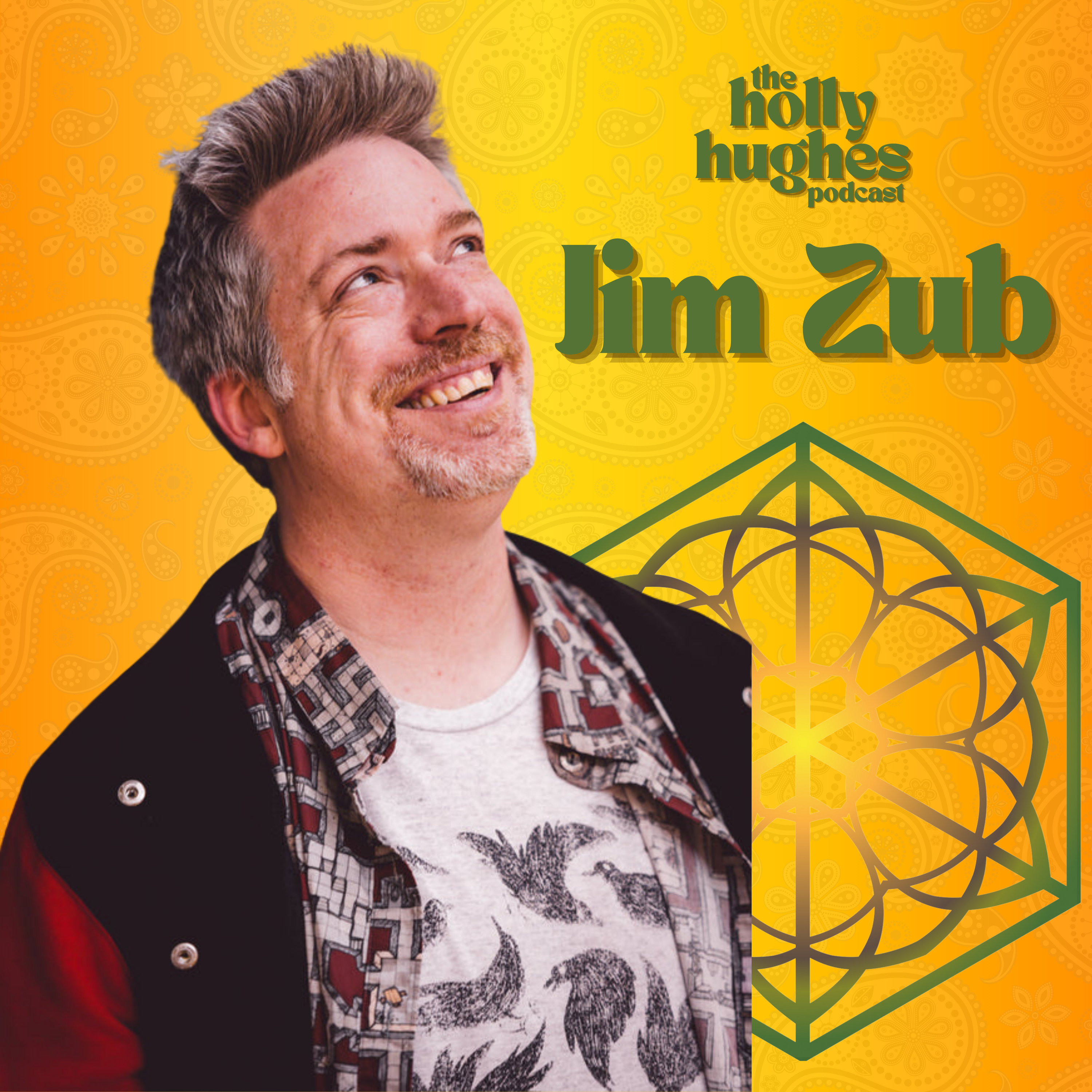
For many listeners of this podcast, the golden era of comic books is something we fondly remember. Names like Spiderman, Superman and Conan are more familiar to us than many family members. For each of those iconic properties, there is a creative mind behind the writing, artwork and storytelling that brings those comics to life.
Today’s guest on The Holly Hughes Podcast has dedicated his life to breathing life into some of the most beloved franchises to grace the pages of comic book lore. Jim Zub is an artist, writer and creative director for the Conan: The Barbarian franchise, as well as The Avengers, Skullkickers and more.
Jim and Holly talk about the creation and direction of revered comic franchises, the atmosphere of events like San Diego Comic-Con, the industry of creativity, collecting memorabilia, and the power of relationships - particularly the one you have with your life partner.


For many listeners of this podcast, the golden era of comic books is something we fondly remember. Names like Spiderman, Superman and Conan are more familiar to us than many family members. For each of those iconic properties, there is a creative mind behind the writing, artwork and storytelling that brings those comics to life.
Today’s guest on The Holly Hughes Podcast has dedicated his life to breathing life into some of the most beloved franchises to grace the pages of comic book lore. Jim Zub is an artist, writer and creative director for the Conan: The Barbarian franchise, as well as The Avengers, Skullkickers and more.
Jim and Holly talk about the creation and direction of revered comic franchises, the atmosphere of events like San Diego Comic-Con, the industry of creativity, collecting memorabilia, and the power of relationships - particularly the one you have with your life partner.
Connect with Jim Zub online at jimzub.com.
Read Holly’s viral essay about sexual harassment in Hollywood that got Jim and Holly connected here.
Chapters
00:00 Introduction to Jim Zub and His Work
01:42 The Life of a Comic Book Writer
03:59 The Significance of Conan the Barbarian
06:50 The Creative Process Behind Comics
08:28 Collaboration and Community in Comics
11:27 The Future of Conan and International Opportunities
13:12 The Role of Teamwork in Comic Creation
13:31 Reflections on Past Collaborations
17:17 Personal Stories and Impact: The Power of Narrative
18:52 Legacy and Relationships in Creative Fields
22:23 Navigating the Business of Creativity
28:11 Ownership and Royalties in Comics
32:35 The Slow Grind of Hollywood Adaptations
37:08 Memorabilia and Personal Connections to Art
43:21 Rediscovering Self and Relationships
45:17 The Journey of Love and Marriage
47:36 Adventures in Marriage: Trials and Triumphs
49:58 The Power of Humor in Tough Times
54:28 Navigating the Creative Journey
57:28 Lessons from the Creative Industry
01:00:47 Defining Success Beyond Expectations
01:02:36 The Warmth of Personality and Connection
0:05 Welcome to the Holly Hughes podcast. Today I am talking with it's the Jim Zub, a Canadian writer, artist, art instructor, and for me, the epitome of creative, collaborative and kind. Those are all the three words I immediately think of when I think of you, So I just wanted to share that straight off the bat. Thank you. That's really, really kind. I deeply, deeply appreciate it and it is wonderful to see you and I think this is going to be a lot of fun. Yeah, we're going to have lots of fun. So I I I don't even know where to start with you because there is so much. First of all, again, thank you for coming. You are very busy.
0:47 You, you, I was looking at your schedule in between. I can't imagine what your production schedule is for writing and all of the comics that you were doing. And then you are at like every event in the next three months, like up and down the East Coast of the US and like how, how are you doing all of this? I yeah, it's weird like to give, I guess maybe your listeners a bit of background. I'm yeah, I'm a mostly known as a professional comic book writer, but I'm a yeah, I'm a freelance writer now, but I've previously taught art, been an artist and pop culture, you know, particularly in the comic book space, whether it's the movies or video games or everything related to it, are bigger than they've ever been. So there's always a convention running some weekend. The the hours are pretty wild.
1:37 Like literally, you know, these last couple days I've got for the Sprint before one of the biggest pop culture shows in the world called San Diego Comic Con. It's doesn't look. It's still a dream of mine to go. I'm I think I'm too chicken. I've been too chicken because I. Think this is my 21st San Diego Comic Con, so it's like my experiences at the show are now old enough to drink. Wait, maybe, maybe I'll just meet you next year. That would be like if I had a reason to go. Yeah, it's a phenomenal experience. It is a lot like if you haven't been to any convention before, I wouldn't recommend it as your first go because it's it's a lot. It's. I've been to some local ones, I've been to some local ones and they're very tiny.
2:21 I think the introvert in me is just going to be overwhelmed by the number of. People saying if you don't do well with crowds of people, it is probably too much. I'm now weirdly used to it. So it's more of you have those moments where you can't believe you're there or how insane it is, but then there's this weird kind of Zen that washes over you. We go here, we go again, you know? And then I've got a Conan the Barbarian panels because I'm the current saying it out loud is always like. A weird I know I'm sweating for you. I was like, that's. The current flagship writer of Conan the Barbarian, which is amazing. Tell me what that's like. I really want to dive into this because you have like deadlines for that. You are taking on something that has lived it forever. And I was like reading some of the reviews on how they take the old and the new.
3:09 Yeah, Conan the Barbarian is older than Superman. So he's he's just a, a core kind of iconic property in pop culture in many ways, kind of the bedrock of the sword and sorcery genre. And I grew up reading those stories and reading those comics and seeing the Arnold Schwarzenegger movie and all that kind of stuff. But never in my wildest dreams would I ever have imagined I get to contribute in any way whatsoever to it, let alone be the person who currently has their hand on the steering wheel of the franchise. So although the character started in pulp prose, like in short stories and then eventually longer novels, there are more comic book stories of Conan the Barbarian than any other medium that the characters appeared in. So the way my boss, the guy who owns Conan, explains it, he says, you know, you can do a movie like once a generation, you can do a novel maybe once a year. But every month, if the Conan comic is coming out and it's strong, then that's the heartbeat of the franchise. Then it is really setting the tone for everybody else. Whatever analogy I want to use, we're the sharp tip of the spear for the franchise and the material that we're putting together.
4:16 What that's adapting older stories or creating newer stories really sets a tone for everyone else who's making video games or trying to develop movies or toys or any of that other stuff. And so I take that responsibility very seriously. But it's also a ton of fun because you get to, I'm a real creative partner in terms of building out where our stories are going to be now, but also years from now. So I had an editorial meeting last week talking about the panel we're going to do at San Diego and stuff we're going to be announcing, but also talking about where the big narrative arcs are going to be at the end of 2026 and moving into 2027. And saying those numbers out loud sounds like science fiction to me. Because, of course, growing up, you know, the 2000s alone feels like the future. And so being, yeah, knowing what I'm going to be doing in terms of big writing pushes next year and the year beyond is, is a very cool thing.
5:08 And in comics, not something you can take for granted like there used to be in the 70s and 80s in particular, there were long runs where creators would stay on books for years and years at a time. And that was pretty much the standard. But through the 2000s, I don't know if it's just attention spans and everything else, it tends to get shorter and shorter and shorter. So most of my peers when they sign on to a book, they sign on for a six month contract, maybe a 12 month contract. So me being on what's going to end up being A5 year plus run on the book is highly unusual. Wait, wait, step that ahead of time. Yeah. You're gonna be 5 plus years. Yeah. So I started on this particular run in 2023 and I'll be on the book through 2027. So it's ridiculous.
5:54 You remind me of Steven Moffett now. I I wish right so. No, no, don't even it's. A really cool feeling to know that we're going to be able to like. So on 2023, because we were doing a big publishing relaunch, the idea was I had a year to sort of prove that this could work, that this plan that I put together would work. And it launched really strong. Our numbers stayed really stable. And so then it was just negotiating and figuring it, OK, you're going to be the guy going forward. The potential plan is now the plan. How do we make sure that we get everyone, you know, on board and, and our the artist that I get to collaborate with my editor, everyone on the marketing team, They're amazing. They're just such great people. And because we launched at San Diego Comic Con in 2023 for this new thing, every year it feels like a cool milestone. I get to go back, I get to celebrate with my collaborators. We get to sort of, you know, toast, have a beer, and in another year we're doing it.
6:50 I know, but like I want to take it like can you absorb? Like you talk fast? You clearly have talked to a lot of people. You know what it's like to be on a panel, but like, I don't want you to gloss over the massive accomplishments that you have because your bookshelf behind you is all your. Work well so we talked about this before we started recording so yeah though if you're listening to audio it's not going to be very useful to you but there's a a bookshelf just here the thinner one on my. It's massive. He's downplaying it. It's massive. And and there's so I've written over 70 graphic novels and then some of them have been, you know, plus short stories and other things like that. So yeah, I've done I guess about so so one of my friends, Dan Slot, he's done a huge runs on spider Man.
7:36 He got me into this mode where we would to help yourself remember your sort of productivity from year to year, You would count how many pages of comics you've scripted in a year. So then you can go, well, this year I was more productive than last year, but I'm I like, you know, maybe it was higher quality or maybe, you know, whatever things for it. So I now have a running tally which is a weird thing to sort of say, but I've written over 9000 pages of comics which is like kind of mind bending if I think about it of. Course it is. And collaborated with dozens and dozens of some of my favorite artists in the industry and many people who have now become my friends. And the social stuff I think is what I'm even more proud of that, you know, in this Sprint up to San Diego Comic Con, I'm getting dozens of messages from friends of mine in the industry that are really looking forward to seeing me that, you know, can't wait to to hang out together and want to know where I'm going to be.
8:26 Whatever, Thursday night, Friday night, Saturday night, let's do stuff. Let's have dinner, let's grab lunch. Let's, you know, just celebrate another year of doing what we love. And that to me is really kind of the victory for me is that that the show's become a milestone. You end up having almost like a like a convention circuit family that you see over and over again. And we're all getting older and hopefully getting wiser, or at least we hide it better. Our our mistakes and we're spending matter time and we're realizing how special, you know, the time is that whatever people's kids are growing up and careers are changing. But we're still here. We're still doing the thing and getting to have these experiences with each other, let alone meeting readers and getting to have those conversations with them, Hopefully taking them from being like mildly interested in your stuff to deeply interested into your stuff to I'm going to buy everything you do, you know, because they, they trust in the work and they had a good experience meeting you. That's why you do it.
9:30 You know, that's why you go to these events, let alone now getting to see new places. The Conan book is in 11 languages. And so I'm getting more international invites than I've ever had before. So just for example, we went to England and Spain back in May. I've never been to Spain before, went to Madrid. Three of the artists that I'm working with are all in Spain. So they came to see me and we did signings in these Spanish, you know, book shops. And one of the artists was good friends with the bookstore owner and he says we got to do, you know, signing at my buddy's store. And I was like, sure, no problem. And then one of the artist goes, oh, you have to sign at this other shop. And I was like, guys, I'm only going to be there for four days. You can't do 2 signings in the same city, one of them's going to suck like it's not going to work, and both of them were absolute bangers.
10:18 It was like, not Madrid, man. That's not going to happen in Madrid at the. Door it was bonk the first one was great and my wife and I left and I said OK that's the good one Unfortunately the next one's going to suck like no one's fault but it's just the way it's going to go and and I sort of brace myself and we showed up for the second one and it was crazier and I just went OK all. Right. Was that one later at night? No, well, they were both kind of evening ones, but one was like the the Thursday and the other one was a Saturday. So I think more people can show up for the weekend, obviously. And it was just wild. And then after the second one, the store owner had invited a whole bunch of other Spanish creators and we all went out for a big feast. And, and it was just awesome getting to meet people whose work I knew through reputation, getting to see old friends who had never seen on that side of the pond and just, yeah, kind of just marinating in the culture there and, and enjoying, you know.
11:10 And so one of the things we're trying to figure out now in 2026 is, OK, what are the other places we can go where they're publishing the Conan book? So I can kind of, you know, dual mode it like we get to have a little bit of a vacation and see somewhere new, but also I get to promote the work and and everybody wins. I love that. How big is your team? Like how big is the Conan team that makes this all happen? Right. So it's pretty, you know, it's, it's different than than a lot of other situations. So I work directly for the rights holders of which is unusual in terms of comic books. Usually that's a licensing division, but this is like a just one office. So there's, you know, kind of the main owner, the main accountant, there's two marketing people, there's an editor and an assistant editor.
11:54 There's a like their social media person, so that's just on the directly on the right side of things. And then our comic book team is there's sort of three different groups of artists because nowadays the expectations in terms of artwork is quite a bit more detailed than they used to be in the 60s and 70s. And so we have to work months in advance. We couldn't just have one artist do every single monthly issue. So there's three different art teams that are rotating through depending on the story. So I have to be written pretty far ahead. And when they start referencing each other's stuff, I have to make sure, OK, has that been designed? I don't care which artist designs it, but once it gets designed, it has to be consistent across, you know, the book. If we have a new item or a new place or a new character or something that shows up in the story. And then we also have what we call these event books. So every fall we do an extra kind of miniseries where we take all the stuff that we've been building up for the year and kind of pay it off.
12:46 It's almost like the TV equivalent of a season finale or like a extra long episode or whatever. And so we have a different art team for that and we we build those out in advance. And because the book is doing so well, Titan, who is our publisher, their prose division now wants to do tie in novels based on the stories that I'm building. And so they need that information as far in advance as possible because you can't just tell a novelist I write pop out a novel this month. So we work together. I've reached out out of the blue. It's one of those like, cold call. You really hope someone will respond, but you're like, oh, they're going to think you're crazy or something. I had read an essay that you put together about abuse in Hollywood and the way that people are treated, you know, behind the scenes.
13:31 And I was putting together a supernatural story called, which eventually was called Glitter Bomb. And it is a Hollywood Horror Story about a failed. There it is. That's right, a failed sci-fi actress who is bitter and her life is falling apart in Los Angeles. And eventually she gets an offer from some eerie supernatural being that ostensibly says, do you want revenge on all the people that have destroyed your life? You you know, I will give you the power to do it. And it's it's a horror. It's a Hollywood Horror Story, and I had done a series. Well, I was actively working on a series called Wayward, and that was a supernatural story with teenagers in Japan.
14:13 And I had these essays in the back of that book that that readers really liked because it helped fill out the world and made it feel more real. We were talking about Japanese mythology and living in Japan and all these different elements. And I wanted Glitterbomb to have that same grounded sense of reality. So I did a ton of research on LA, but I wanted to talk about sort of the, the shadowy undercarriage of, of these productions. And your essay that you'd written was one of the best that I had read about it. It was concise and it was clear and it was really sharp. And so I asked you if I could reprint it, if you owned the rights to it and if I can reprint it in the back of the first issue. And I sort of threw that it's the Internet. And I thought they're not even gonna respond or just. Gonna it was Twitter.
15:00 It was Twitter when? I first approached you on OK. I couldn't remember if it was an e-mail or if it was Twitter. And I just out of the blue go, hey, this is really great. Can I get in touch with you? The halcyon days when people felt like you could just do that a decade ago and it wasn't. I'm still doing it. That's how I'm talking to most of my guests. I'm like, hi, what's up? I'm a real person, I swear. It's not a bot or some terrible spammy thing. And I'm not trying to sell you anything. And we worked it out. And then you, I believe said, you know, I got a ton of stories. I don't mind doing more. And that was such a huge weight off my shoulders because what I was worried about was what am I going to put in issue 2? What am I going to put in issue 3? And I got to find a different person for each one. That's, and it's supplementary material.
15:41 It's important, but it's not the production of the main art. And so it's like just finding someone for each issue is going to be such a huge pain. And I, and yours was so on target. I was like, and the quality's got to be maintained, you know, across. And then you said, I got tons of stories. If you send the thing ahead of time, I can write more. And I was like, well, that just sounds like the best kind of situation. And so we worked together on that series and it was, it was amazing. I had such a great time putting it together. I'm super proud of it to this day. And it's fascinating how years later, you know, it feels like the social media and everyone kind of caught up that the Me Too movement that spilled out years later.
16:23 I'm not we had no part to play in that whatsoever. But it was already brimming. It was already there under the surface. It still is. I think that's the irony of Hollywood. I'm like, it's it's definitely a thing which made working with you amazing. So I remember that you sent me that you're like, hey, I read that essay. I was like, yeah, sure. Why not? Like I I'm not even I'm what's it's X now. I just deleted my account shortly after because it became a cesspool and I was like, I can't deal with that negativity, so I'll just go somewhere else. But we connected. Working with you was as a writer and a creative person. You hold so much space for people's talent. And that's when I really got into comics.
17:03 I was like, well, what is this when he's letters and what does that mean? And like, I was like, I was like, this is delicious. And then even locally, people like you worked on Glitterbug. Will you come here? I'm like, I'll come here. But I got like, I am not part of that, but I'm happy to promote anything. The person who threw me on the table, right? I got a, a random message on social media saying I am George's daughter. I hope I can reach out to you. And then I was like, oh boy, weird, right? I was like, oh, wait, I, so you can't see me if you're not watching the video, but like, I'm wiggling because sure. I was like, Oh my God, he has a daughter. I originally wrote the essay because I also have a daughter and I wanted to teach her that her mom knows how to fight back, right? That you can speak up when something bad happens to you. And anyway, I, she was like, I just, you know, wanted to reach out and let you know Karma got him. She said, I don't really want to go into it because it's really, it's personal.
18:03 But basically she was like, I hope it's OK. I live this life. He went through XY and Z Karma got him. He's broke, he's miserable and unhappy. I'm living my best life and I love that. Like basically said, thank you for writing it and being cool and whatever. And I corresponded with her a little bit and she has a super cool life. And I, I wanted to be mindful because I've got daddy issues, right? I was like, I appreciate that you found me, right? Because I'm, I'm not the biggest creator out there in the world, but I was just like, I appreciate that you did that, that your message meant something. And I hope that you, and really I sincerely mean it, that you are well and that you're grounded and you're surrounded by people who love and will protect you.
18:52 And she's like, yeah, no, man, I'm good. I got the best deal out of all of it. And he, she's like, none of his kids are talking to him. I was like, wow, wow. I, I try and explain to people when they're getting into whatever the creative arts, you know, and it's true across almost all mediums. So whether it's comic books or prose publishing or or movies or television or video games or tabletop games or any of these kind of creative fields, like treat other people the way that you want to be treated. Treat them better if you can, you know, remember what it's like when you're starting out. Remember those fears and remember those, you know, those ego checks and those things because you are not wherever you're at in your career, whatever success or failure you're going to have, you know, your ability to treat others well is going to help chart the future of that thing.
19:43 And it's going to that's the real honest legacy that lasts. And it lasts longer than our lives, ideally. You know, if people Remember Me when I'm gone and they say, oh, Jim wrote great stories or whatever and was a really good dude, you know, like, and was always fun to meet with and always looking out for other people or, or excited about, you know, art and stories and trying to get other people excited too and engage with it. That's the best, you know, you can kind of hope for rather than. The minute your name comes up and the nose kind of wrinkles and you're just like, at best people are kind of holding in a bad story or a bad experience or what may have you like I yeah, I know, but. I think that sets you apart like right, Because like I would still work with a lot of great.
20:32 I I I get that like I think I think all of us who are creative have like these wounds, right? We have this whatever our creative move, right, But you don't have to lead with it. You don't have to like lead with that. I think for me I've. Got frustrations, you know, galore and, and it's not like I'm living some idyllic life where everything goes my way or, you know, I don't want people to get their own idea. It's like the power of positivity. And therefore you will never have problems because that's certainly not the case. The more people you work with, the bigger the properties you're working on, the more companies you're involved with. But at the end of the day, these are people too. Like people are saying, oh, do you prefer working for Marvel or DC or, or, or whatever? And you're like, actually, I, it's not like there's a guy called Mr. Marvel and I work for, for them. These are different people on different creative teams, you know, and sometimes it's not only am I working with that editor, but this year that editor, whatever, they had a baby.
21:26 And so their lives and the way that we interact is going to be different than the year before or the year after. And we're all people. And our ability to, I put it in this term, I say our job is to communicate and to entertain. And the first people we have to communicate with well and make sure they're engaged and entertained are our collaborators, that they know why we're doing something, that they're excited and on board with it. And if not, why not? So I don't want people to just whatever, work on my script because I'm the writer. I want them to read the script and be excited to draw it, you know, or to see it produced and published and marketed. So if people have questions, it's not just like that perfunctory thing of does anyone have any questions?
22:07 It's seriously, I want you all to know why this thing's going to be exciting and what's going to be so cool about it. So when any of us is talking about it, we're excited for the right reasons and we're pumped to see what's coming out. And when a new piece of artwork comes in, let's share it all around and get pumped because we all get to have our names on this thing, you know? And I felt that way with Claire Bond, that you were part of the team and you should be excited even if you didn't. You're not a horror writer and you're not a comic book person, but we brought you into this for the time that we were building this all together. And you should be as proud as anyone else to hold that book up and say, I have a small piece of this. That's really. What it's all about, you know, And there's a lot of talk. I think you see the superhero movies and at the very end of the film, if you stick around for the credits, there's a little special thanks section.
22:57 And those are all the comic book creators after the people who did the catering and after the people who drove everyone around. There's a little tiny paragraph of the the the craters whose blood, sweat and tears actually built the storylines that they're adapting. And I wish every one of those people was treated by the publishers, you know, by these now massive entertainment conglomerates the way that they deserve because their creativity has made these billion dollar properties, you know, and, and they feel any sort of acknowledgement, like if you hang out with them, like literally the people I, you know, I had breakfast with the guy who made Thanos, you know, the big villain from the. Avengers yeah, of course I'm wait wait, you should know I'm part nerd so like don't you don't like I'm there it's. Also for your listener.
23:46 I'm like, should I turn around and show you my Funko Pop collection like it's all over there so. But it's like, and that guy's the nicest, most humblest dude. And when, you know, he gets acknowledged at all, he feels that that surge of, of pride for the work. And you're like, you should be very wealthy, you know what I mean? Like you should be the whatever, the guy who created The Winter Soldier, you know, and all these other people that that the vast majority of them, when they are thrilled to meet fans, they're thrilled to know that they've contributed to the sort of pop culture landscape. And that is cool, but you also don't want to be taken advantage of, you know, So it's that. Weird.
24:27 Let's dive into that. How does how do you own something like royalties? Like how does it work? Like you create a character, right? So like, I know how it works in film and well, how it used to work in film and TV, I don't know anymore, but. With streaming and stuff, it's messy. That's that's. That's what I'm saying, right? So like if you create something now, like I even think about this with your Conan work. I was asking like, so you have have the legacy and then where you want to take it. How old is Conan at this point? Like how old do we always keep in? 1932. I mean how old is the character? Like literally age like I'm. Oh, sorry. So there's different eras of the character. That's what's interesting.
25:08 So the character in his youth, he's in his sort of 20s and he's running around as a as a troublemaking thief. Then he's in his prime where he's leading armies. And then there's Conan the King. So then there's he's older and he's the king of Acqualonia, this, you know, fictional country and he's, you know, into his old age and, and what may have you, he creates his legacy as as a king and eventually the entire world goes through a cataclysm. Multiple things, you know, the and until we get to our modern history and all that stuff has been lost to the sands of time and things like that. And so you can actually do stories at different periods of Conan's life. So I've written stories when he's young troublemaker, I've written stories where he's in his prime.
25:49 And I'm actually writing my first King Conan story right now that's going to be coming out in, well, I've written it, but it's going to be coming out in October. And so it's fun because the character has this entire legacy and you can sort of drop in at different points of his life and, and focus on different aspects of the adventure. And whether he is headstrong and, and, you know, pushing up against the edges of civilization or he's sort of becoming embittered or he's this king who realizes he has to sort of pull his head out of the muck and lead others and try and, you know, keep humanity alive when they're up against all these threats from all these sides. That's, that's what's fun about the character is he's got this kind of fully fleshed out career that you can then work within. And so there are the original Canon stories written by Robert E Howard, this Texan author who had an incredible, he died in his, you know, 30s.
26:47 And he was like had written hundreds of short stories and hundreds of poems, and only 22 of them are Conan stories. He actually wrote more boxing stories and Western stories, but that wasn't what he became famous for. What he became famous for was this particular character. And so our ability to use anything for me of those stories is, is open because we have the entire kind of whatever you call the Robert Harrod character library. And so sometimes I'll do connection points between other supernatural stories that he made to try and entice people to read his horror work or detective work or other things that he's done. But if I create something brand new, I have, I am the creator of that.
27:27 That's just the credit. You can't take that away. And there's a small financial incentive if it gets turned into other media. And then for the work that I've written in terms of publishing, when that's published in, in other, you know, collections or in other languages, then I get a, a royalty on that stuff as it continues to sell for as long as it continues to sell. And so, you know, with enough body of work, if it's popular enough over a longer span of time, it's a, a form of passive income. You know, obviously it's not going to be on the level of a whatever a Stephen King or something like that. But it still has that kind of heft in terms of what you'll now always be associated with Conan the Barbarian if you do a long run on that thing. Just like I did a run on The Avengers and now everyone knows who The Avengers are.
28:16 And so when I get invited to a convention, usually after my name, they put either The Avengers or Conan the Barbarian or Dungeons and Dragons or potentially all three. Those are sort of the three biggest credits of things that I've worked on. Like I was writing The Avengers when Infinity War came out and you know that whatever 6 month period leading up to in the launch of that movie, I have no role in that film. I have no credit in that film. I just happen to be the current writer of The Avengers. But it's like, I'm here in Canada and I did every major Canadian news outlet, every newspaper radio, because they're like, oh, the writer of The Avengers is Canadian and it's the biggest media property in the world. And you're like, sure. And they go, have you met Robert Downey junior? And you say, no, you know, like this is not I'm we're in a different, different division, you know, like I'm in the publishing division and they're overdoing the Hollywood stuff, you know, but but even just having that kind of a notoriety bump obviously has been, you know, massive in terms of that. And so with the creator own stuff, it all depends on what deal you signed with the publisher. So Image Comics has done the majority of my creator own work, you know, Glitter Bomb, another book called Wayward I mentioned before, and then another book called Skull Kickers that I did, which was sort of my breakout book that was kind of 2010. And it's a action comedy, sword and sorcery title. But these two mercenary monster hunters who get themselves in trouble.
29:36 And I own that with the artist. We own it together. And so if we ever do any media adaptation movies or you know, we've been optioned a few times, which you know what it is. But for anyone listening here, it's like if you've created a thing, a movie company might say, we're interested and we're going to try and put all the pieces together, a producer, a director, budget, a big actor or whoever. And so we don't want you to sell it to anyone else. So we'll put a little our thumb on it and give you a little bit of money. And that means, you know, it's ours if we want it within this period of time, one year, 2 years, whatever. And we have the right to continually roll that over and continue to pay you a little bit of money every year on an option for us to make a a full blown adaptation and then pay you a larger chunk of money, which usually comes with whatever executive producer credit and involvement. And sometimes you get to be in the writing room and sometimes you get to be involved in casting, and other times you just take your money and walk.
30:33 You get nothing, you get a big zero, you get your, you get an EP credit. You have to negotiate your deal well, so you always get paid in perpetuity for every medium. None. Yeah, there are really bad media deals where you can sign one where you literally go, OK, the option money is all you're going to get. And then they tell you, oh, you're going to get a percentage of profits. But the term Hollywood accounting, of course, is where they're able to tell you that every single expense that that studio has ever incurred suddenly is is weighing on your film. Yes. So you never go against net. It's gross. It's gross. You see that box over it made $100 million, but it cost me 17,000,500 bajillion to put a stamp on that letter. No, no, funny man. Like I tell people that all the time. Yeah.
31:15 So I've got representation for my media stuff and the the group that we work with, they're they're literally like whatever the upfront payments are, whatever is guaranteed, those are the things you can count on. Everything else is just vapor. You know, you've got to be really careful about how you negotiate that and that you have exit clauses that they don't own it in perpetuity or that they're not able to do adaptations or do sequels or do more with it. That you have no control over that. Literally, even though you're the creator, some clause in that contract says that they can basically make decisions without you. It's. Brutal. Yeah, so you've got to have lawyers to look all this stuff over. And I've always treated the media stuff and the adaptation stuff as like, that's a bonus if it happens. But you can't make.
32:01 I don't make a comic to try and make a movie. If I wanted to make a movie, I'd pitch a movie. You know, I love making comics. I love working and publishing. I love collaborating with artists and all that stuff. So that's where my head's at. That's what I'm focused on. If someone comes to me and they see whatever, I think Skull Kickers will make a great adult animated show. You're like, cool man. I think it can adapt so well. Like, you know, I I watch a lot of Asian shows, like I watch Vicki, like I don't know if you know Vicki. So I'm like all of that and they have their own anime and their own whatever. I was like, I think that fits real well. But I was like, it's your baby. I'm sure you've been approached, but I'm I'm just like. Multiple times on on glitter bomb, we've been optioned on wayward and on Skull kickers. And the first few times it happens, you definitely have that moment of, oh, this is the life changing. This is everything here we go.
32:49 And then you realize first of all, Hollywood moves very slow and then all at once and then nothing, you know, so we would have these crazy meetings or you'd be on calls with people. And one of the reasons why I got representation was literally because I would have what I thought were these life changing calls. And they were people who couldn't make those decisions, but they would lie to you and tell you that they could. And so I needed someone to be a filter to go, is this for real? Do these people have any power control? Is this company for real? Their website looks good, but anyone could put together a website. And so having this filter now where they're like, first of all, there's the legitimacy of someone else negotiating and making sure it's worth your time. Yes, you're going to pay a percentage for that, but it's sort of worth its own weight.
33:34 And second of all, when they finally get to the point where you're in the call, everyone is now committed. All the people that have gone through those filters are like, all right, now it's worth Jim's time. Let's get in on this thing. So I had a call a couple weeks ago and it's one of the better ones we've had in a while. And you're like, cool, you cross your fingers. But my job is to make stories and to and to write and to make comic books. Their job is, in some cases, on those executive levels to have meetings about meetings about maybe making something someday. So when they're having meetings, they're getting their salary. And when I'm having meetings, I'm not, because I'm not writing. Oh, I love that you're so grounded for a creative person.
34:14 You're like insanely grounded. I don't know if that's part Stacy. You and Stacy have magic together. Yeah, I mean, we absolutely do. And she's been really good about that, that thing of, you know, remembering who you are and knowing what, what actually matters. You know, I, I went to, I got invited to a convention in India. So I went to Mumbai Comic Con and it was one of the craziest experiences of my life. I was one of only two international comic book guests and they don't get a lot of guests and the crowds are massive. And there were people there who were specific fans of my books, but there was a wider sense of you work for Marvel there for everything Marvel related. We're just going to shower you with love. And that's very exciting to feel like a celebrity in the midst of that.
34:59 But they don't really know who you are. And so you kind of got to you're being put up in this insane hotel and I had whatever, you know, first class flight and all this kind of stuff, which I don't get very often. And so you feel really cool in the midst of it, but there's this weird artificial bubble. Love it, ain't you, baby? Like, it's these broader kind of pop culture waves. Enjoy this, have fun with it, make those inroads, you know, and the press junket stuff, like I had done, I'll do press at San Diego. And it's usually with nerd outlets, you know, and things like that. Every so often, some slightly, you know, yet last year was the 50th anniversary of Dungeons and Dragons. So like, we got an interview by Time and by New York Times and stuff like that about D&D is a cultural movement, you know what I mean? But again, it ain't you.
35:46 That's Dungeons and Dragons, correct? But did Stranger Things also pop it the DND? Like did that also, yeah. It's Stranger Things. Do you know what Critical Role is? Yeah. So there's a, yeah, a series of these voice actors who played Dungeons and Dragons, and they're now massive pop culture kind of influencers. So I'm in Mumbai, and they do this press thing. They say we're going to do these media, you know, interviews. But it's like Associated Press India. And it's like the biggest newspaper in Mumbai. And it's like the biggest radio station in Mumbai that has millions of listeners. And they're like, we want to talk to you about superheroes. And you're like, OK, like this is a different level, but it's just this one singular moment and then it's going to go away. And that's that.
36:31 Like, it's not it's cool. It's an amazing adventure. I'm so glad I did it. I'm so glad I got invited. I'm so glad it went well. The the promoters were super happy. And they asked me if I want to do another one, you know, next year or in years to come. Awesome. But it but it's not you. It's not mine. I don't own The Avengers. I don't own Conan the Barbarian, whatever. I'm the steward of this thing for the time that I'm creating that story. And at some point you, you hand it on to the next people and you need to do that as magnanimously and you know as possible because that's. I'm like imagining you with like, I don't know why, but I'm imagining you right now with the big Thanos, you know, with the like. So do you have anything like that? Like you are in the world?
37:18 Do you have memorabilia that you love that you have in your home and stuff? Or is it like, I'm there all the time? Yeah, yeah. You know, it's weird, like the first few years you go to the convention circuit, you're buying all kinds of things. You see some collectible, some limited edition, and you're like, Oh my God, you know that they've, they've primed you well to sell you these things, you know, But now I'm doing whatever, 15 to 20 conventions this year, which is bonkers. And so you try not to fall into that, like, so for example, this is good. So I bought this is Conan #1 from 1970. It's the first Conan comic. I didn't have a copy of it growing up. It's a, you know, quite a rare collectible or whatever may have you. And I was at a convention in Orlando, FL and I've always wanted one and I saw one for a pretty good price. And we started chatting, me and the the retailer who was there. And all of a sudden, he glances down at my badge, and he says, wait, you're the Conan guy?
38:12 And I said, yeah. And he goes, I'm bringing like, a box of books for you to sign from my customers tomorrow. And I said, well, if you got them here, I'll do them right now. So we just keep talking about Conan for about 20 minutes. I sign all these books that he's got for his customers, which is very, you know, it's fun. And then he looks and he goes, I don't know why you don't have one of those. I said, well, they don't give you 1 when you take over Conan. It's not like they have a box of them in the back and they just send you one. It's pretty rare, you know, to get one in good condition or whatever. And he's like, you need this. And I said, well, I think so too. And so he cut me a deal like 50% off and he sold me the thing because to him it was the bragging rights of I sold it to the Conan guy and I sold, you know, sign this books or whatever. So there's occasional, you know, things I will buy. It's not that I'm completely inoculated to the pop cultureness of it all, but I definitely buy a lot less than I used to.
39:00 I buy one of the things I love doing is if the artist I'm working with have original artwork. So sometimes people work digitally so there's no originals, but if there's original artwork, if they've worked pen and paper, I I try and buy a couple pages or sometimes the artist will gift me pages. So I've got like 6 pages from Glitterbomb for example, that I bought from Gibrell because they're so awesome. Yeah, he's amazing. So I've got a couple of those framed like in my hallway just outside here. And so my house is like, we have sort of a, we joke the gallery because I've probably got about 40 or 50 pieces up of original artwork around the house, almost all of them from books that I wrote. And so that's a pretty cool feeling. I've got a.
39:41 That's amazing. Yeah, the cover to the first issue of Conan that I wrote for Marvel. It's an original oil painting and that's in our living room. And I joke with my wife, she was like, really we're putting a cone in painting up in the living room. I said, well, that helps pay the mortgage. So I feel like it deserves a place of honor, like let's do that. So just kind of fun stuff like that. So I'm buying less of just like random kind of pop culture stuff for toys or things like that. Usually it's I'm getting. Whatever the new art book that a friend of mine produced and he's going to do a drawing in it for me or I'm going to get a original piece of artwork from a thing that I grew up on or some weird. During the the lockdowns, I bought a lot of old Dungeons and Dragons books, like a like a lot because that was sort of like my my safe space. Like I would retreat into those old nostalgic books and a lot of them I didn't own because my older brother had them. And so I was just buying stuff to have it and to flip through it and to not think about the world as it was, you know what I mean?
40:39 I do. And so my Dungeons and Dragons collection geometrically kind of expanded over the course of those whatever, 2 1/2 three years, which was wild. And now it's all reference material. When I work on D&D, you know which is which is good, but probably not necessary. But it was fun to have. It's not about necessary. It's art, first of all, it's art. I collect art. A lot of people will come into my house. They're like, you have so much art. I'm like, yeah, because I didn't have kids till much later in my life and I collected art. And I like magical realism in all things and all things I read like it's my favorite. So a lot of my art is that way as well. It's a little trippy. Or for my now very teenage daughter, there's a lot of nudes, right?
41:20 Like there's bodies in my art because it's art, right? And like, before her friends come, sometimes they're like, do you want me to take that one down? Because it's Nah. She's like, used to it. But like when she was middle school, it was like, sure. Yeah, that that age where it's like, why is this exist? Yeah, I remember one of my buddies, I'd go to his place. He doesn't have a lot of friends over. And he's given me the quick tour of the house because I've never been there before. And I walk in and in the bedroom, he's got, you know, salacious photos taken of his wife that they had, you know, done a photo set and he forgot. And he was just like, oh, shit, you know, And I just laughed and we walked out or whatever. And I said, dude, that's really cool. Like, I'm really.
42:01 And he goes, I'm kind of embarrassed. I go, why? Because because you love your wife and you think she's hot. Oh, no, the vapors. Like what? Oh my God the boot bond picture got out. I like that I. Think it's fun? Whatever man. Like, I think I love seeing people's places because you want to know what they prioritize or what they find interesting or what inspires them, you know, particularly those places. Like this is my office, so obviously I've got reference material all over the place, just off camera shelves and shelves of books and little statues and all kinds of funky things. And sometimes you've got, I've got a bulletin board here with magnets. So tons of reference material or calendars or things I'm trying to keep track of or whatever's current.
42:46 But then there's just little, I don't know, tchotchkes of of fun things in each one of them, you know, kind of provoke memories which. Is I don't I think your office sounds 100% like my office. I've got gobs of reference material I have. I'm a Halloween fan too so I have like strange Halloween things of more reference materials. Clubs Sophia I have. I want to see the original picture. Well, I don't know that there's a lot of photos. We're talking about the early 90s, right? So this is even pre digital photography? Well. We're gonna, I'm gonna have to find a way. You might have to share that like privately because that would be so cool. So we, we met in the early 90s and we were in a larger friend circle for years and years and years.
43:29 But we never, you know, we're close that way. I moved away for several different jobs. I started as an artist in animation, moved to Calgary, then moved to Halifax, came back to Toronto, had a really bad breakup and was sort of like no relationships, like got to resettle my brain. And for about 6 or seven months was sort of, it was the first time I had lived without a roommate and without a a significant other for the entire, my entire adult life. And that was a really weird kind of a reset of like, who am I without somebody and who am I without even a roommate? Like, how do I, how do I like my own living space? And who am I as a person? And then a mutual friend of ours who we've known for years was like, I think you and Stacy would make a great couple.
44:13 And I was like, you are nuts. Like Stacy has never shown any interest in me whatsoever. And he was like, oh, so if she did show interest, then that would you would not be against the idea. And I was like, well, you're putting words in my mouth. And then he just started pushing from the other side. And so Stacy and I started hanging out more, almost because we were complaining about how annoying he was getting trying to get us together. He was brilliant. Who is this person? He's brilliant. Guy Parks and he ended up being in her wedding party as her dude of honor, you know, like, but that was the whole thing was, was like, yeah, he saw something there. He thought that we would, you know, really hit it off. And we it's not, we didn't know each other. We totally did.
44:56 But we've never seen each other. I guess that kind of a way. And over time, you know, the conversations and getting closer and then the next thing you know, you're like, I feel comfortable around this person because they are into the things I'm into. You know, she's a big pop culture person. And we've got just a huge Venn diagram that crosses over and the things we like. And then on top of that, just they've known me all these years. So there's not this weird kind of veneer of whatever, I don't know, Jim's this writer guy or, or in this world of pop culture stuff. It's not just Jim, you know. And so it's been great. It's been so wonderful. We've we got married in 2010.
45:36 And the crazy thing is I launched Skull Kickers literally a month after our wedding. So I was doing the final approvals on publishing for this book while we were finalizing our wedding plans. And if you can survive those two things at the same time, I figure we're in it for the long haul, you know, so. I'm applauding. I'm silent, applauding because that's insanity. And the pressure, pressure, judgment, pressure. Pleasing people. How? Wait, no, dude, my wedding was 50 people. It was tiny. No, we did. We did a pretty big one. And it was so funny because everyone thought our wedding was going to be nerdier than what it was. We didn't go really crazy on it. And people are just sort of like they're going to have just nerd stuff everywhere. And I was like, no, not really.
46:21 What's funny is she wanted it to be more nerdy than I did. And I was just sort of like, no, I, you know. All right, what was the biggest nerd thing at the wedding? Like I want to know how you define. It we had centerpieces that had comic books in them, so you could poke comic books out and read them at the table if you. Wanted which my wedding vows included the word snarf. OK, that's pretty good. That's pretty nerdy. Stacy's bouquet had a. So in Dungeon Dragons, I don't know if you've played D&D before, there's the different dice. So there's AD 20. So she had AD 20. That was woven into her. You know her. Nice day. Because we met over gaming stuff and so that, you know, there were nerd bits if you knew where to look for it or whatever.
47:03 When I got up to do my speech at the reception, I did do a Conan reference, which is funny because I hadn't written Conan at that point. But I said to people, I said, now all of you think, you know, what is best in life. And there's that famous goes what is best in life. And I said, actually, this is what's best in life with all of you, friends and family, you know, on the most special night of our life and all that kind of stuff. So it's funny that the, the ripples of Conan, you know, have sort of worked their way into my life now more and more. It feels like every year. But but it was always there, You know, it was always part and parcel of this thing. But and, and like any relationship, you go through ups and downs and, and figuring out where your priorities are and, and this journey that we're on. It's so funny.
47:46 Stacey reminds me, I didn't ask her to marry me when I proposed to her. I said, do you want to go on the adventure of a lifetime? And she said yes. And so every so often when we're having, you know, difficult times, she goes, well, you did promise me an adventure, you know, like, so or we're in the middle of travel and things are all screwed up and we're trapped in an airport and she just looks at me and she'll just pause and she'll go adventure, you know, like, and we laugh about it because it's, you know, when things are hard, we we band together. One of the first conventions that we did after the pandemic, real, you know, when people are starting to go back out. We got Covad at a convention and we couldn't fly home.
48:27 So we had to rent a car and drive from Calgary to Toronto. And that is it was a total of 40 hours driving. No, no, I would have sat somewhere and waited to get better. We had to get home and so 40 hours, four days on the road and of course we have COVID so we have to go through, drive through with a mask on and tell everyone and they're bringing stuff out to the car and dropping food off. We stayed in roadside motels and we told them and they put us in the furthest hotel possible. And then in the morning we would leave all the windows and door open to air it out and we would get on the road again. And after one day of driving, Stacy got very sick.
49:08 So then it was just me driving and she was just in the passenger side hacking and falling asleep and, you know, terrible fever. And I'm thinking to myself, we just got to get home. We got to do this. And it was some of the best conversation we've had in years. And it was like, I told everyone, all my editors, everyone I was working with, I'm driving, I got to get home, I'm sick. And everyone left us alone. Literally my inbox except for good luck and we're thinking of you messages. It was just quiet. It was just the two of us. And it was like we banded back together and just were like, we got to do this. We got to get through this. And we did, of course. And in some ways we're closer than ever for it that we know that when the chips are down, it's like, all right, it's you and me against the world, babe. Like, let's go, you know?
49:54 And that's something I take a lot of strength from the fact that, you know, whatever the highs and lows are, when when it's needed, we know. We know what matters. Yeah, I love it. So it still goes to your sense of character and kindness and what I said to you, that you're you're just kind. You're just, you're, you're a you know what? You're a good man. You're you're a mess. Save all my sarcasm and snark for. No, you can always bring that because I I think that's the the interesting dichotomy. I am like, I often cry while I'm talking to people because they touch my heart, right. I have this beautiful veneer of sarcasm because sure it is. I think in my deflection and whatever, but anytime you want to be sarcastic, we don't have to record it, but whatever. I know what's funny is when I when I get injured or when something is really going wrong.
50:50 Stacey knows it can be this weird thing 'cause I'll, I'll respond with sarcasm. So if something doesn't go the way I want or things are falling apart, whatever on a project or in travel or anything else, I'll get very snarky and sarcastic And she starts laughing and she's like, I'm, I'm not laughing at the situation. I'm just laughing at your ability to turn it into this like really hilarious thing. And I'm like, it's my defensive mechanism. Like that's the only way I can get through this. And she knows if we go past the point of snark, if I start getting genuinely angry, she's like, OK, now it's bad. Now we're in a real bad spot. You know, if I had, I had a really bad back injury and I was laid up for days at a time and, you know, literally need help going to the washroom and things like that. And the first day of it, I was hilarious. I was trying to describe the amount of pain I was in and I was just like, I, I didn't think I was a religious person, but now I can scream for God like no one else, like with heartfelt abandoned.
51:48 I'm praying for the God because I'm in so much pain. She's laughing and laughing, you know, like I'm literally straining over the toilet and I'm trying to describe to her the colors that I'm getting coming through my brain because I'm in so much pain. And she's trying not to laugh. Because it's the most embarrassing moments of your life that you can't, you know, whatever, take a dump. And two days later, the humor left me because I was like, maybe this is the new normal for the rest of my life. And then it just sort of like dawned on me like, oh, I'm doomed. And she was like, that was that was hard. When you're laughing, I feel like we can get through it. But when the darkness sort of washed over you, I thought, uh oh, what? Now you know. And so it's fascinating to sort of realize those things about yourself.
52:32 I have had many back problems and know a lot of pain so next time just DM me. I'll be like you need to do this this this and this. This will help you in the bathroom and do this. I did physio afterwards and that changed the way I move and it changed, you know, now doing weekly exercising and stretching and I haven't thrown my back out since then. So that was 2018 was the last time that I was laid up. And it's like I'm very thankful. Humbling. Yeah, and now at a convention when things are really crazy, when you're running around and you're staying out late, you're waking up early, there's moments where I can feel the muscles in my back starting to sort of shake. And I go, OK, got to be careful. Here's what we're going to do. We're going to do the little stretching regiment and we're going to do this and we're going to do this. Sometimes I'm doing a signing and suddenly I'm just standing and people are like, oh, you're standing. And I'm like, Yep, just going to stand for the next 40 minutes because sitting too long.
53:19 And do you have your own cushion going? To go behind this banner, yeah, yeah, I've got all this stuff, but even still, you're just straining it. I'm like, I'm just going to go behind this banner with my name. I'm going to do some weird pressing against the wall and things. Don't fret, you know, we're all good and you sort of feel the old man energy, but whatever. The good thing is, I'm not. I don't have a I'm not afraid of embarrassing myself kind of anymore. In that broader sense. I I I've been to enough conventions. If you go to your first show or you feel like, man, I really want to be part of this industry. Of course you're terrified. What is the first impression I'm going to make and what are people going to think of me and am IA professional and do they give a damn? And now I'm just sort of like, all right, here we go again. We're going to San Diego and we're going to do the thing and I'm going to have a lot of fun.
54:01 And sometimes I'm going to feel like garbage because I'm going to get rain checked on another meeting or someone's going to make it clearly obvious at a party that I'm not a priority as they look over my shoulder at someone more important and they just sort of shove me out of the way or whatever. And you just go, all right, we're at that part of the evening. Here's what we're doing. I'm going to go find the people who like me and we'll. Just exactly, yeah. Because I've done it enough that I know over aggregate this one bad moment is not the end of the story. But you can see why people early on in their careers, it's the same feeling. Like people ask me if I get writer's block and I say yeah, all the time. And they go, but what do you do about it? I go, well, the difference is because I have a shelf full of books that I finished.
54:45 I look and I go shit. This is the part where I feel like I can't do it. Instead of I can't do it, I go. This is the part where it tricks me into thinking I can't do it again. Thought I escaped him but he came back again to get me. Now he's there, that little bugger. It's always there. Whatever the imposter syndrome, whatever you call it. And so now I look at it and I go, oh, welcome back, old friend, you piece of garbage. We're going to, we're going to defeat you because I have. But if you've never done it, if you've never gone through that before, or it's very early in your career and you get a real severe case of it, I can understand the feeling where you go, well, a real artist doesn't feel that way. A real writer wouldn't have such doubts. Therefore I must not be one.
55:27 Therefore I must stop. And so that's the real danger, is if you're early on in that process and you get that clutch of fear and it forces you away from it completely. And then you just say, well, I guess I wasn't meant to be because I don't have the muses kissing my fingertips or whatever. Or that bad critique, right? There's always someone, there's always that one bad review. Or if you're in a critique group getting feedback, there's always one a hole in the group, right? Like there's and it's either it's because they don't like their work or they just want to show off what they know or be better. It's for a myriad reason. And the other, the other side of the coin, I know, and this is AI would not do this personally, but I know there's some people that like, it's that weird mental thing of you need to build up a sense of, of callous, you know, that, that you have to be able to take a critique, otherwise you're not going to survive in this industry.
56:22 So I know there's some people they'll give a just an eye wateringly brutal critique. And it's sort of like, well, if you, if that's enough to make you quit, then you never would have made it anyways. And I don't prescribe to that per SE, but I can see I get it in the broader sense of you are going to get rejected, you are going to fail, you are going to be told you're not meant to be here. And part of the job has to be staying in the game, staying in publishing. The highs and lows are going to get you, you know, like right now I'm riding a really cool high. And what's nice about it is it's a sustained series of output that is going to hopefully be well regarded long into the future.
57:06 And I will be able to that's another sort of, you know, floor and whatever the big building of your career. But there will be bad ones. There will be really bad years and there have been lean years and crappy years and and you know, it's. The ride. It's the ride. And if you realize staying on the ride is is half of it, you know, and then celebrating and enjoying it when it's going well and railing against it and trying not to let it, you know, freeze your heart when it's going poorly, then you will be OK. You know, you may not ever get the success that you feel you deserve or get to work on the properties that you think you'd be perfect for, but that's not actually like I never you told me, what do you want to do? Growing up, I would not have said write comic books. I would have not have said write Conan and Dungeons and Dragons and The Avengers.
57:58 Even collecting growing up, Avengers wasn't one of my favorite comics. And yet when I got to work on it, I saw patterns and things that were such a good fit for my headspace. And the way that I wrote, you know, a bunch of the characters I love, I have not had a chance to write regularly. You know, they'll do little pop up here and there, but like I, I as a kid, I collected Spider Man and Doctor Strange and neither of those characters I've had a chance to do a long run on and I may never. And it can't be you can't set your your creative goals around if I don't get to do X, then I'm a failure because so many of those decisions are out of your hands. When I was in school for art and animation, I wanted to work on a Disney feature animated film. I wanted to, I was, I just taught traditional hand drawn information.
58:45 So flip the papers and all that stuff. By the time I finished school, Disney had gotten rid of their traditional animation division. Well, guess what, your dream. It's like if someone said I want to be an astronaut and then they told you bad news kid, they cancelled NASA. You're like, oh, I guess you don't get to be an astronaut. Like I guess you don't get to do so now what? And in some ways it was, of course, in the rearview mirror. It was the right lesson because it taught me that what I really wanted was I wanted the feeling that I felt like the people who worked at Disney had, that they got to be part of a large creative project. They got to collaborate, they got to make art, they got to tell stories, and they got to do it together. That was those were the traits that made me want to be a Disney animator.
59:29 But I thought it was getting to Disney was the goal. Actually, I know a lot of people who work at Disney and it's not a nice place to. Work. Of course not. So I'm so glad that you actually created your world. You keep doing it. The same thing with Marvel or any of these other giant corporations. You work with people and depending on what division you're in and depending on who your supervisors are and depending on who your collaborators are, that can be an amazing or that can be a terrible experience at the same company on different projects. And so it wasn't about it was Disney the idyllic concept rather than Disney the reality, you know what I mean? And the same thing with when I get to work for Marvel or or work on Dungeons and Dragons. Sometimes it's amazing and sometimes it's very stressful and difficult and you sort these companies know that you. Are a giant fanboy and that you would roll through broken glass to work for them and so they don't have to be nice and they don't have to be good.
1:00:26 Now individuals within that company can be good and they can be nice and they can be magnanimous and treat you properly and respectful and all those things, but it's not assumed you. Know. And so that's the real, those are the lessons that I've kind of had over the years. So when someone comes to me and they say I want to whatever, I want to do what you're doing. And I go, cool, what, what do you envision that is? And they say, I want to write Conan. I go, well, I'm here right now. Unfortunately, you know, and I'm going to be doing this for a while. So I'd like to keep this seat and don't look at me that way. You know, like, like, but, but on the other hand, if they say to me, I want to write stories, of course I want to empower you to do that. And, and what may have you or, you know, if they say, but if they say whatever, I, if I don't get a chance to write Wolverine, then I'm a failure.
1:01:11 You're like, you do not get to choose that. The editor of Wolverine and the Marvel Comics Publishing, you know, get to decide that. And you want to make a character that makes you feel like how you felt when you discovered Wolverine. That's the goal. That's the really good thing that you should do. What is it about those stories? It's so funny when you say all these characters like I have all these memories of, oh, when I discovered Wolverine and I always loved Gambit. I just don't know why Gambit didn't get a whole lot more attention or well. He's still around. He's, I know. X-Men lineup and he's quite a cool character. He's being written by a friend of mine, GAIL Simone, and. She's doing an. Amazing job. See, but like, those are all my, those are my not. I wasn't a kid.
1:01:51 I was, yeah, I was like more my thing. Or I was all Gamora, like I was for her for Halloween. And being green, by the way, takes days to come off of your skin. Anytime these cosplayers, I see the orange or the green or the blue skin and I'm just like commitment. I know was the worst is like I was having a party and everyone's like, who are you? I'm like Gamora, like what I well, Gamora or I did Penny Dreadful. They're like, who is that? I'm like penny dreadful. So like, I'm just saying, I need more of my, my people. You call them nerds. I don't care whatever you are because I got my, I tell you all my Funko bots. Don't even get me started about Star Trek because I'm all about that too.
1:02:32 But I want to thank you for your time. We've been talking a long time, so I don't want to take up more of your day. And I keep saying you're really kind, but I wrap up every episode with the question. If you came with a warning label, what would it be? So what's your warning label? So my warning label is probably hot surface do not touch. So I am very warm as a person. Like genuinely warm. Like if you hug me, I'm probably warm too warm. And in the summertime it's way way way worse. So when I go to sleep at night, usually my wife just kicks me away 'cause I'm radiating heat like I'm like an engine. During the winter, I'm your best friend. I'm the one you want to keep around. So she just clings on to me and just, you know, for warmth during the winter months here in Canada. But during the summer, steer clear. I'm a warm, warm individual.
1:03:27 I love that. I'm like, I didn't see that one coming. I actually love that. My husband asked me. He got sick last week. He's like, oh, can you tell if I have a fever? And I touched him, He's like bitch because I was on fire. Like I run hot too because energetically I feel I'm just like he's like go away. And I was like, it was just funny. No, it's pretty great. So it's Stacy's the sort of opposite. She's got a real, she's genuinely cold most of the time, so during the summer it's still too much, but every soap she just comes over, puts her hands on me. Like where were you? It's like you feel like you had your hands in the fridge. So we're a good combo. Ying Yang. And out temperatures, yeah, it's nice. I love that. So where can people find you or meet you or connect?
1:04:08 All my stuff, I've had my own website for over 20 years, so jimzub.com, so JIMZ ub.com. That's got all my social media. That's got my entire bibliography of books I've written. That's my whole career, all my contact info, all my social media. You can sign up for my newsletter, which is a weekly the. Yep, I have it. I still get it. Great. Thank you. And then the other thing that's on there is I've also got a bunch of tutorials. So if you check the right hand column, there's something called Comic School that I put together with a series of friends of mine. So I've got over 40 free articles all about what it's like to work in comic books, how to break in, how to work with a publisher, what a writer does, how you market your work, misgivings that people have about the publishing industry, what they think it's like versus what it's really like. And those articles have been around for very relevant when I look at the stats, those are still the biggest traffic on my site.
1:05:01 And some of my first work in the industry with bigger publishers came because I had editors contact me and they said, I keep sending people to your website for advice. I should probably hire you, the guy that's giving them the advice. And I thought that was really sweet. And so those are just free resources that people can dig into. And if you want to support me more directly, obviously buy a book, subscribe to a current comic that I'm writing, or on Patreon. I have an archive of over 300 scripts that I've written for the price of a coffee. You can dig through my archives and you can compare what I wrote to the original pitch that I gave the publisher, how it evolved over multiple drafts, notes that I sent over to the artist, just so you really, really get a sense of how the kind of engine starts and then what we end up with on the publishing end. So let's see, again, you're kind and generous and you're sub stack.
1:05:53 I have that. Too. So I'm just like, I know, I bet you didn't know I was still doing all that, did you? It's like I'm a little creeper back there. I'm just, I'm just supporting you from the back. It's all good. It's all good. So it could be funny. I come to conventions and I don't always. Know if people are reading, you know, the newsletter, so someone will reference something I just wrote, or sometimes months ago I wrote, or I'll put recipes. Over the pandemic, I learned how to cook tons of things. That was one of those sort of joys. So I'll put recipes and people come to me and they'll literally show me photos of dishes they've made that I put in the newsletter or whatever, which is really sweet. Or I had one guy come to me at a signing and he got a bunch of Conan. And he says, this is going to sound kind of awkward, but like, I started with the food. I really liked your food photos.
1:06:33 And then I realized I might want to read comic books because I used to read them in high school and now I'm kind of addicted again. And so I was sort of laughing that I brought him in with these recipes and then got him into comic. It was a gateway drug. It was a sourdough bread. It started with a sourdough bread. Whatever gets you to the power, I don't care. As long as you're here so well, everyone, thank you so much for listening to the Holly Hughes Podcast. If you want to get a hold of Jim or watch or follow, of course his links are included. I was like, I want to ask people to leave comments. So I want to know what your what was the first comic or like what character was the thing that got you into comics, right?
1:07:14 Because like I just said, like mine was Archie, but that was never my favorite. I just couldn't get past Veronica honestly, but I'm curious. This is the. Classic the most. Classic nerd answer. But it's true, I started collecting. I, I read comic books. I think the first comic I started collecting was GI Joe because I had the toys when I was younger. Oh yeah. But then, but then Spider Man really clicked with me. So he was my first boyfriend in my head. Spider Man, by the way, I don't. Know fucker man, he's he's, you know that that mixture of like. Accessibility and responsibility, like everyone feels like they see themselves within him and the hidden power that no one knows that you really have. And all the way to the world crushing down on you. Are you just doing my psychological breakdown over my first animated? Crush, obviously.
1:07:57 I think it's channel 11 in New York. After school I was like Peter pose like Spider Man. I was like, I got to go to Spider Man. Look, I'm even turning the channel. That's how old the TV's are. Oh yeah, totally. I try and describe some of those things to my students. Over the years I would you would realize you were falling down a hole as you'd make some weird reference. There was I was talking to someone about, you know, static before the channel started up. And they were like, what are you talking about? I go, well, T VS not 24 hours When I was a kid, it would start at like 5:00 AM and then it would stop around midnight or 1:00 AM depending on the channel. And they just thought I was crazy. What do you mean there's no television? I was like, there's you turn on, there's just static, just snow. And then they were like, that's where static comes from. I'm like, well, that's not where it comes from. It's because there's no signal And you're trying to explain this esoteric weird part of growing up that makes no sense to.
1:08:46 You can probably just Google it and be like, this is what it looks like. This. This is what? There was some list that went around and it was sort of like, have you ever? And it was for like. 20 year olds and there was like 40 things that you've done and there were things like played a cassette or like dumb stuff like that. And I literally all 40 of them because they were just my youth. They were just, you know, the things that we grew up with. And some of them were even newer where they were like, you know, used a phone line for the Internet. I'm like, I'm already in my 20s by that point. What are you talking about? You the sound, the sound of dialogue. That's. Right. Anyway, thanks again for coming. Thank you. Thank you.